Notes on pavers & Palm Beach living.
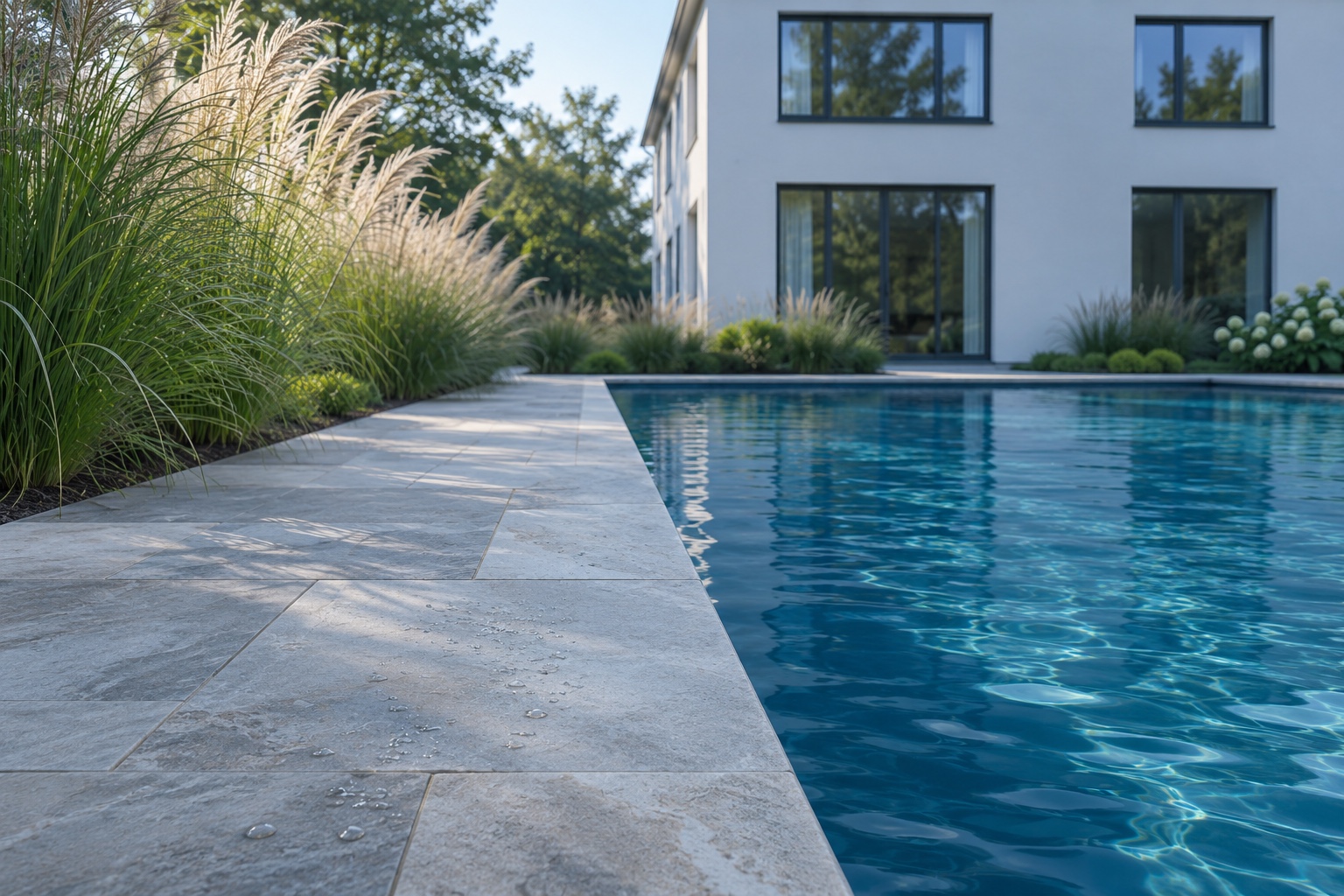
Natural Stone Pavers Around a Saltwater Pool: What to Check
Plan natural stone pavers beside a saltwater pool. Review the exact stone, finish, exposure limits, installation scope, and care before paying a deposit.
Read the article →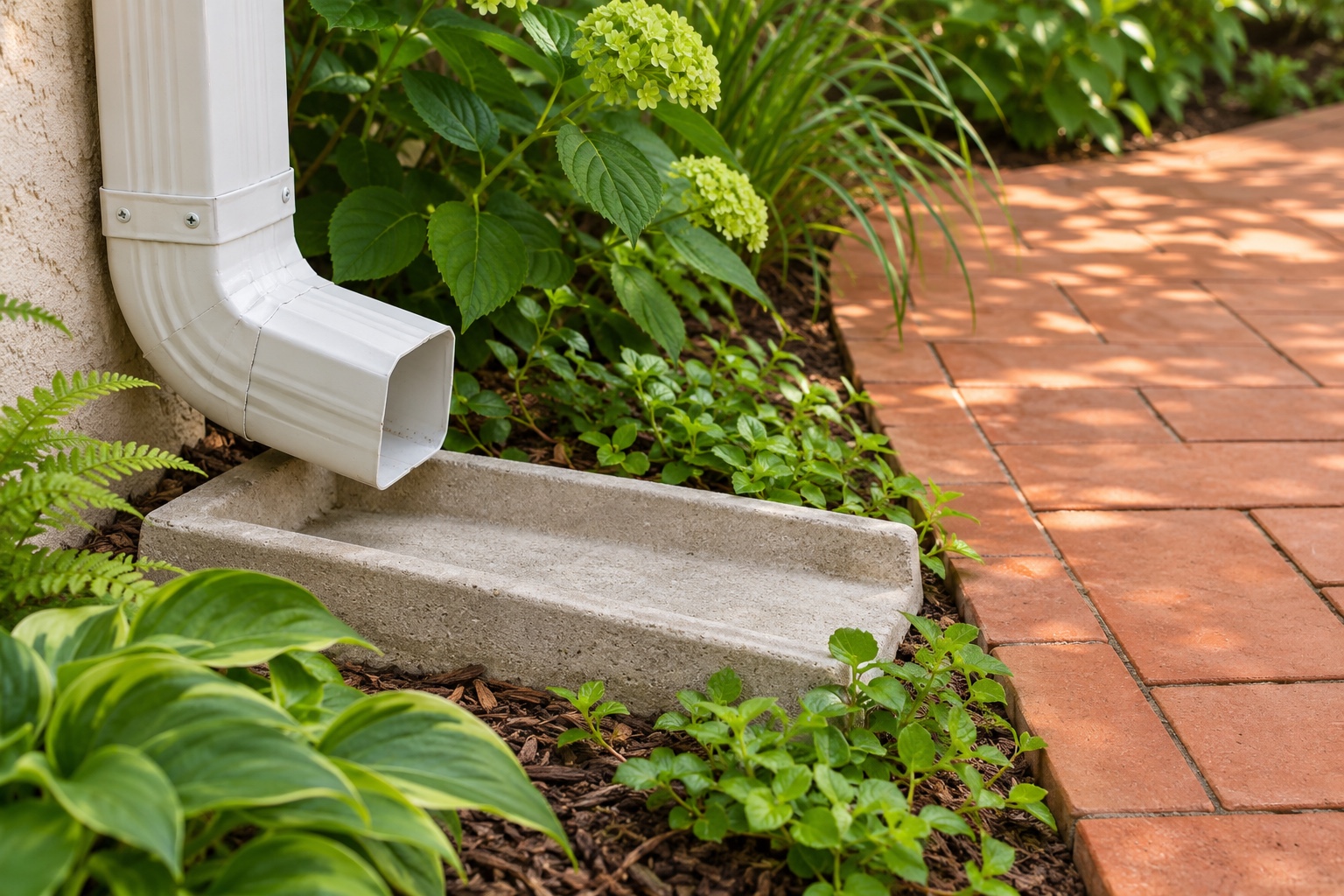
Planning Patio Pavers Around Existing Downspouts
Plan patio pavers around existing roof downspouts. Verify hidden pipe routes, protect access, and define drainage responsibilities before approving the scope.
Read the article →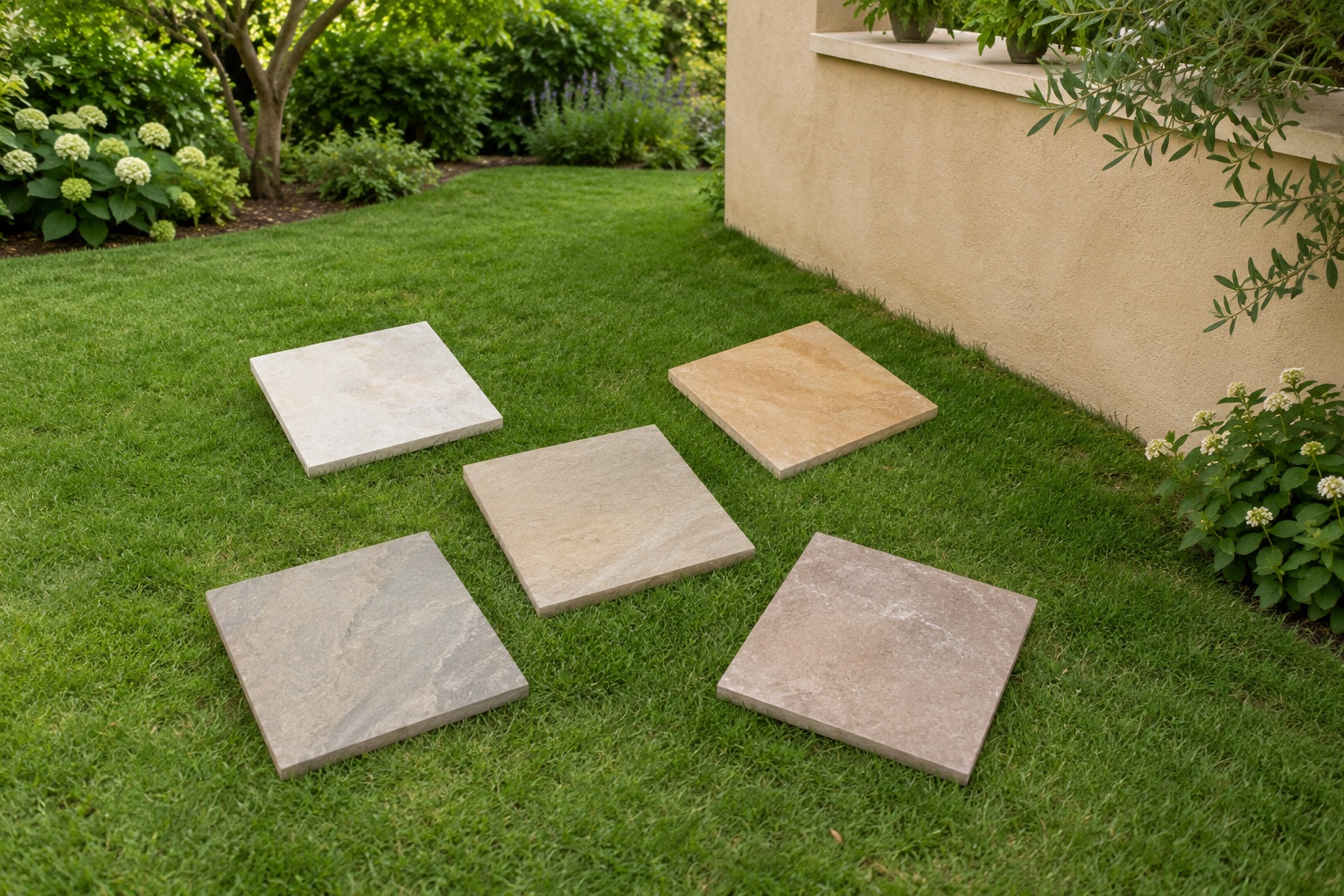
Natural Stone Pavers: Approve a Range, Not One Sample
Choose natural stone pavers for your West Palm Beach home with a sample range. Review the supply, finish, delivery checks, and written scope before ordering.
Read the article →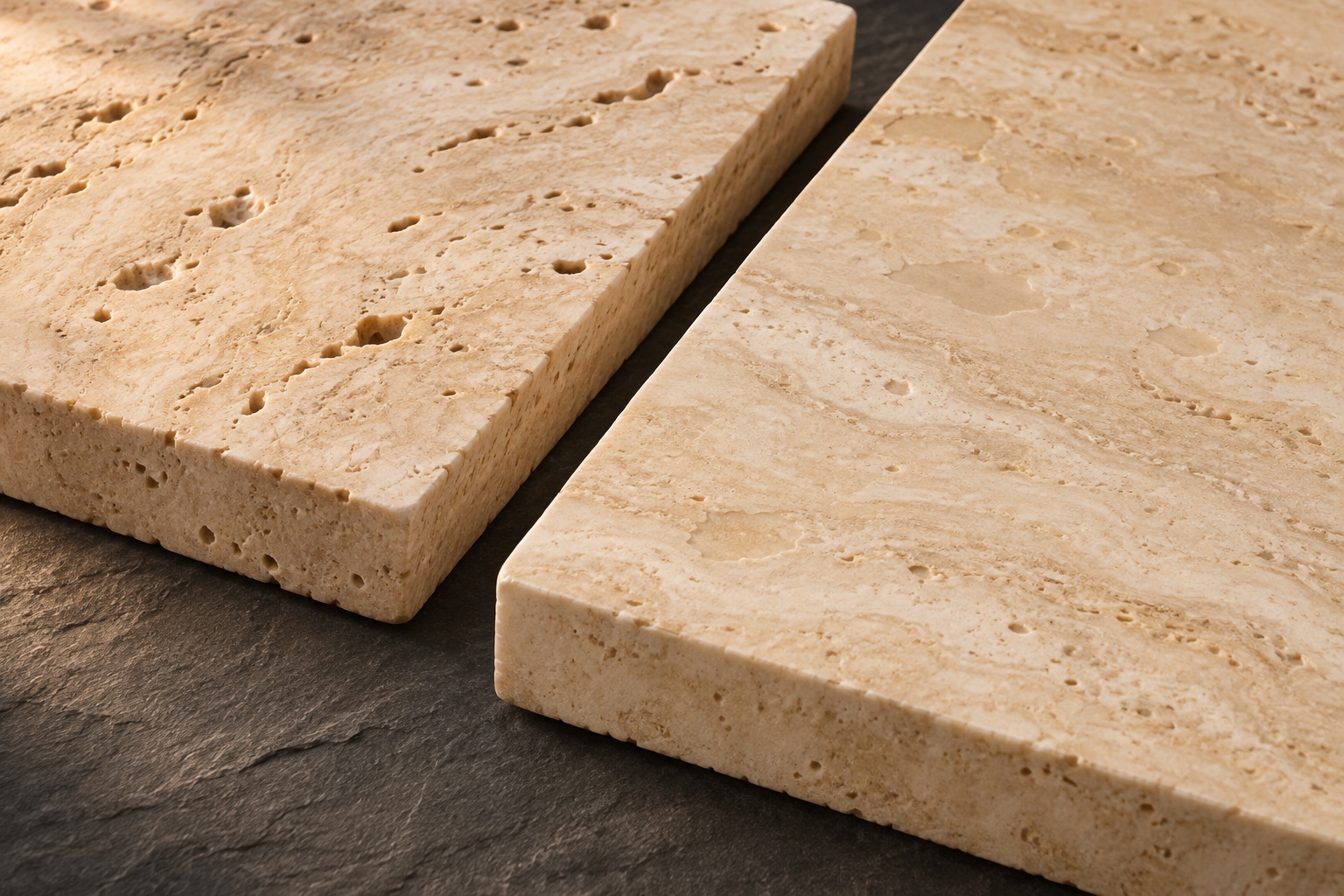
Filled or Unfilled Travertine Pavers: What to Review
Compare travertine samples, face filling, product data, and follow-up expectations before choosing pavers for a West Palm Beach or Palm Beach County home.
Read the article →
Patio Pavers Near an Air Conditioner: Keep Service Access
Plan patio pavers beside an existing outdoor AC unit. Keep its separate pad, airflow, service access and replacement route in the layout before work begins.
Read the article →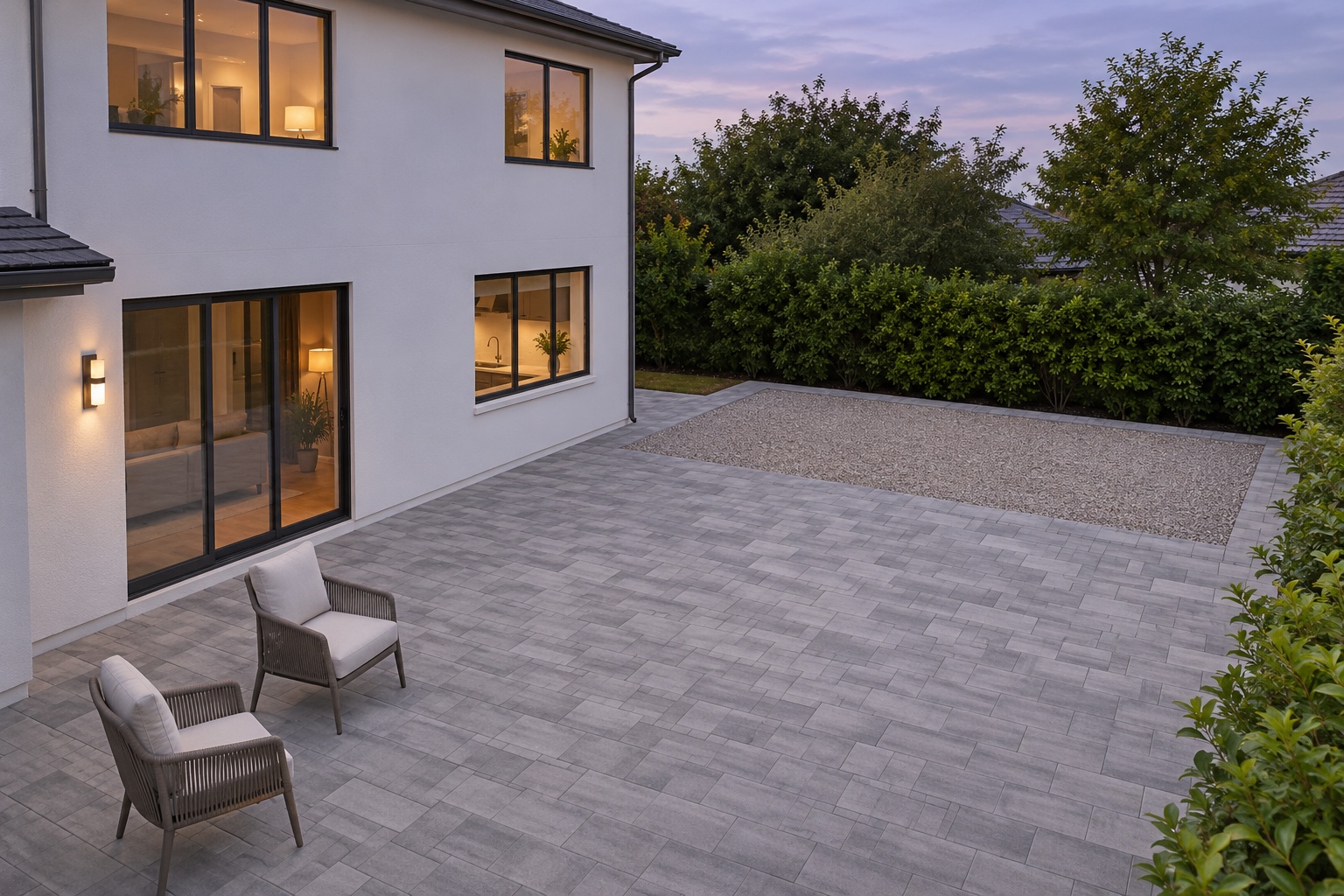
Patio Pavers and a Future Outdoor Kitchen: Plan the Footprint First
Installing patio pavers before a fixed outdoor kitchen? Plan the footprint, trade access, support decisions and future rework before agreeing the scope.
Read the article →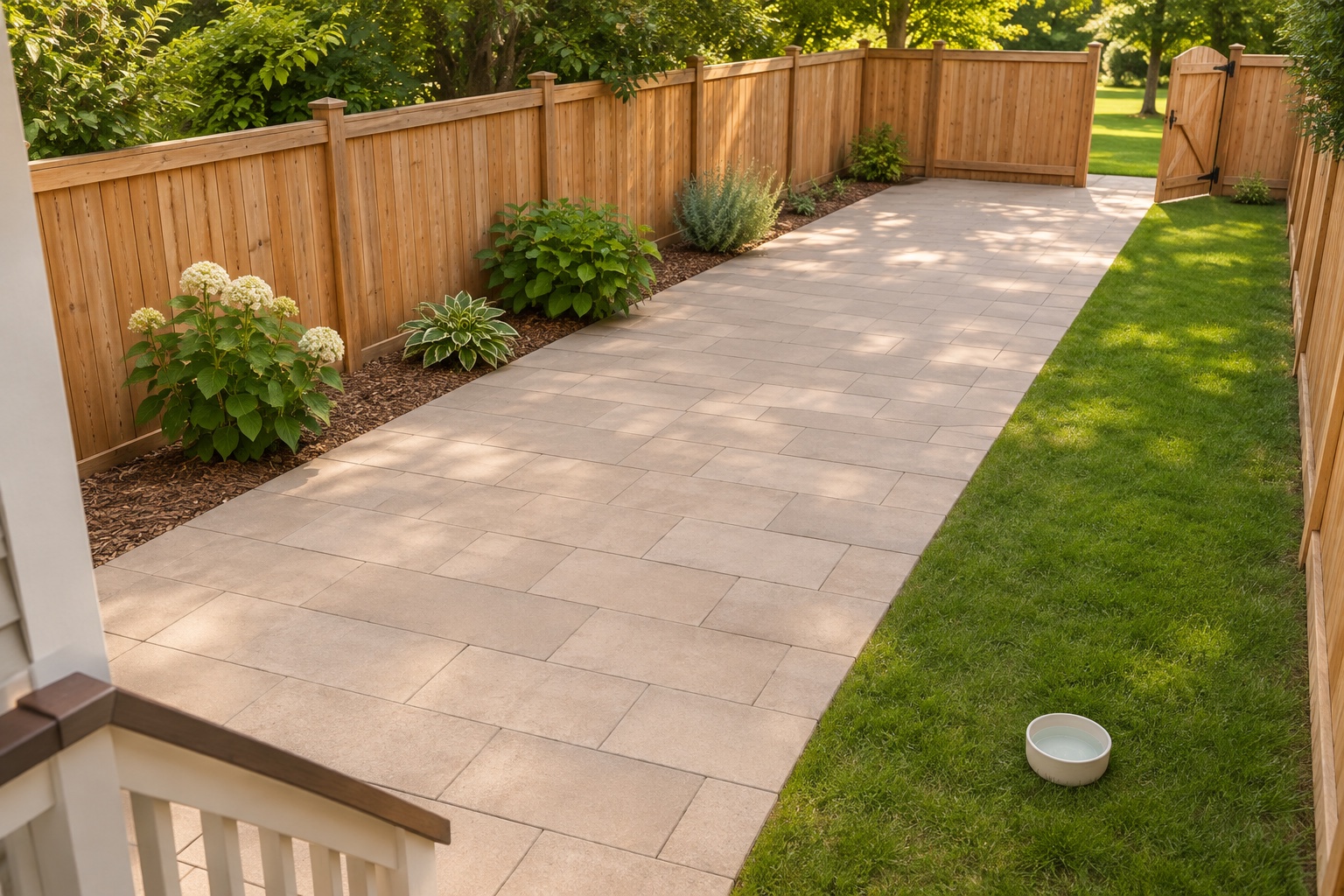
Cleaning Pavers in Pet-Use Areas: Set the Scope First
Plan paver cleaning where pets spend time: define surface work, unresolved odor concerns, a separate access route and product-specific return conditions.
Read the article →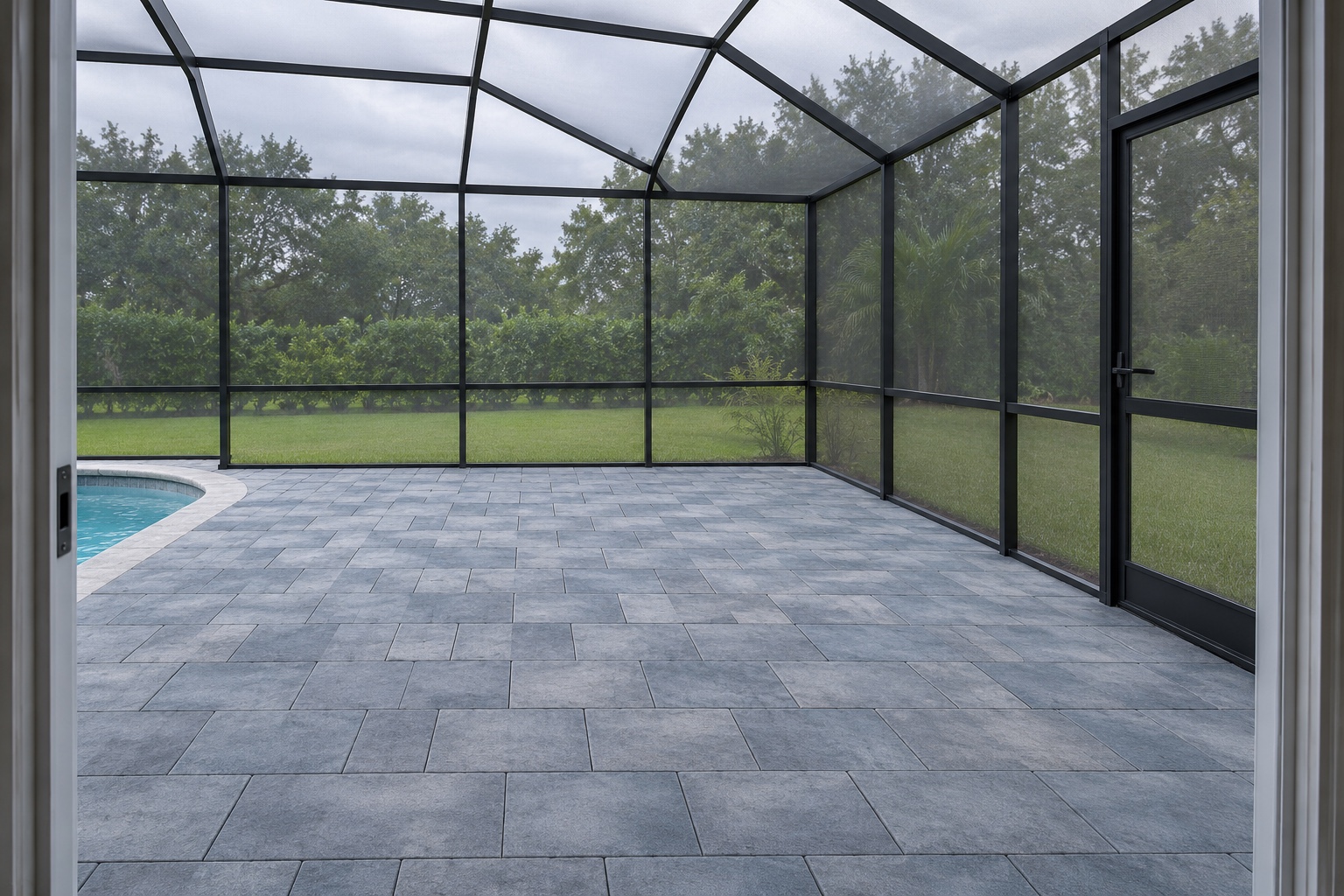
Cleaning Pavers Inside a Screen Enclosure: Define the Work Area First
Plan paver cleaning inside a screen enclosure: define floor boundaries, frame protection, door access, pool precautions and a dry appearance review.
Read the article →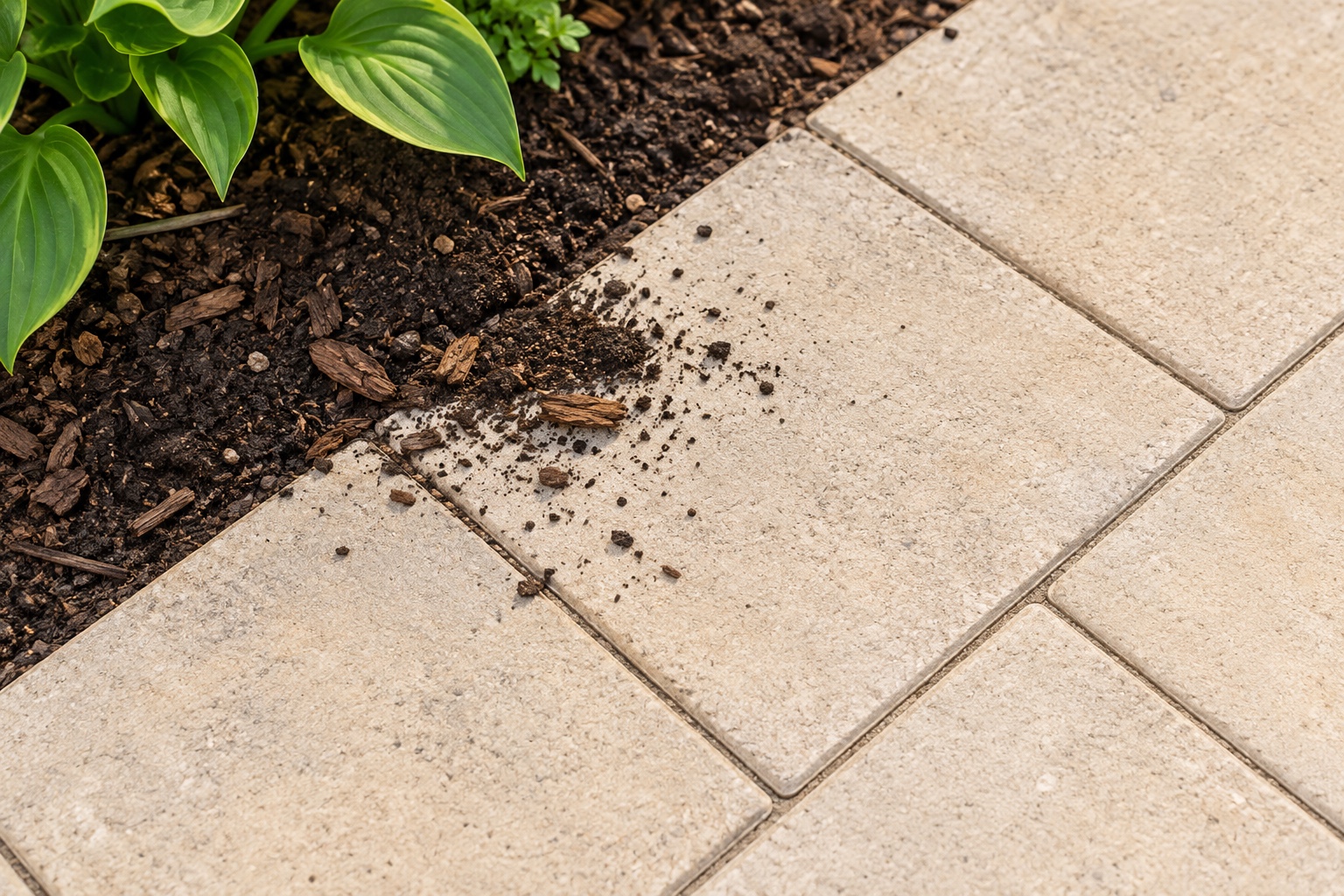
Soil Washing Onto Pavers: What to Check Before Cleaning
Soil keeps returning to your pavers? Document the pattern, separate deposits from stains, and agree source assessment and cleaning responsibilities.
Read the article →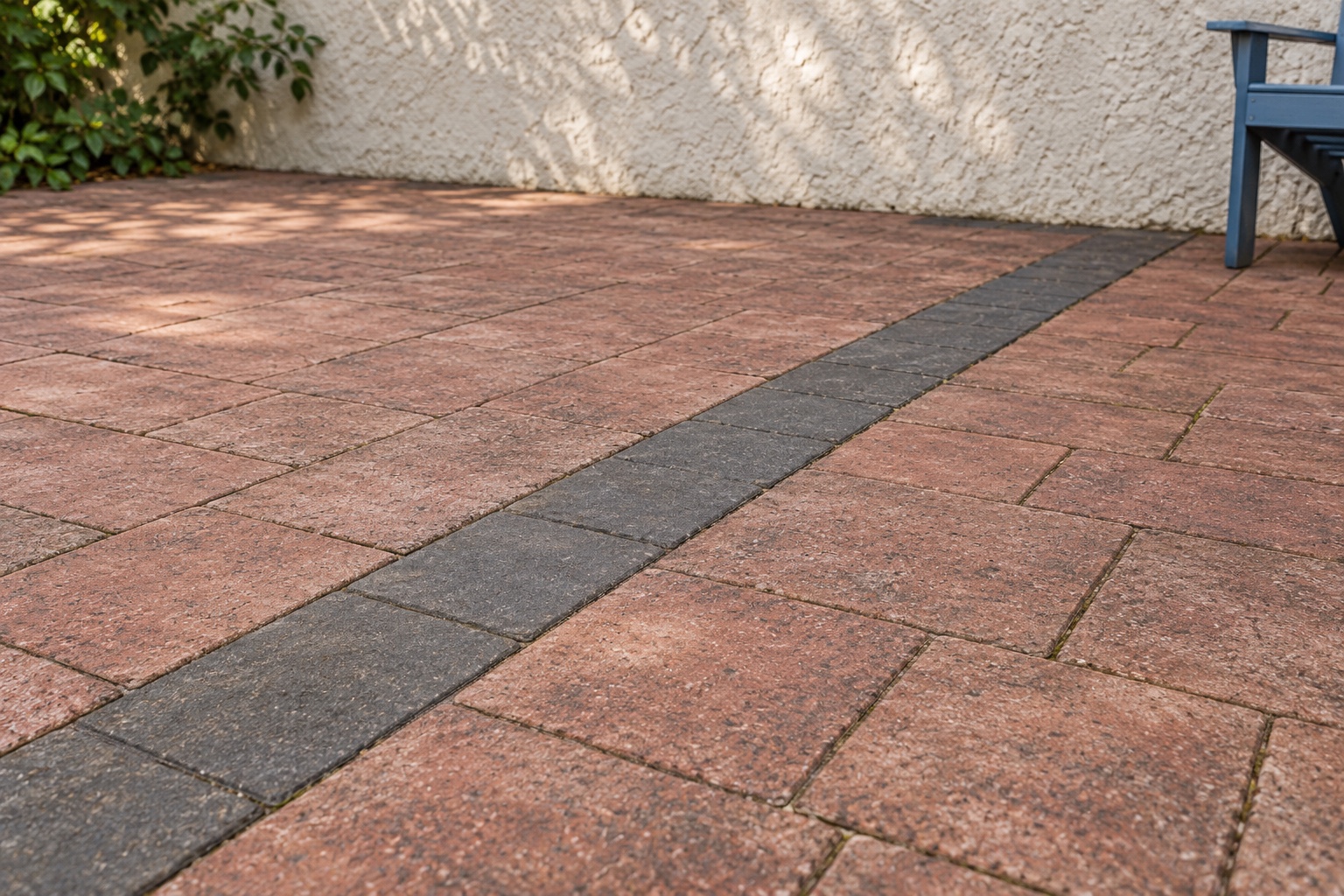
Clean One Paver Area or the Whole Surface?
Considering cleaning just one dirty paver area? Define its boundaries, compare dry adjoining surfaces and agree appearance limits before approving the scope.
Read the article →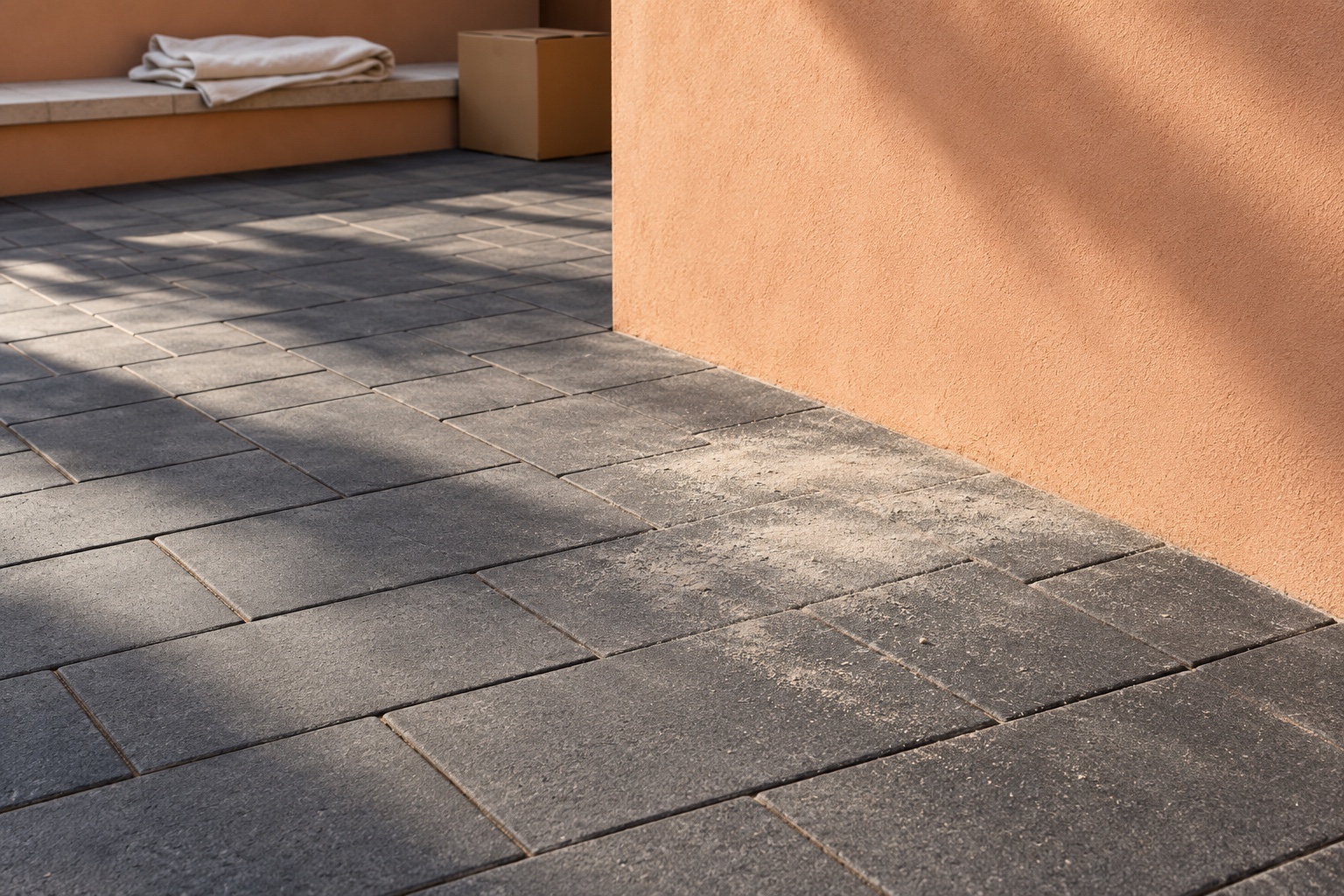
Cleaning Pavers After Nearby Construction
Plan cleanup of existing pavers after nearby renovation: document residue, agree contractor responsibilities, and separate cleaning, repairs and optional sealing.
Read the article →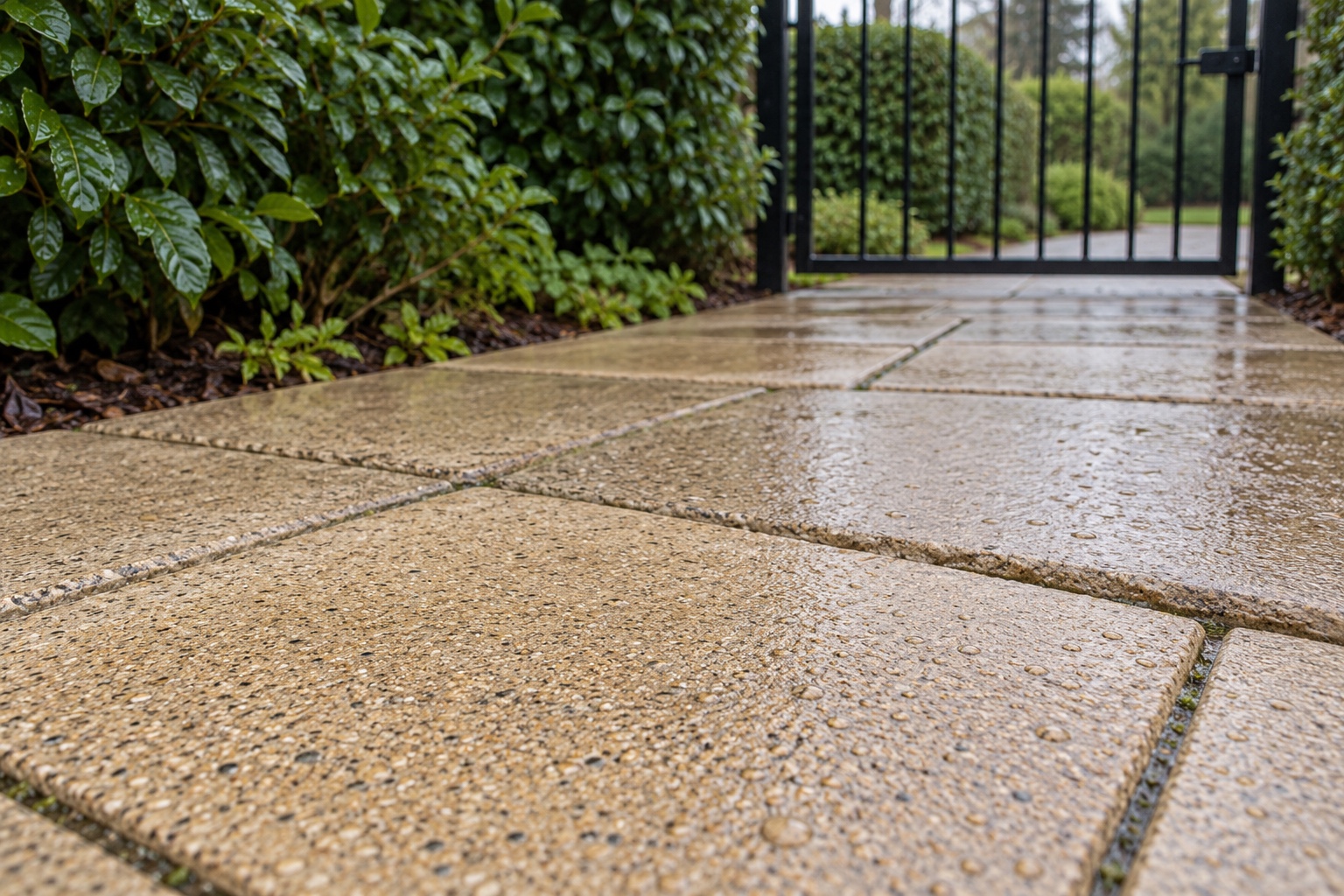
Slippery Pavers: What to Check Before Resealing
Pavers feel slippery? Record when and where it happens, identify materials and past treatments, and define an assessment scope before approving resealing.
Read the article →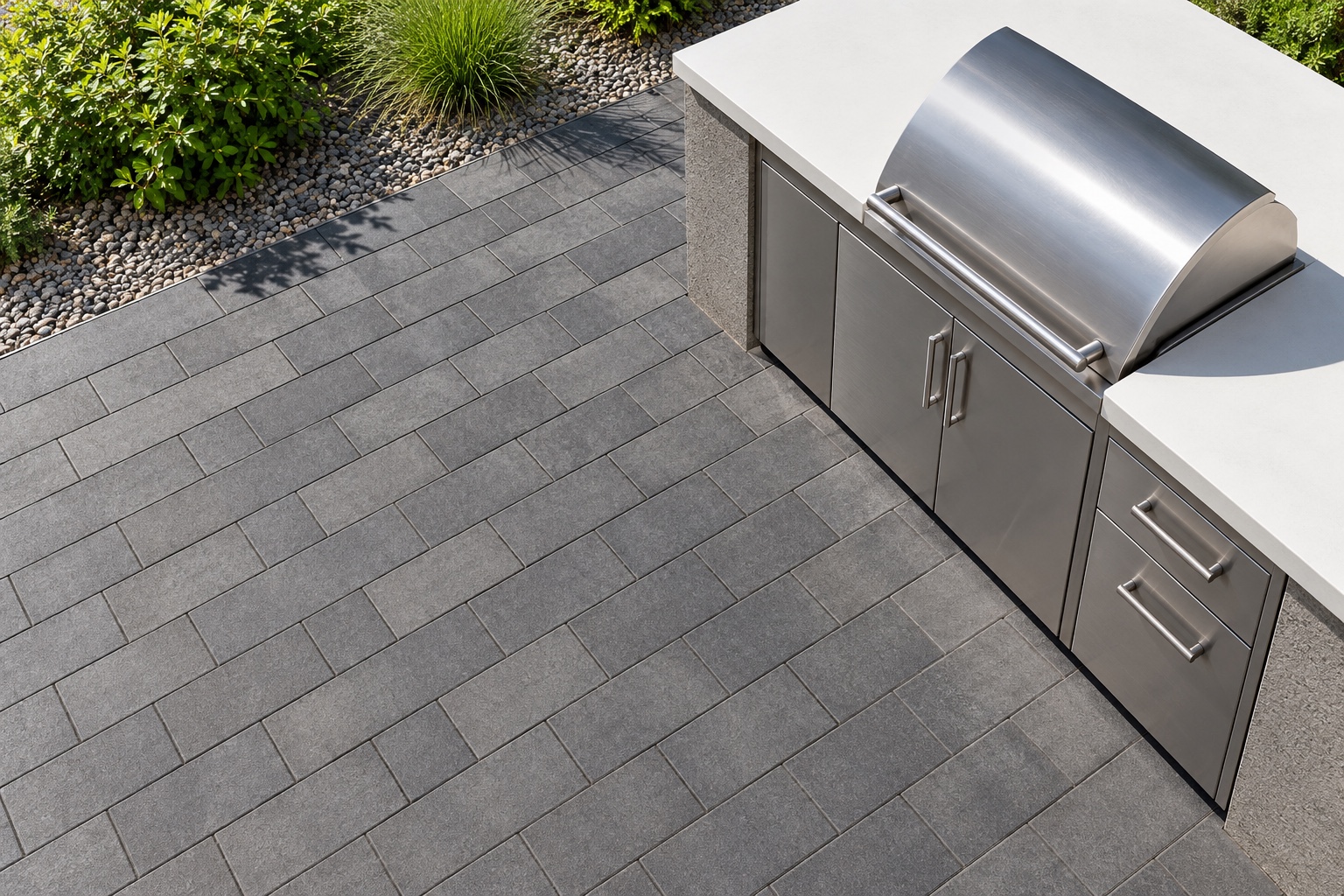
Cleaning Pavers Around an Outdoor Kitchen: Define the Work Area
Define the paver cleaning area around an outdoor kitchen: materials, fixed cabinets, protection, grease-test limits and separate surface and appliance reopening.
Read the article →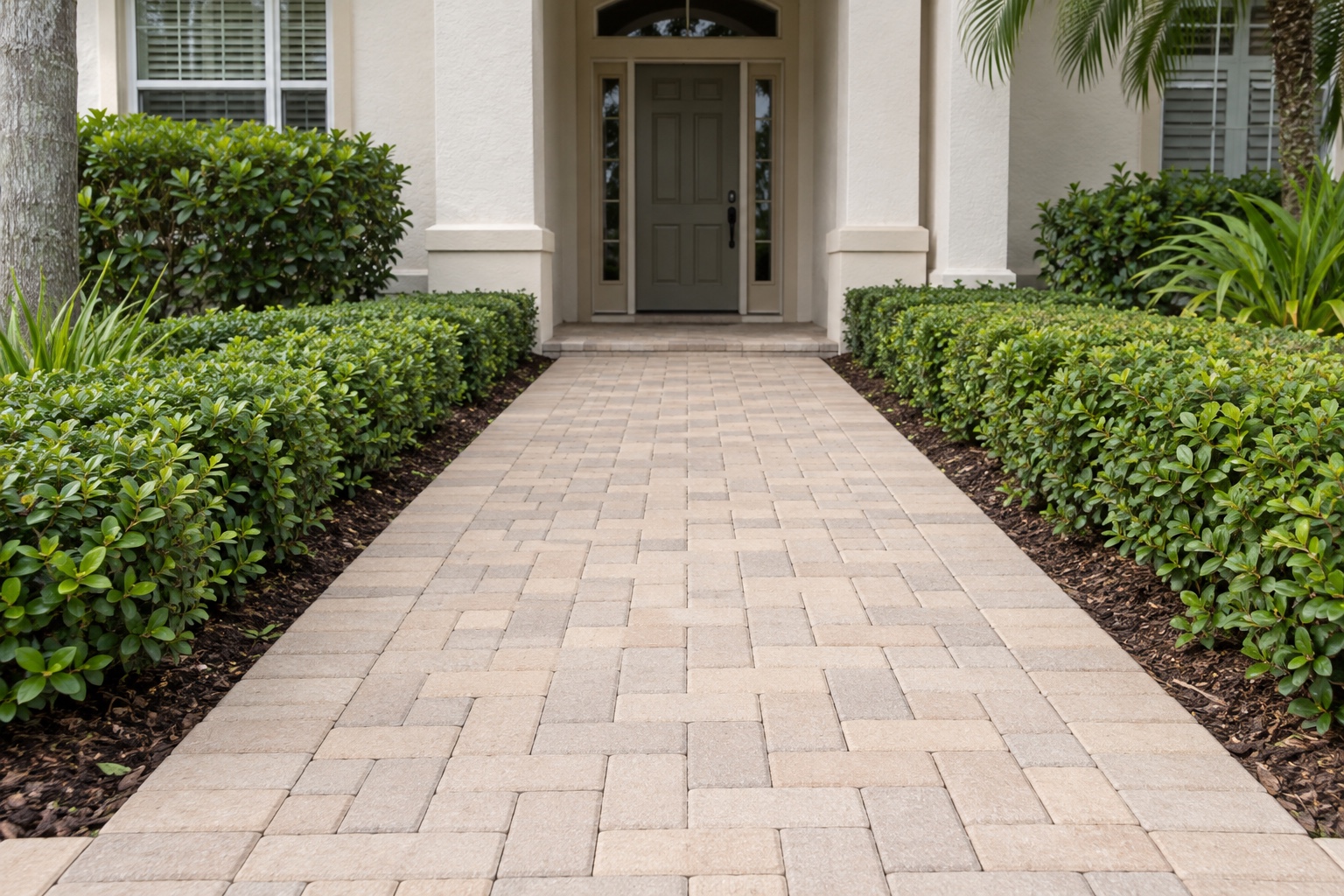
Paver Cleaning Before Listing Your Home: Plan the Scope First
Plan paver cleaning before listing your home: define affected areas, separate repairs from optional sealing, and coordinate access for photography and showings.
Read the article →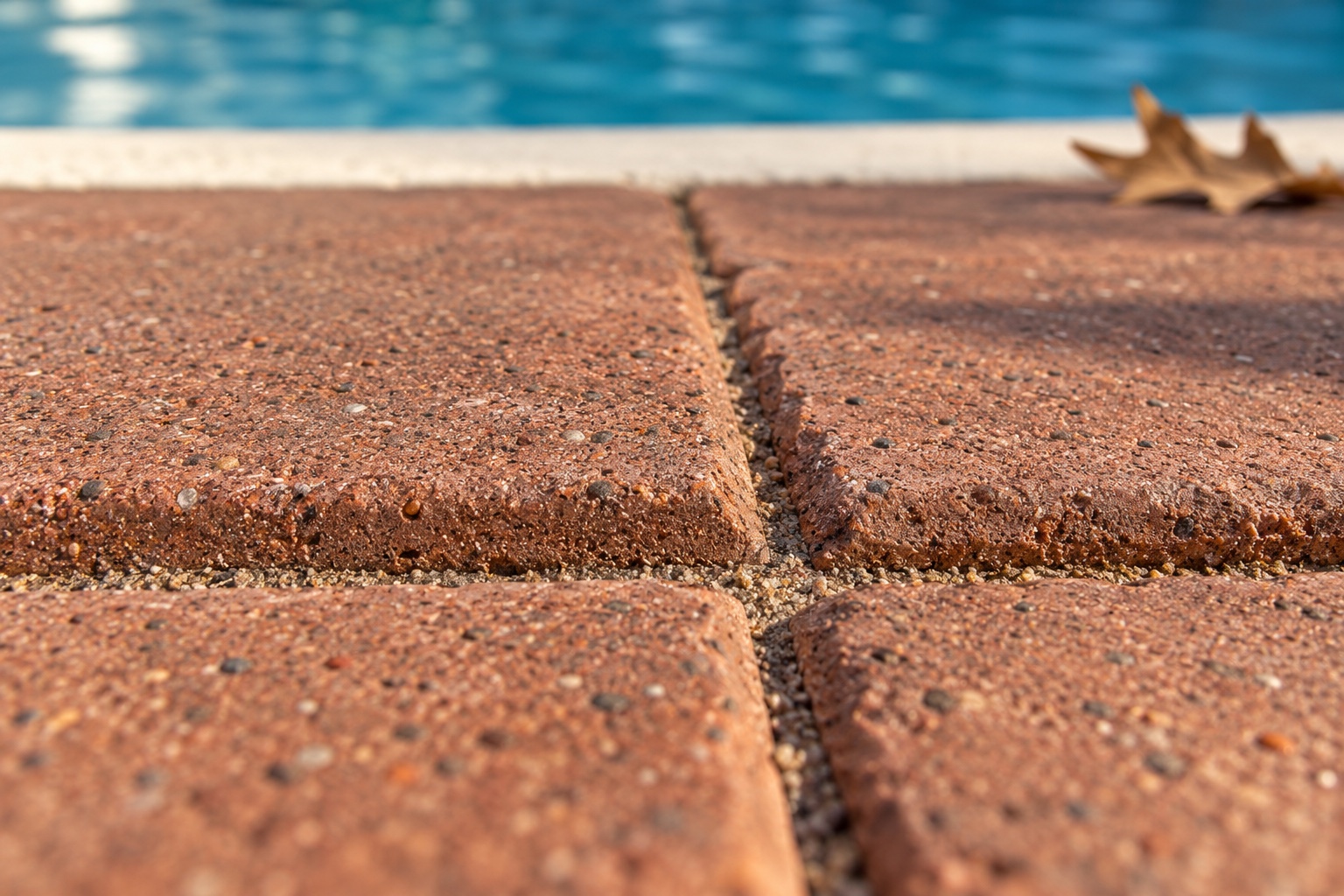
After Paver Sealing: What Care Instructions Should You Keep?
Keep product details, treated areas and care instructions after paver sealing. Plan future cleaning, document changes and know what to send your contractor.
Read the article →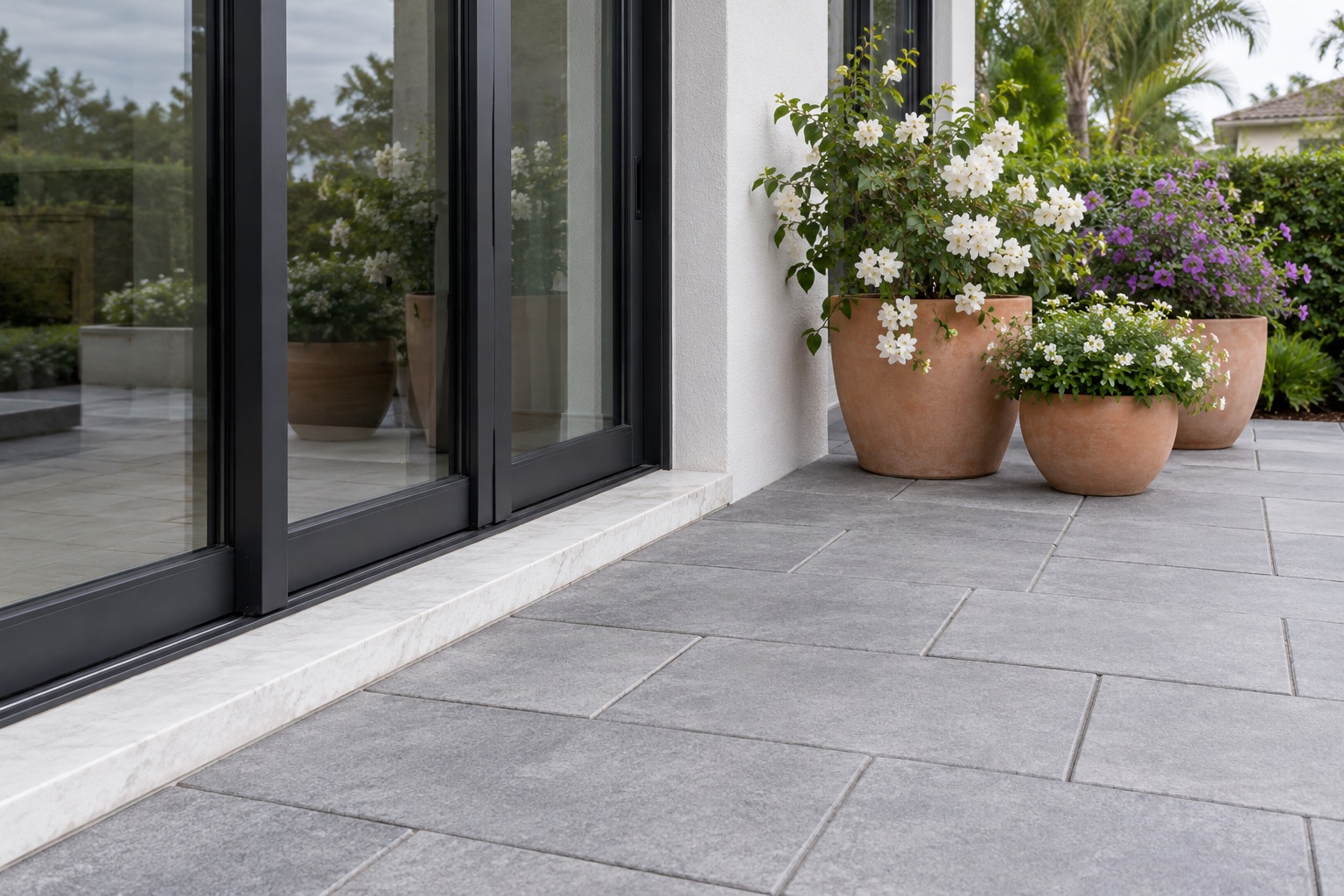
Before Paver Cleaning: Plan Protection for Plants, Glass and Stone
Plan protection for plants, glass and stone before cleaning pavers. Compare scope boundaries, runoff assessment, contractor responsibilities and final review.
Read the article →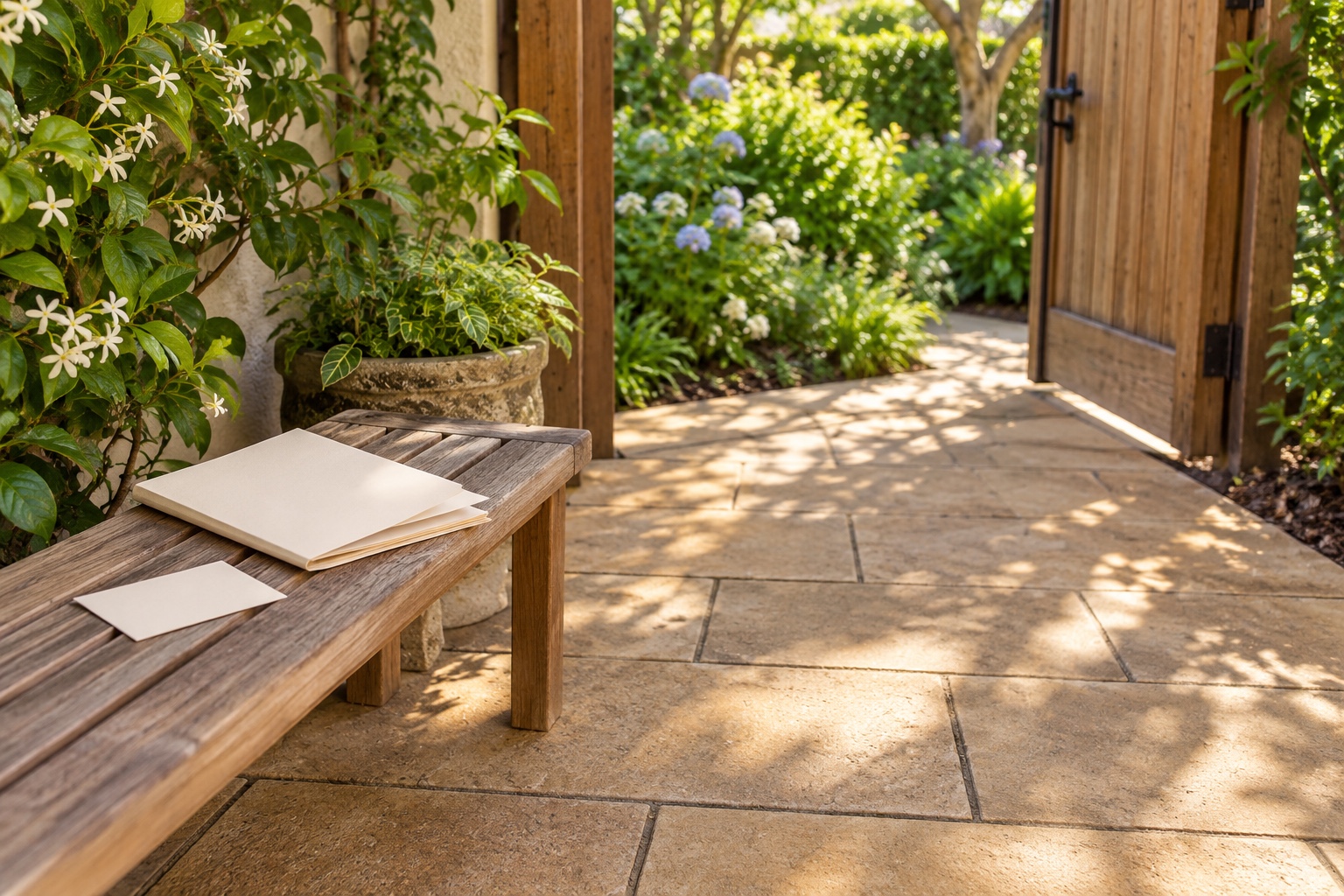
Resealing Pavers When the Previous Sealer Is Unknown
Bought a home with sound-looking pavers but no sealer records? Plan the history review, professional assessment, test limits and scope before approving resealing.
Read the article →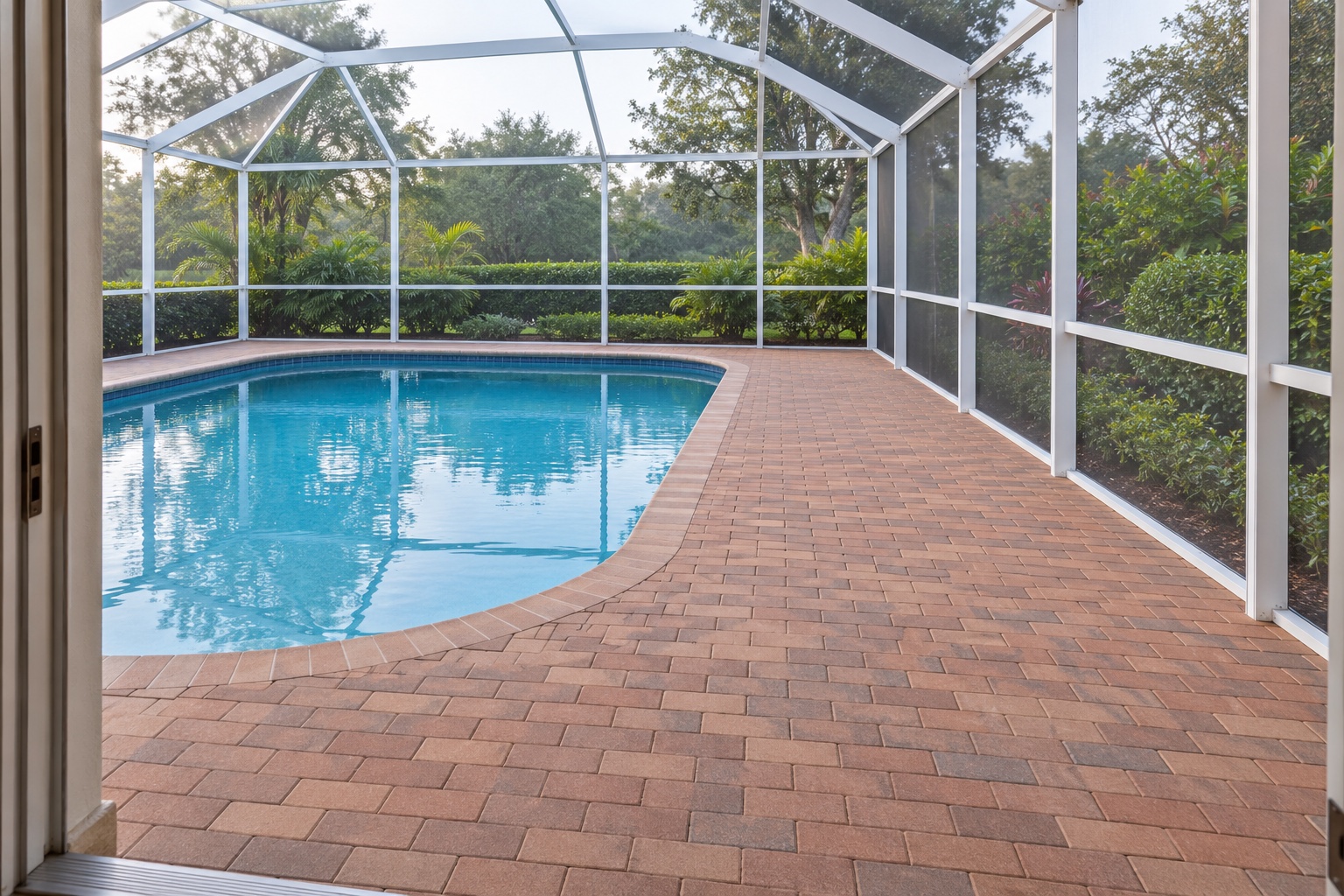
Replacing Pool Deck Pavers Around a Screen Enclosure
Plan pool deck paver replacement around a screen enclosure: define retained features, door and service access, hidden conditions and contractor responsibilities.
Read the article →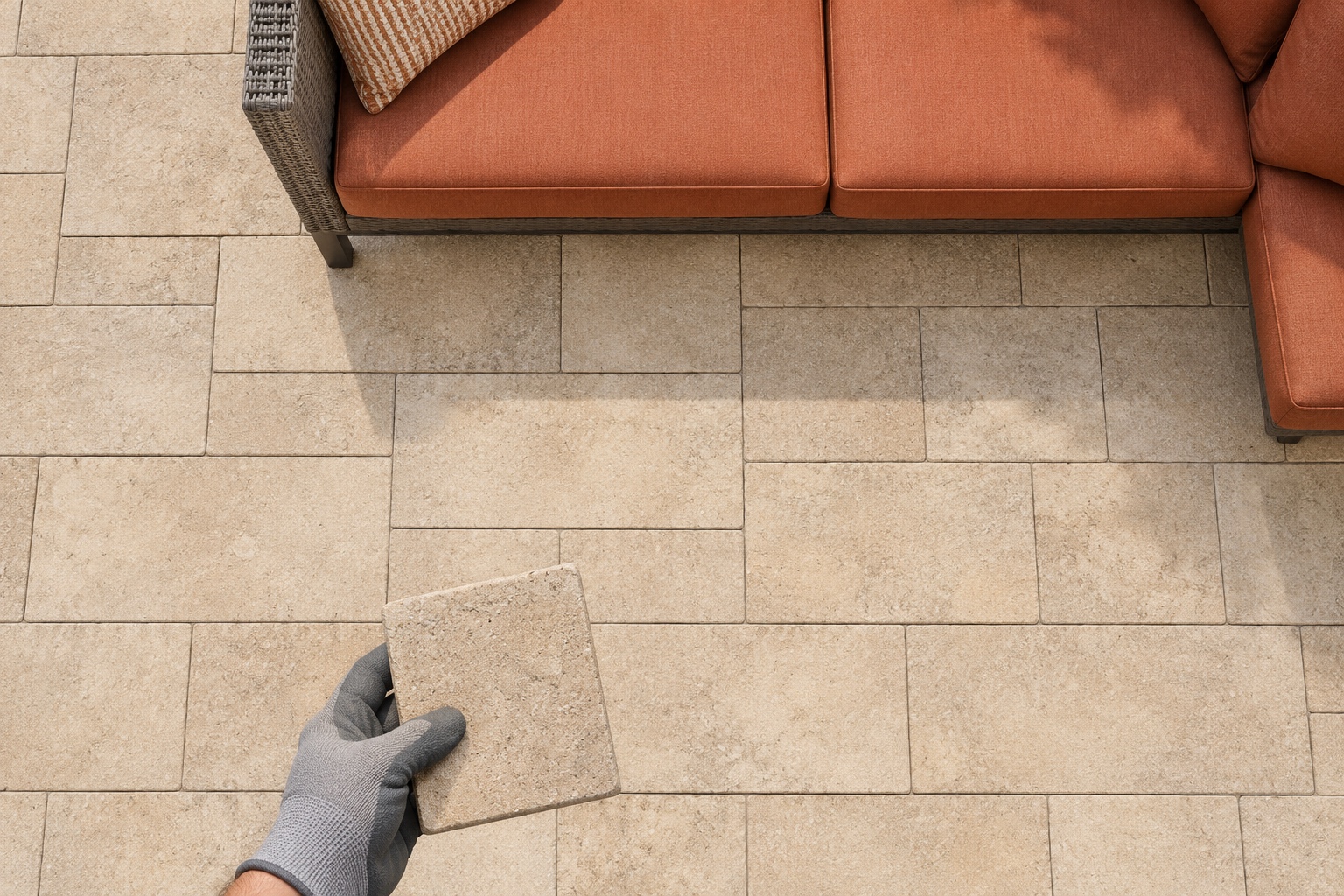
Faded Pavers: What to Check Before a Color-Enhancing Sealer
Decide whether dull pavers need cleaning, a compatible clear finish or further assessment. Separate dirt, old coatings, material changes and mismatched areas.
Read the article →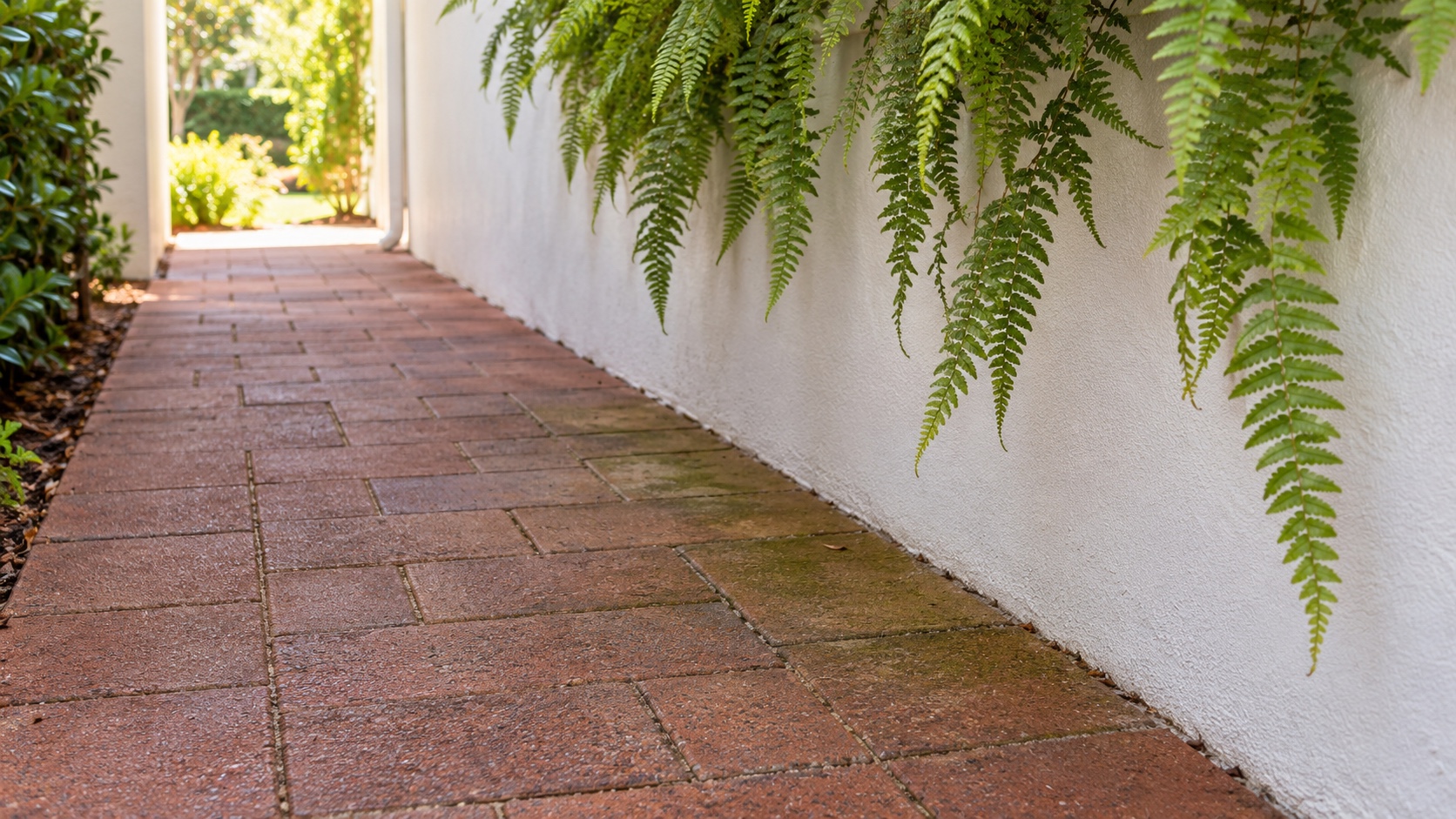
Green Patches on Shaded Pavers: Cleaning and Site Checks
Plan care for green-looking patches on shaded pavers: record wetness and material, arrange assessment, and compare cleaning, site checks and sealing.
Read the article →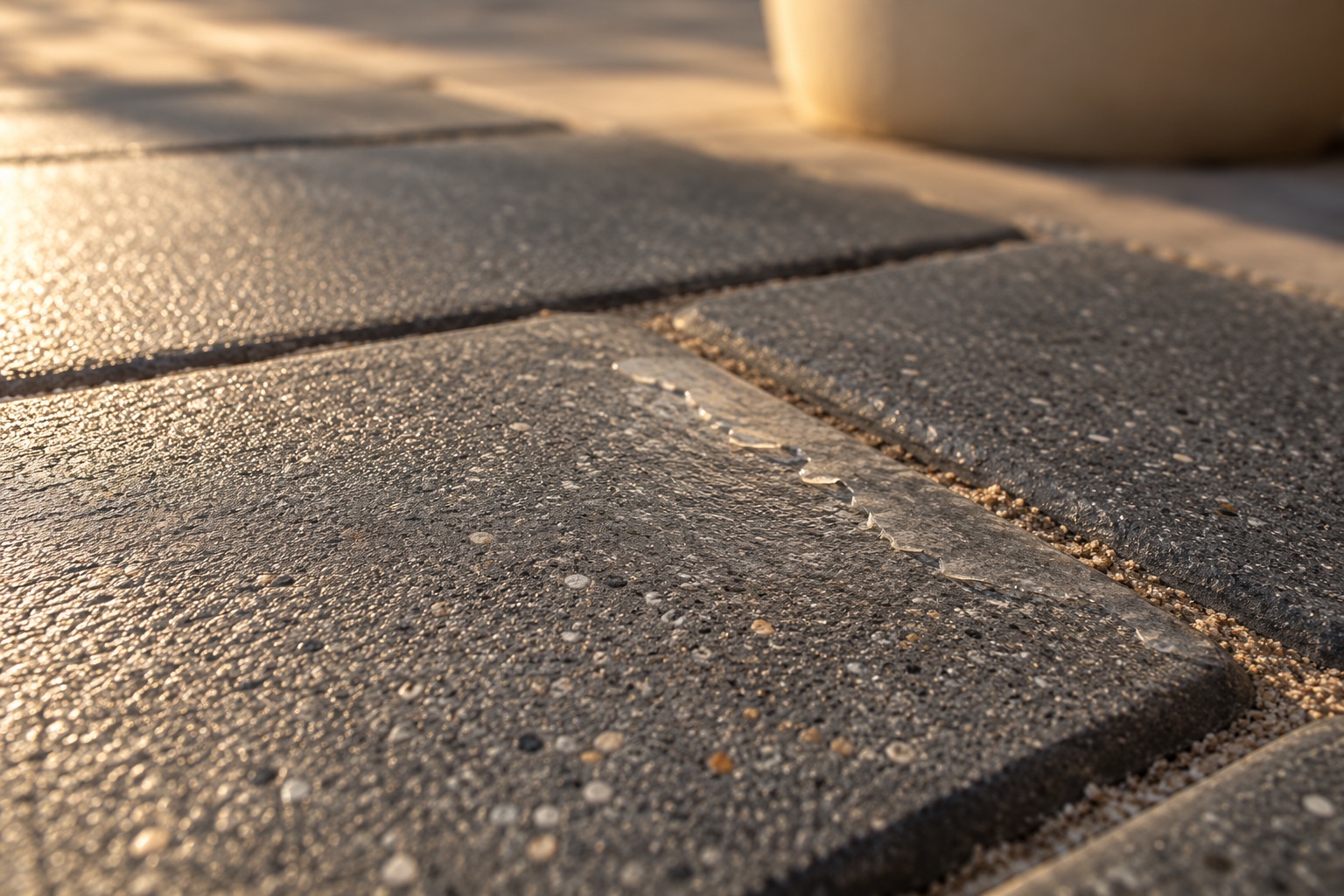
Peeling Paver Sealer: What to Check Before Another Coat
Before recoating pavers, identify the material and old finish, assess a professional trial area, and separate coating work from repairs in your proposal.
Read the article →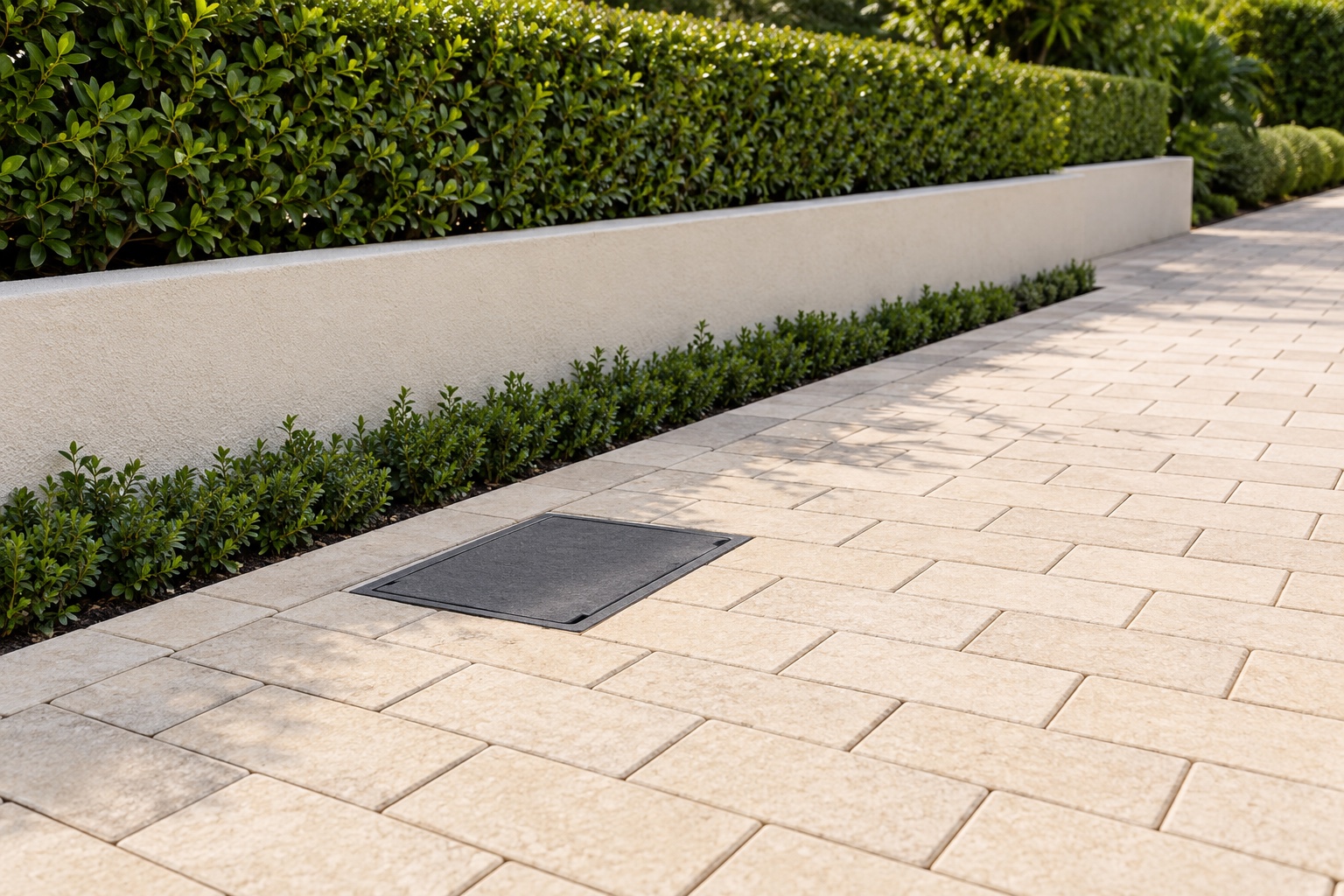
Utility Covers in a Paver Driveway: Plan Access Before Replacement
Replacing driveway pavers? Confirm utility cover ownership, vehicle use and finished levels, then define who handles adjustments and surrounding paver repairs.
Read the article →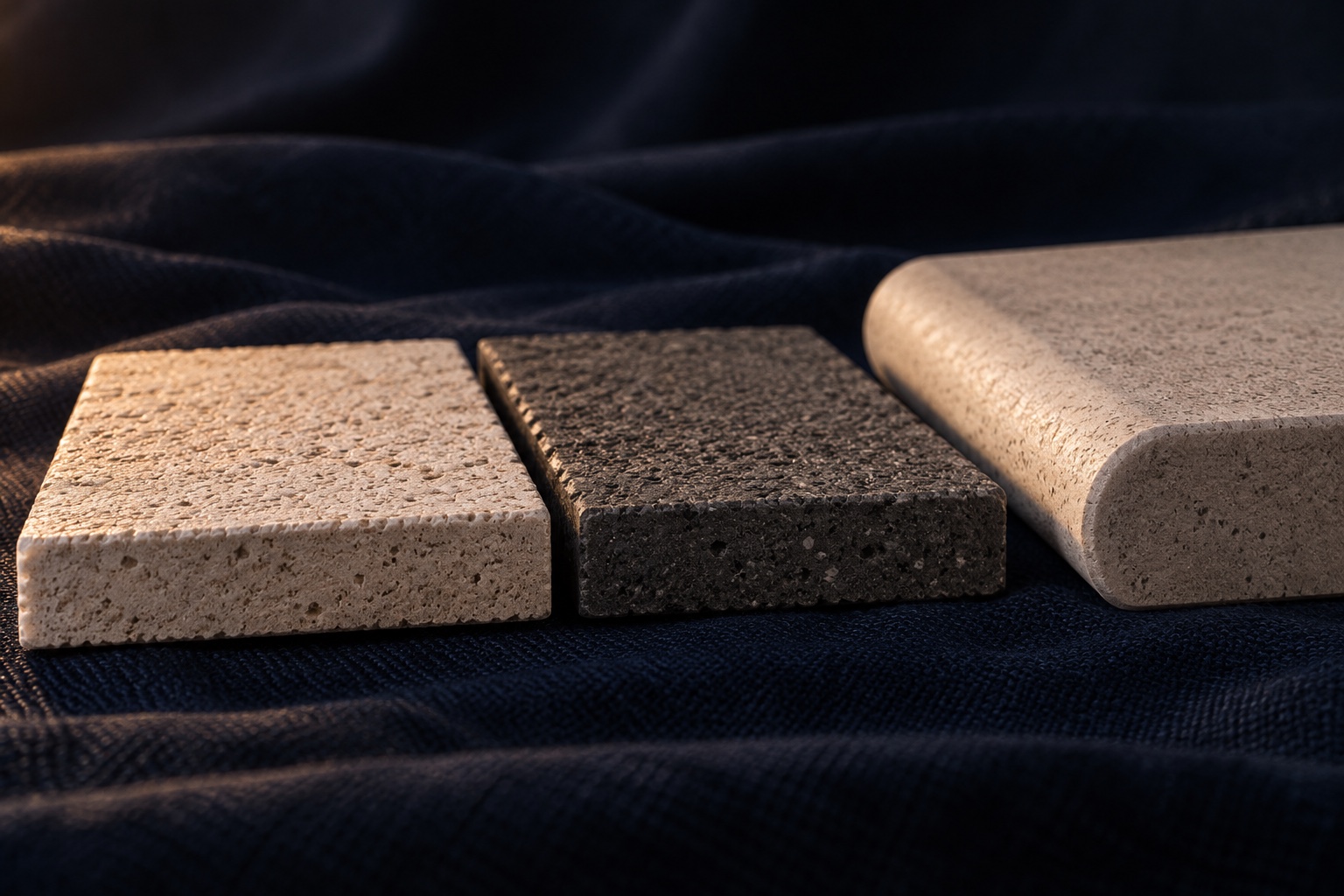
Pool Deck Paver Samples: Check the Finish Before You Choose
Compare pool deck paver and coping samples with your tile and house. Confirm the exact finish, intended use, care needs and substitution terms before ordering.
Read the article →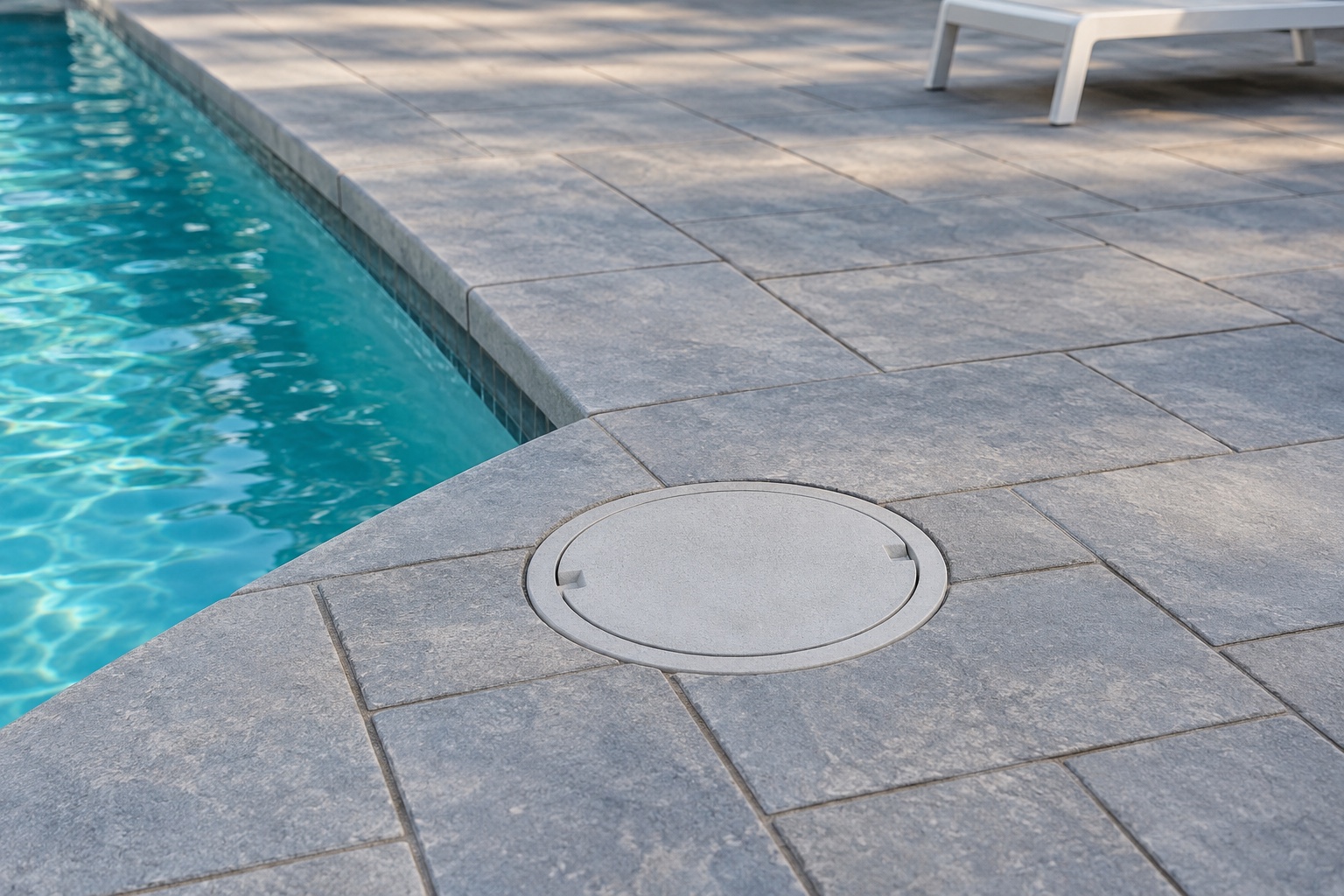
Replacing Pool Deck Pavers: Plan Around the Skimmer Lid
Plan pool deck paver replacement around the skimmer lid: confirm the existing parts, finished level, basket access and who handles each part of the work.
Read the article →
Porcelain Driveway Pavers: What to Verify Before Ordering
Before ordering porcelain driveway pavers, match the exact product and expected vehicle use to documented installation details, scope and purchase terms.
Read the article →
Leaf Stains on Pavers in Palm Beach Gardens: Next Steps
Persistent leaf stains on pavers? Compare a dry cleaning test, limited further treatment and local replacement, then plan debris removal and optional sealing.
Read the article →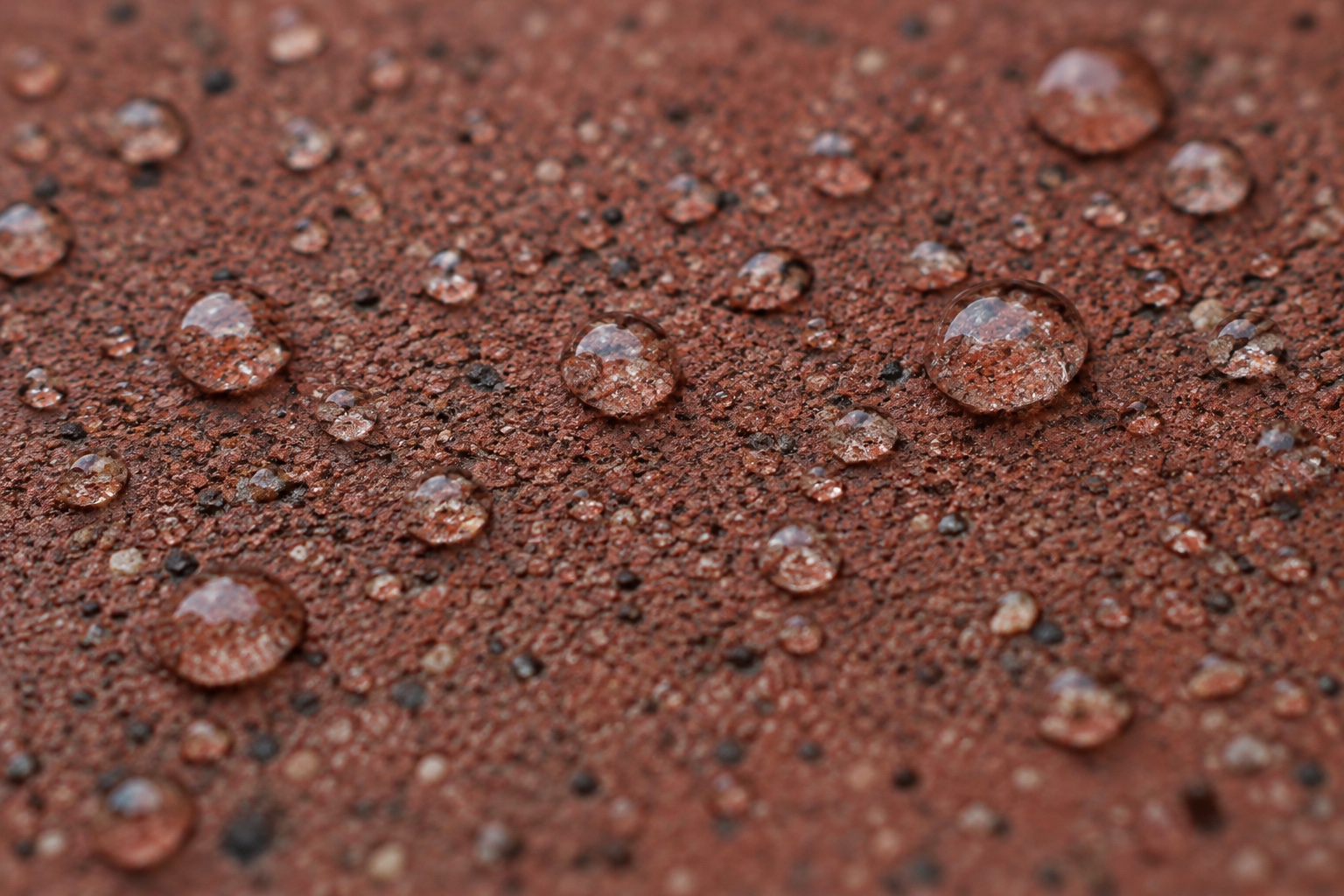
Water Beading on Pavers: Does It Mean You Need Resealing?
Water droplets alone cannot tell you whether pavers need resealing. Identify the surface and old product, compare observations, and clarify the proposed work.
Read the article →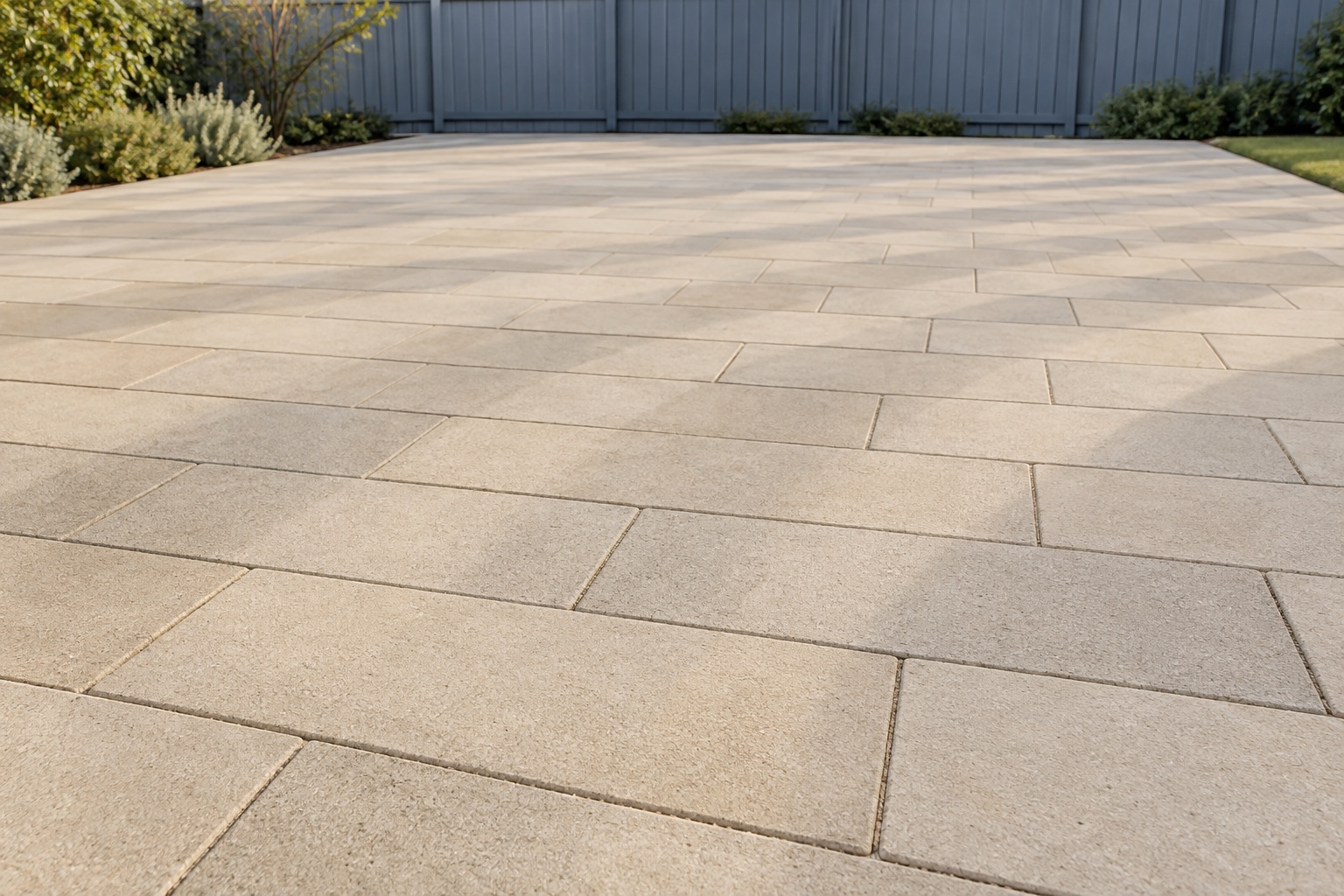
Pressure Washer Marks on Pavers: Assess Before Sealing
See bands or arcs after washing concrete pavers? Record the surface and treatment history, request an inspection, and agree on a trial before further work.
Read the article →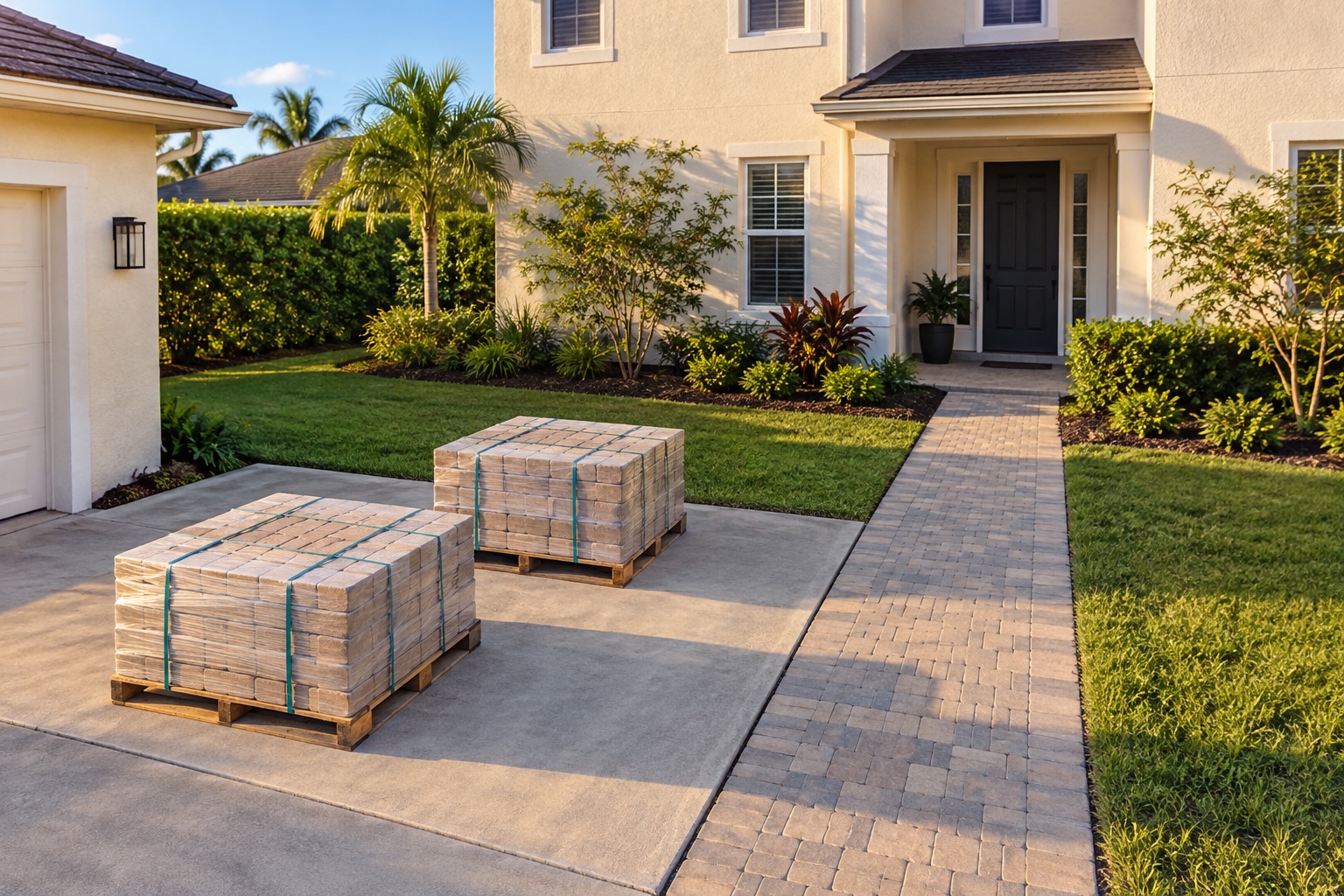
Paver Delivery for a Driveway Project: Where Will the Pallets Go?
Plan where driveway pavers will be unloaded and stored, how your household will get in and out, and who handles delivery changes and leftover stock.
Read the article →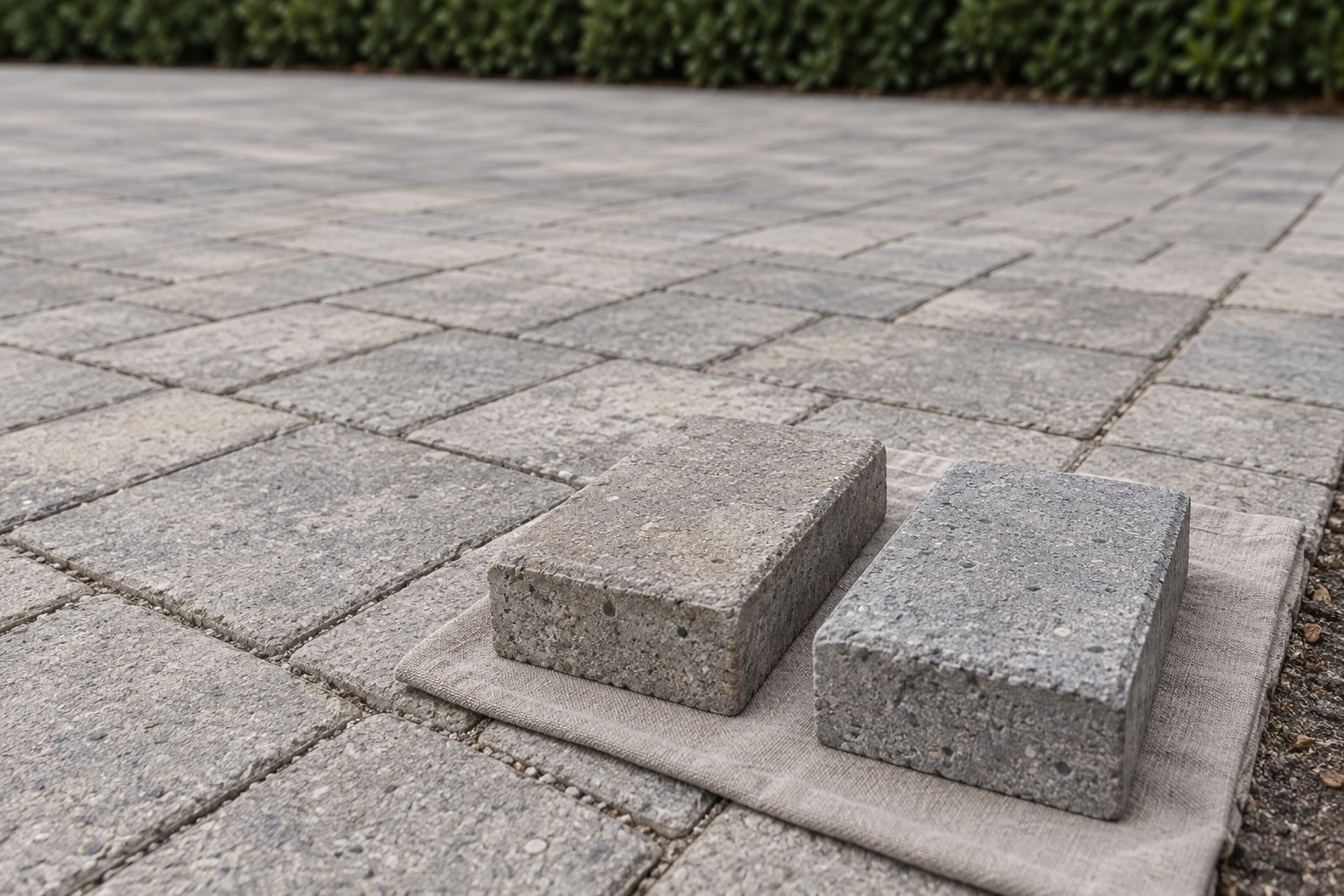
Matching New Pavers to an Existing Driveway: What to Check
Compare physical samples, dimensions, texture and realistic contrast before ordering replacement driveway pavers or choosing a defined section to update.
Read the article →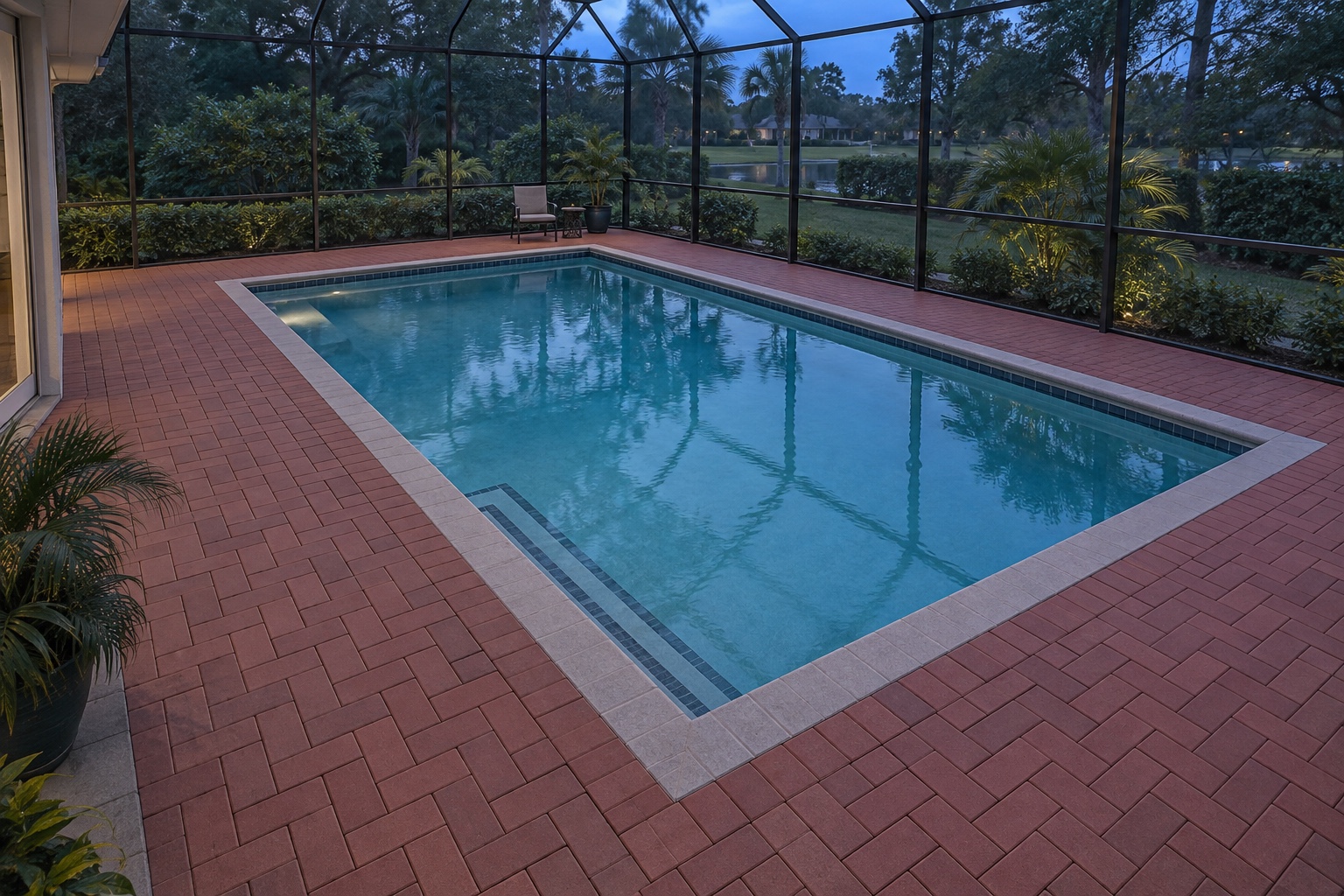
Pool Deck Paver Replacement: What Belongs in the Estimate?
Compare pool deck paver replacement estimates by removal, preparation, retained features, product selection, access and responsibility for unexpected work.
Read the article →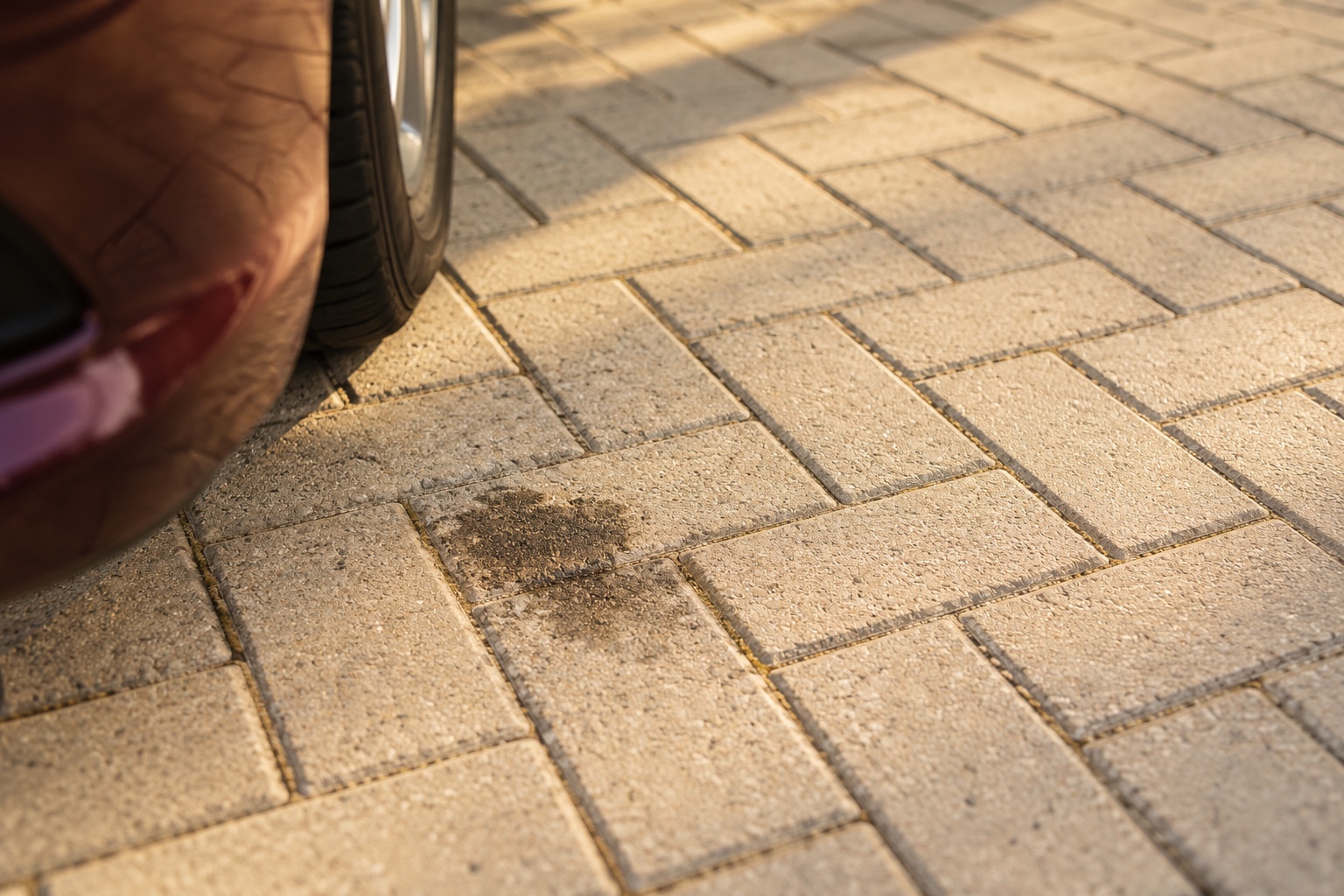
Oil Stains on Pavers: What to Assess Before Sealing
Assess suspected oil stains on concrete pavers before sealing. Review the source, old coatings, treatment tests and remaining marks in a clear written scope.
Read the article →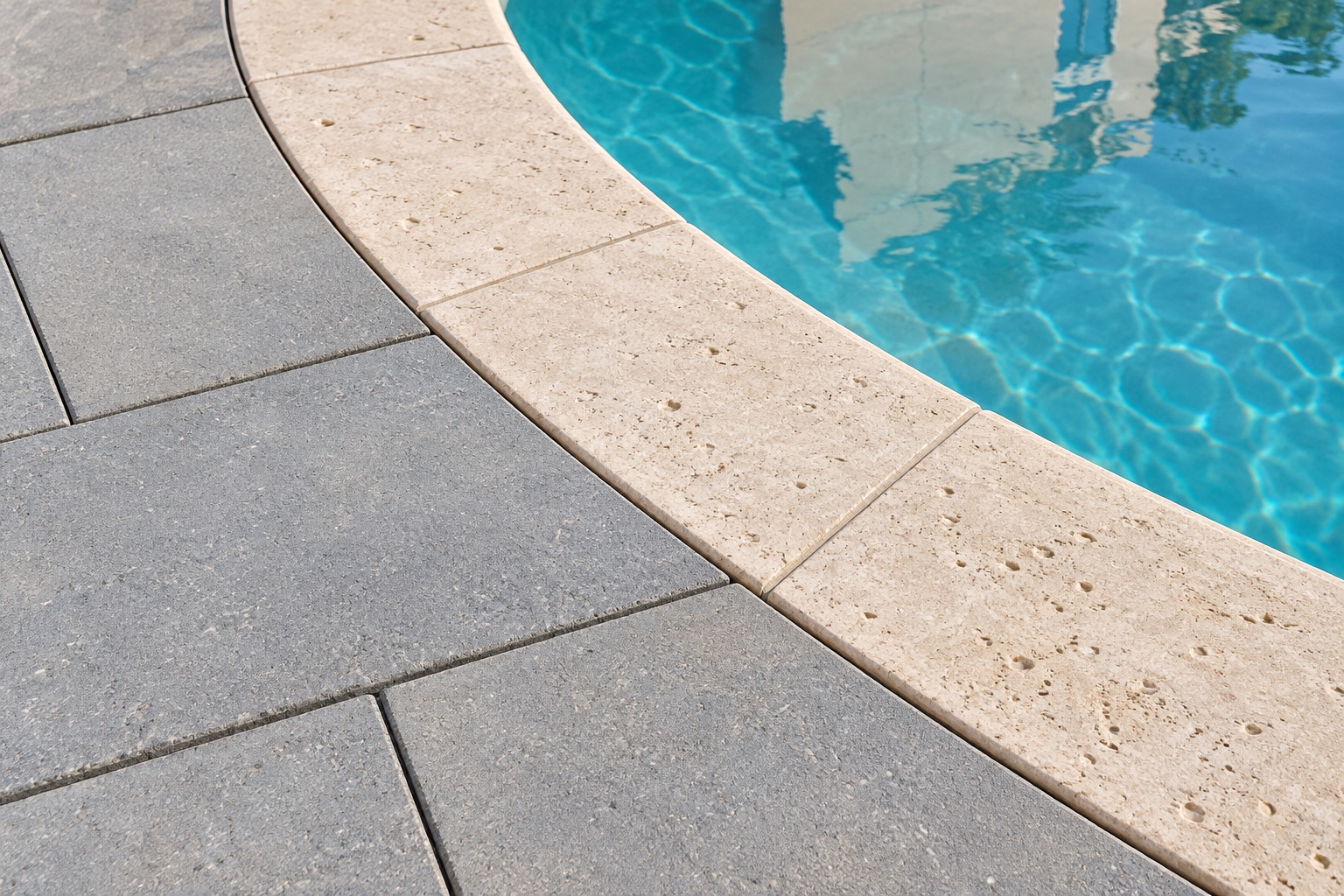
Cleaning Stone Beside Concrete Pavers: Plan Each Surface
Plan cleaning where concrete pavers meet stone borders, steps or coping. Identify materials, protect transitions and agree on a separate scope for each surface.
Read the article →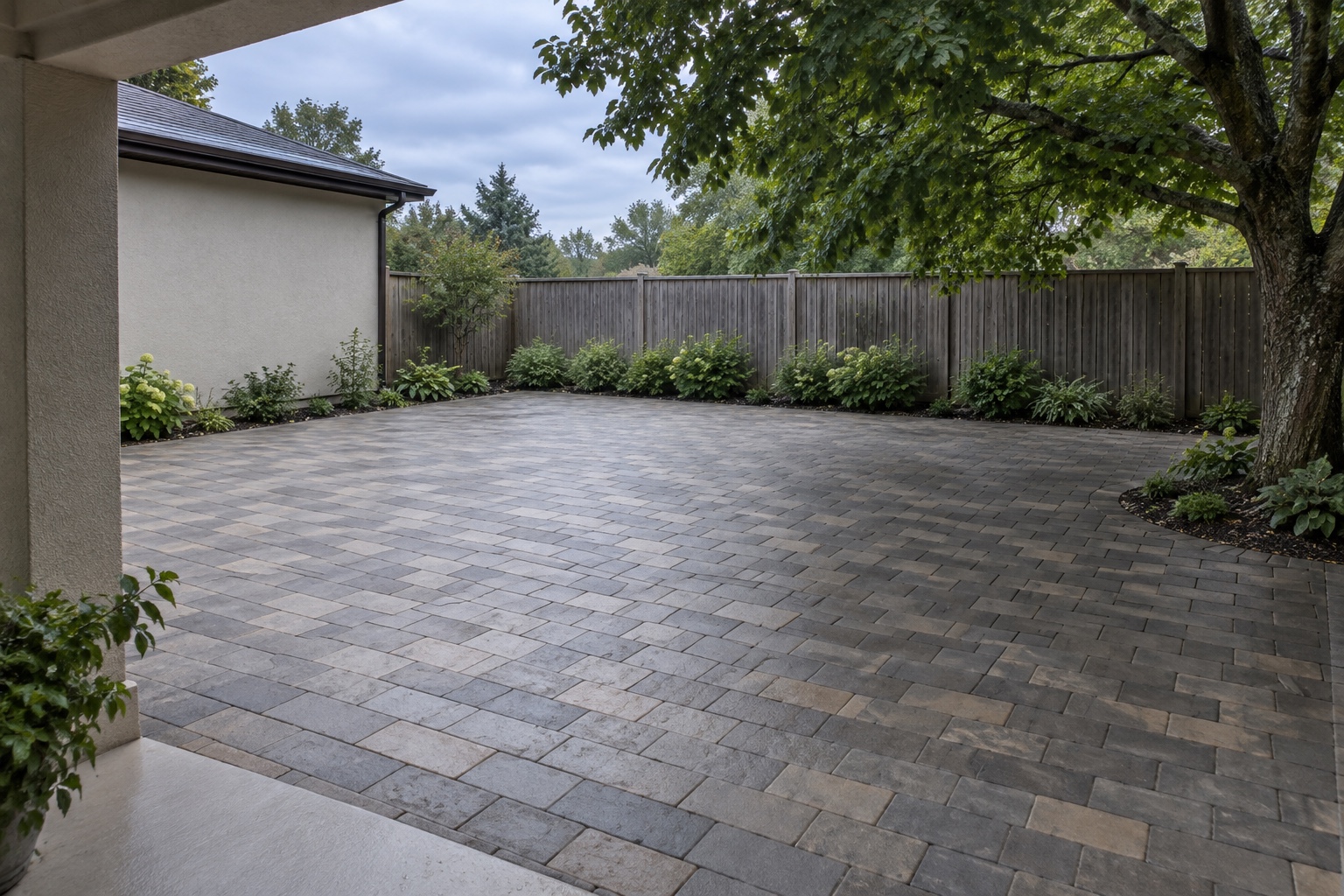
Paver Sealing and the Weather: When Is the Surface Ready?
Plan concrete paver sealing after rain or washing. Confirm the product, site conditions, forecast review and who decides whether work proceeds or is rescheduled.
Read the article →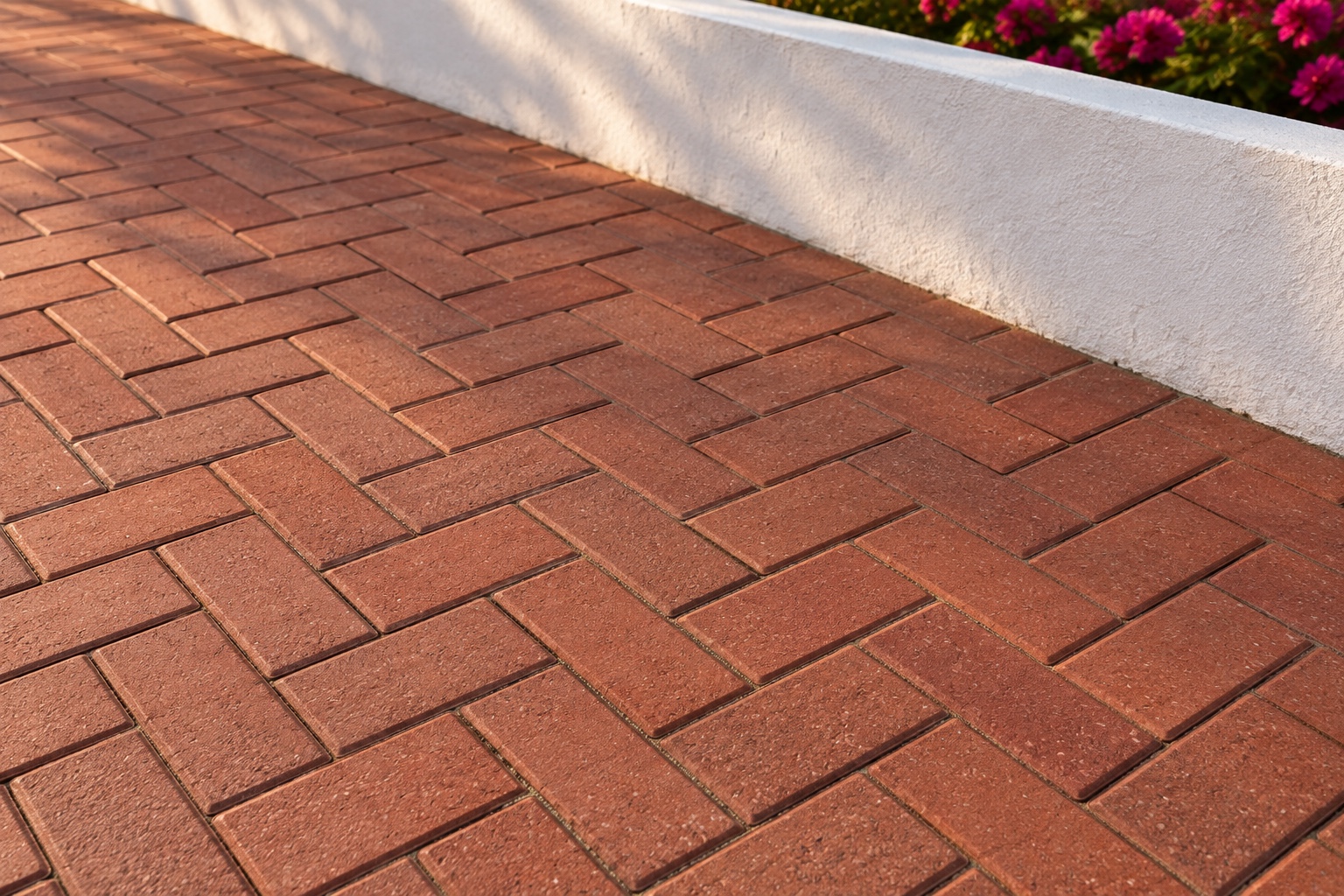
Missing Paver Joint Sand: What to Check Before Sealing
Assess recurring joint sand loss before sealing concrete pavers. Compare treatment scope, product compatibility and the checks that belong in your walkthrough.
Read the article →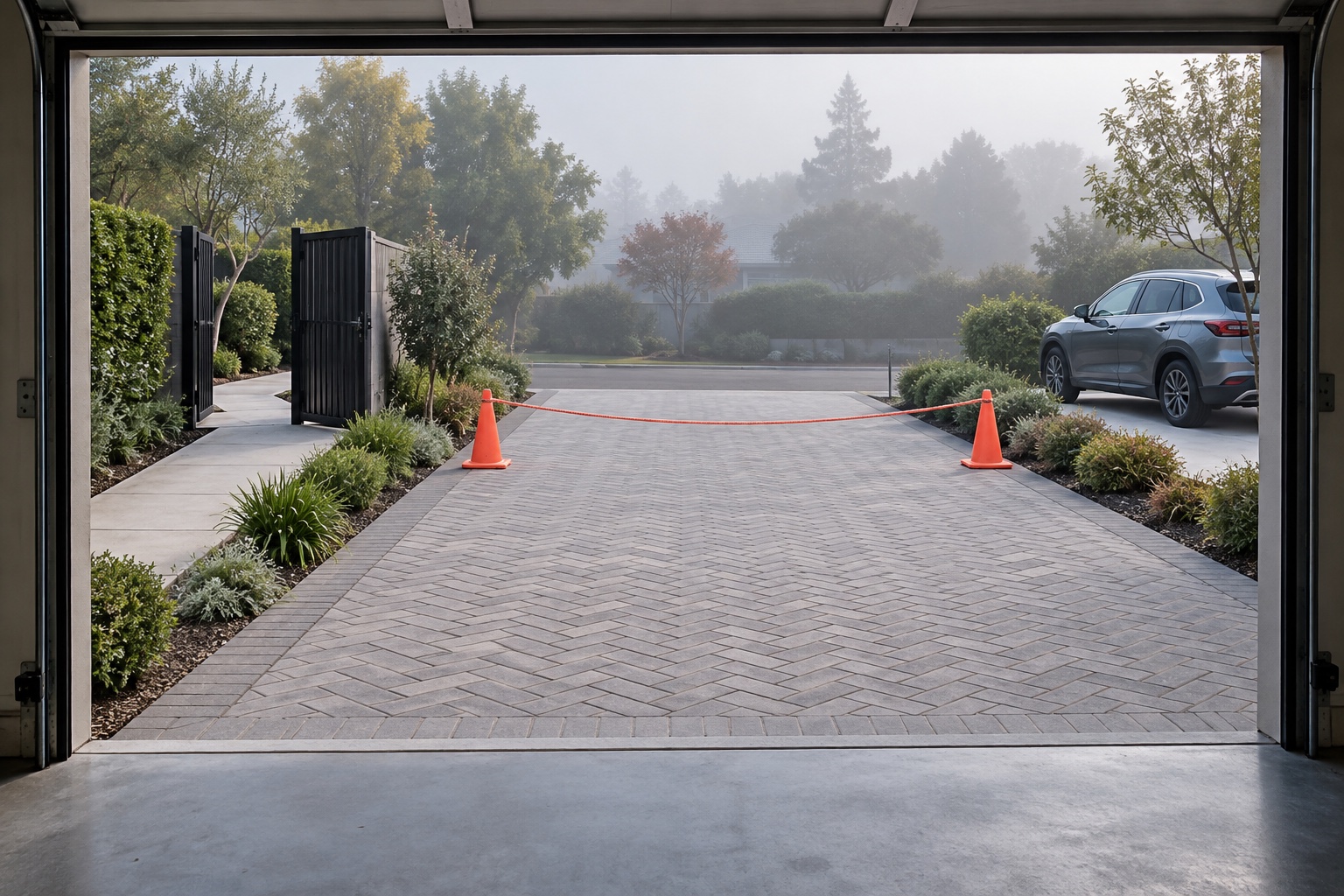
Using Your Driveway After Paver Sealing: Plan the Return to Service
Plan parking and household access after concrete paver sealing. Separate foot and vehicle reopening, account for weather, and get clear installer instructions.
Read the article →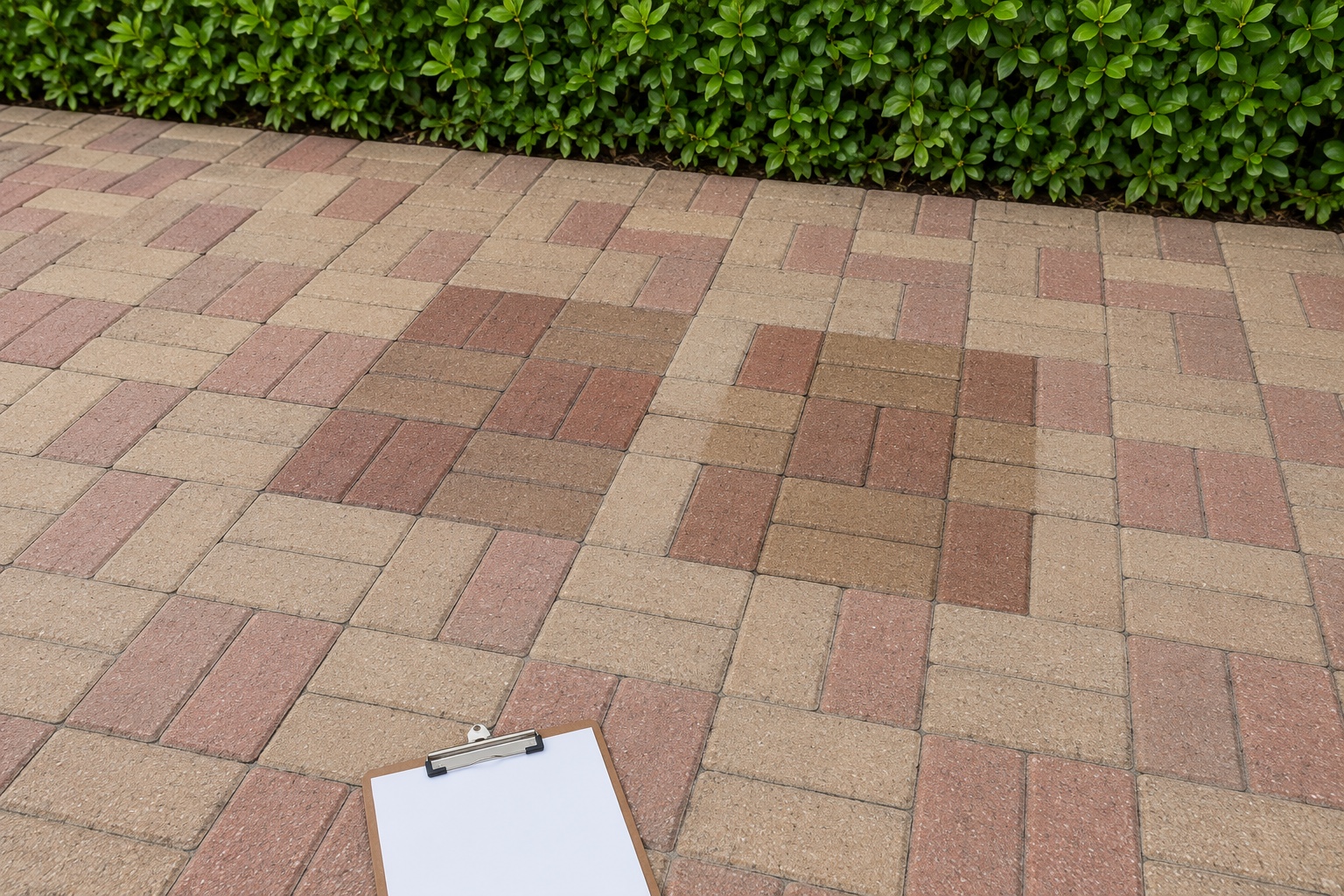
Choosing a Paver Sealer Finish: Approve a Test Area First
Choose a finish for concrete pavers by comparing cured color and sheen on your own property, checking coating compatibility and recording a clear approval scope.
Read the article →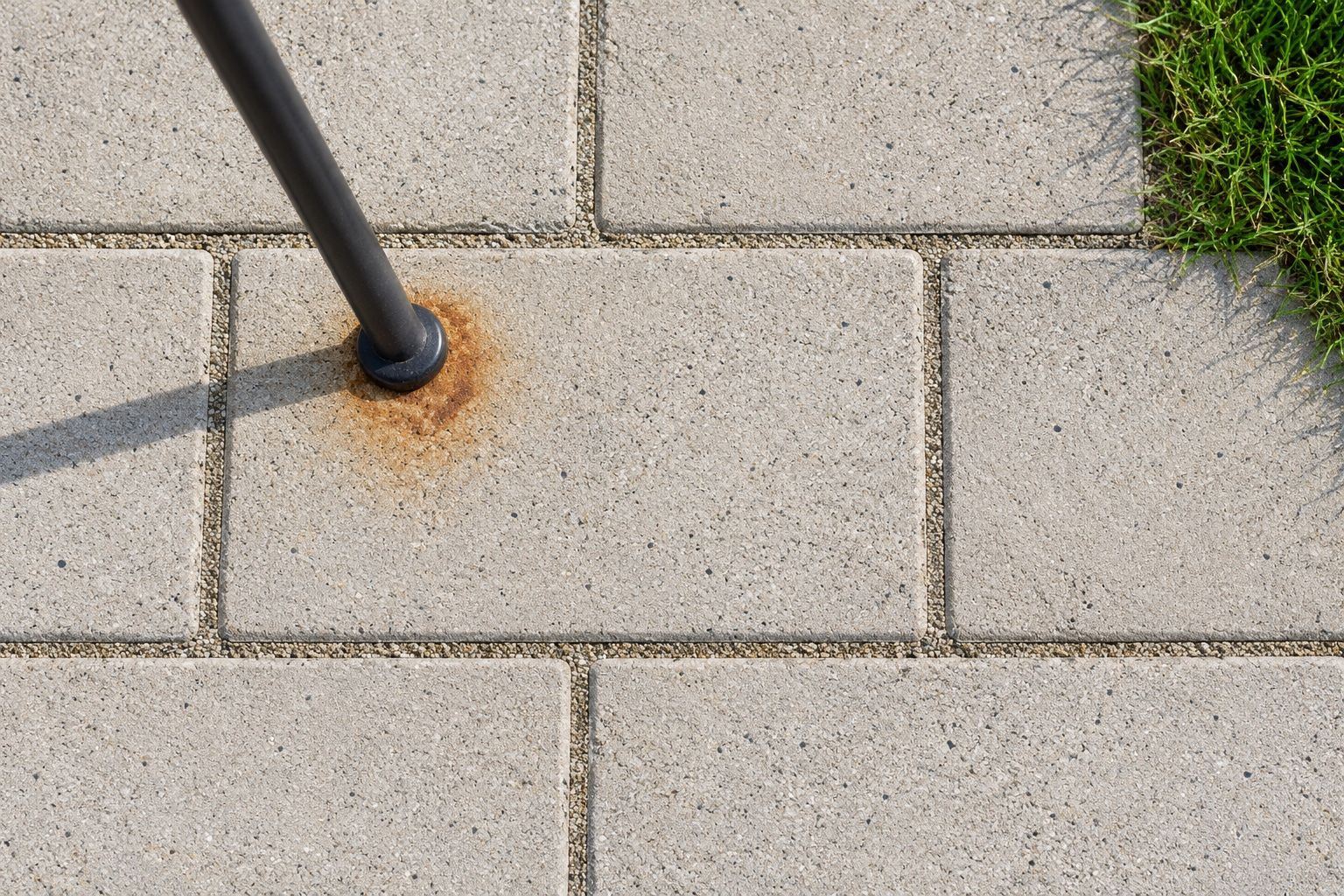
Rust Stains on Pavers: What to Check Before Sealing
Check stain patterns, paver material and past treatments before sealing. Learn what a test area can establish and what belongs in a written cleaning scope.
Read the article →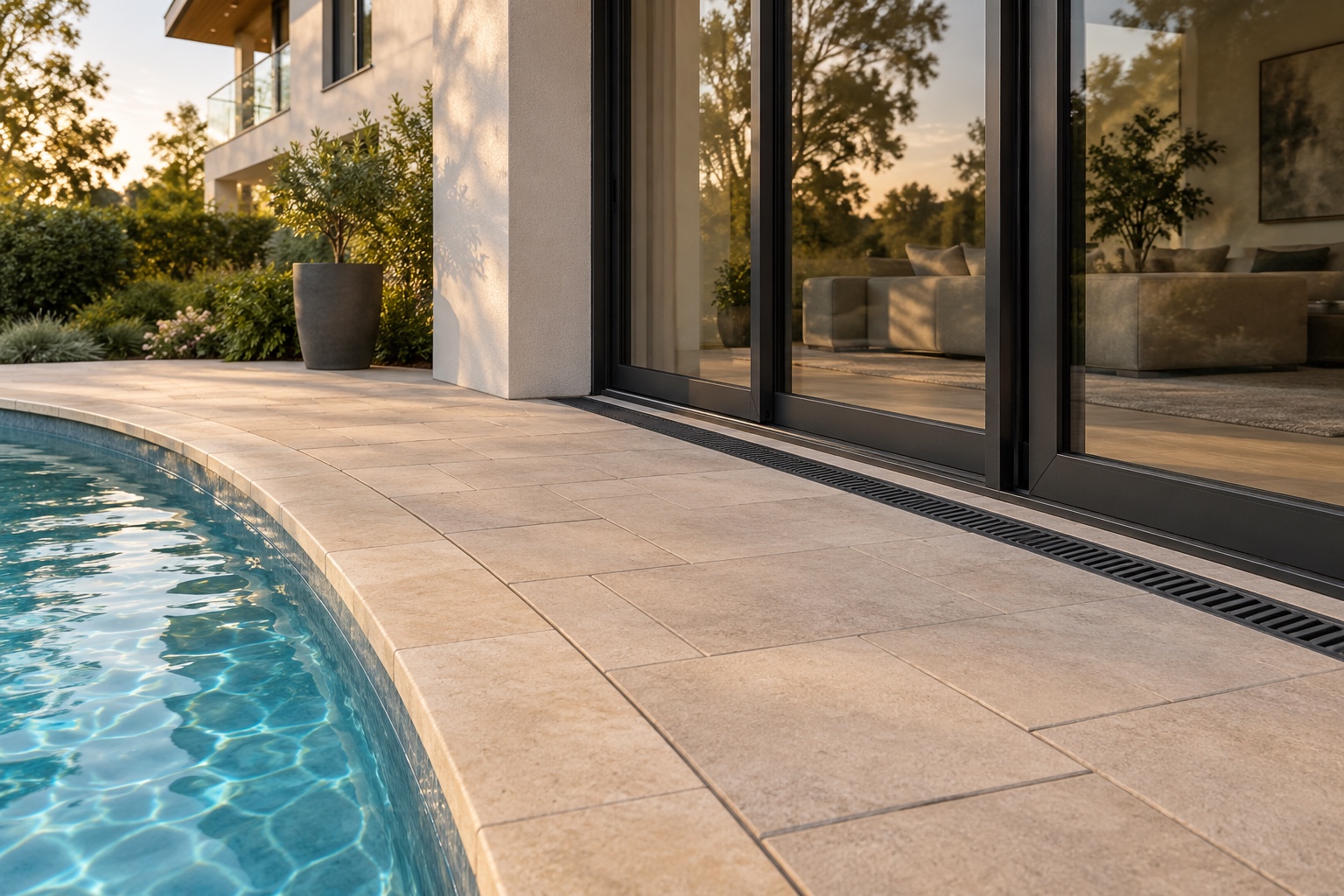
Pool Deck Replacement in Palm Beach Gardens: Lift or Overlay?
Compare lifting old pool deck pavers with an overlay in Palm Beach Gardens. Check heights, drainage, coping and the written scope before choosing a route.
Read the article →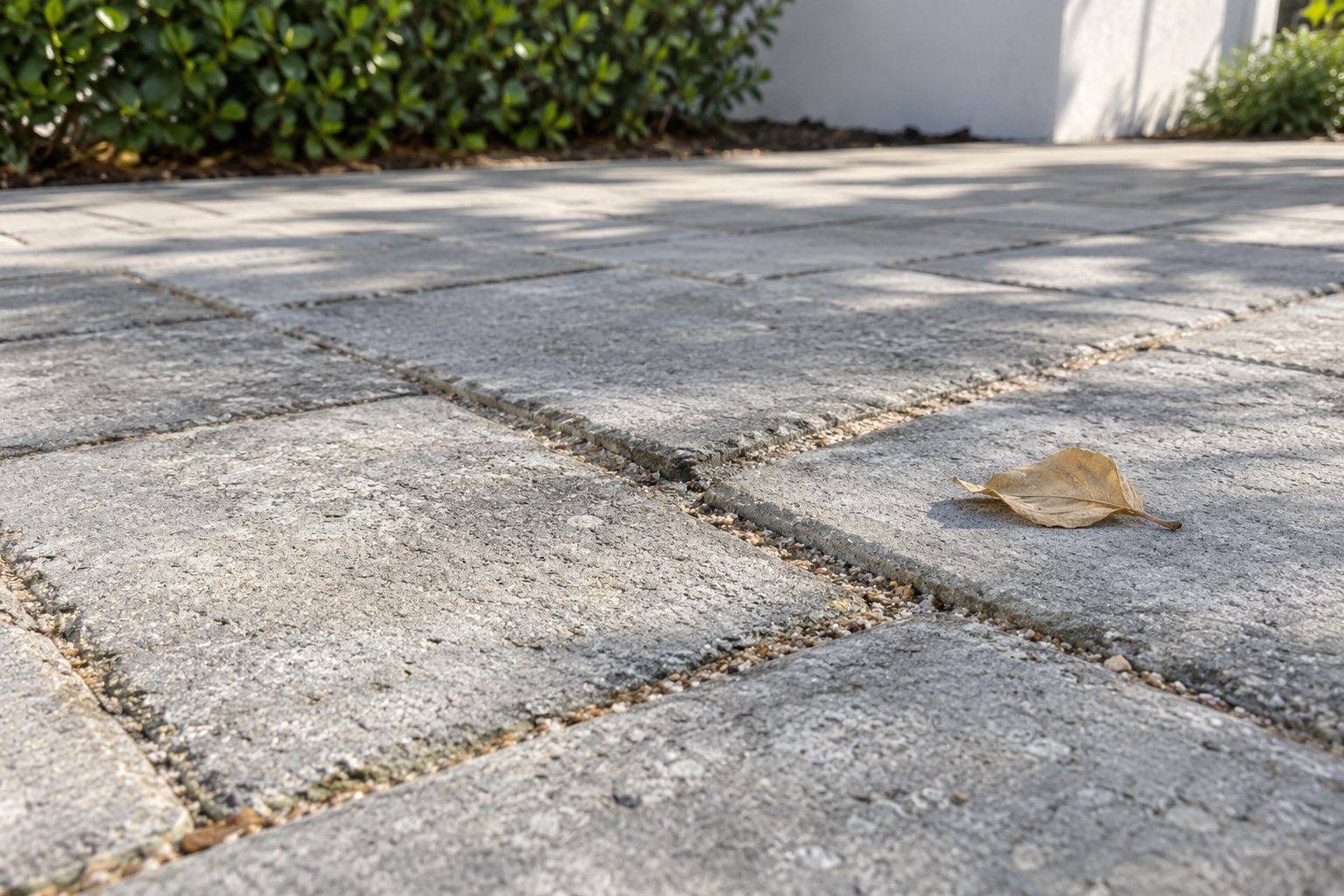
Paver Cleaning in Palm Beach Gardens: Repair First or Wash First?
Decide whether your Palm Beach Gardens pavers need cleaning or localized repair, then compare the cleaning, re-sanding and sealing work in a written proposal.
Read the article →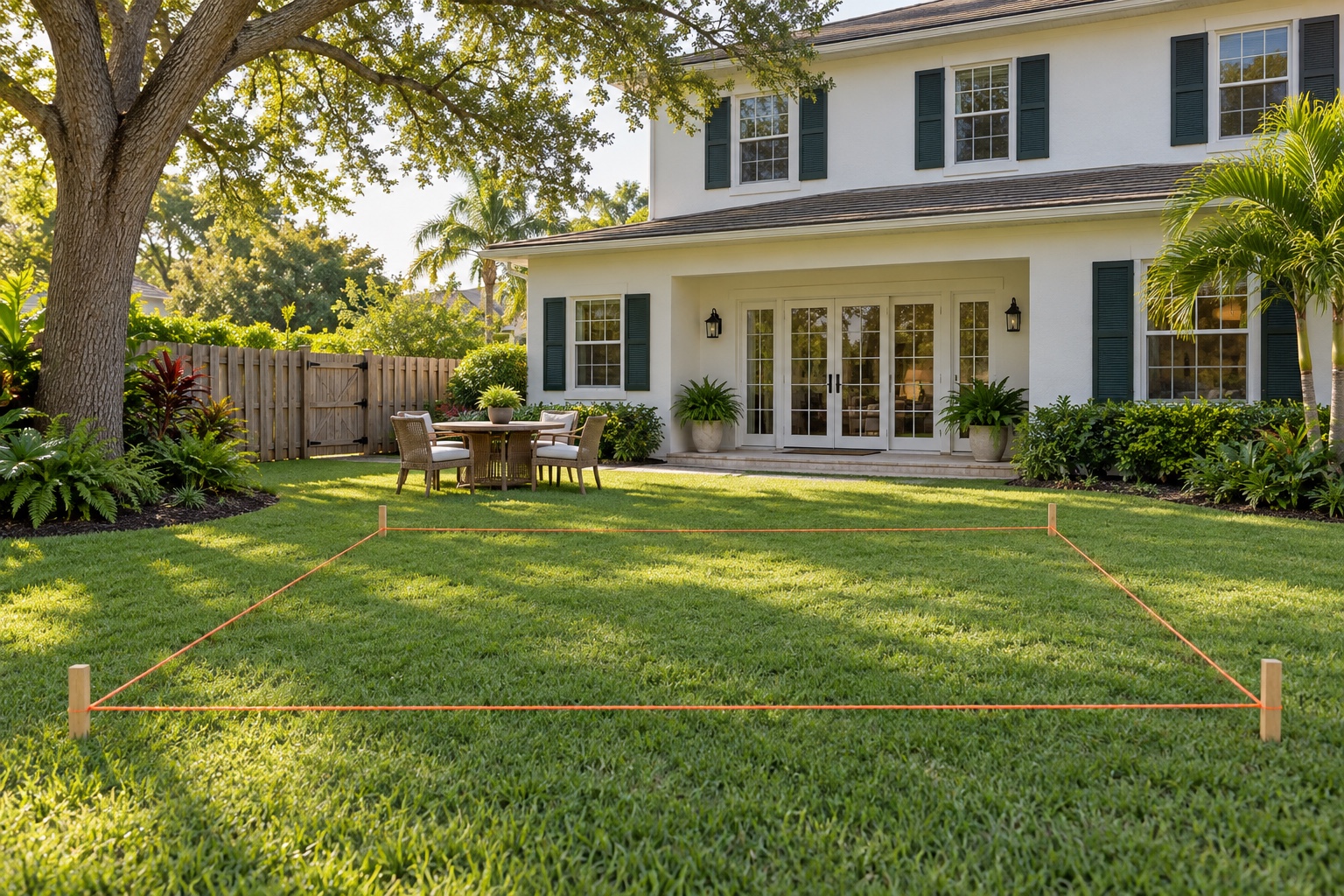
Paver Patio Estimates in Wellington: Compare the Scope
Compare Wellington paver patio estimates by the work included: measured area, removal, drainage, access, materials, approvals and a clear written proposal.
Read the article →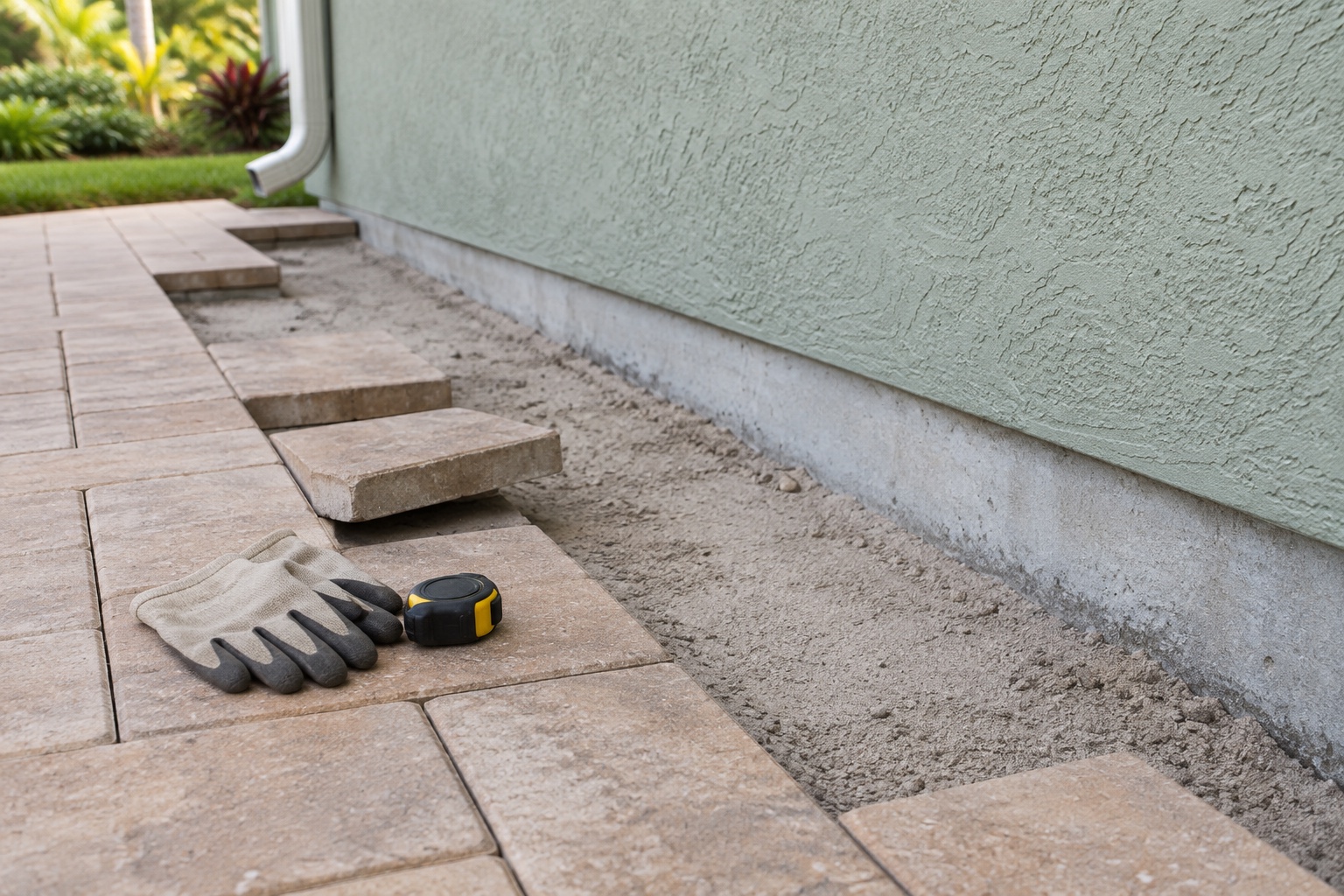
Jupiter Paver Patios: Plan for the Termite Certificate
Plan a Jupiter paver patio with the termite certificate in mind: coordinate house-edge work, provider access, written responsibilities and completion records.
Read the article →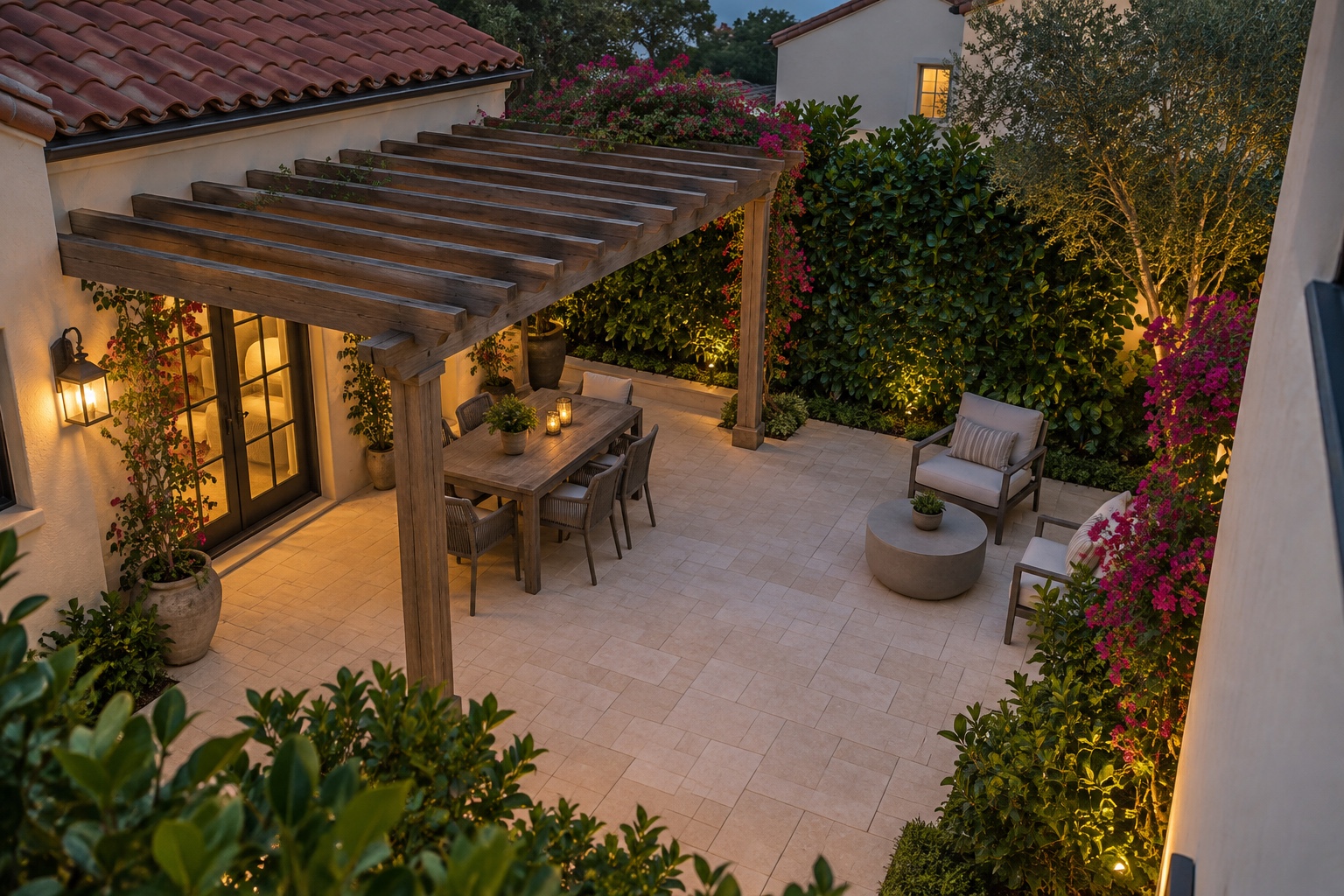
Historic Patio Review in West Palm Beach: Does a Pergola Change It?
Planning a historic patio in West Palm Beach? Compare Staff Level 1 and Staff Level 2 review, and settle pergola details ahead of material orders.
Read the article →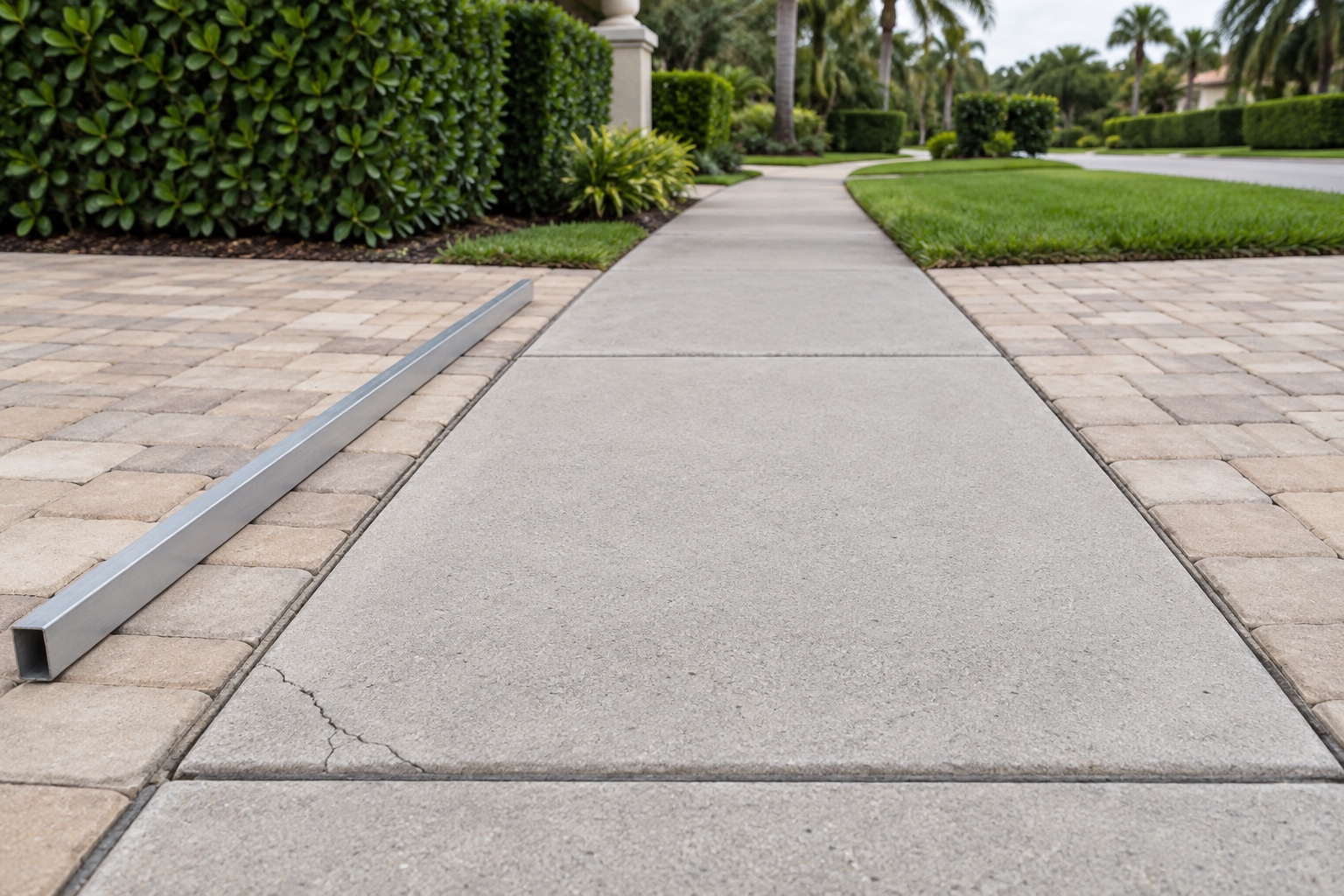
Sidewalk-Panel Replacement in Jupiter: Why the Whole Slab?
See why a Jupiter sidewalk quote may cover a whole panel for a cracked corner, how driveway levels affect the scope, and what lawn restoration should include.
Read the article →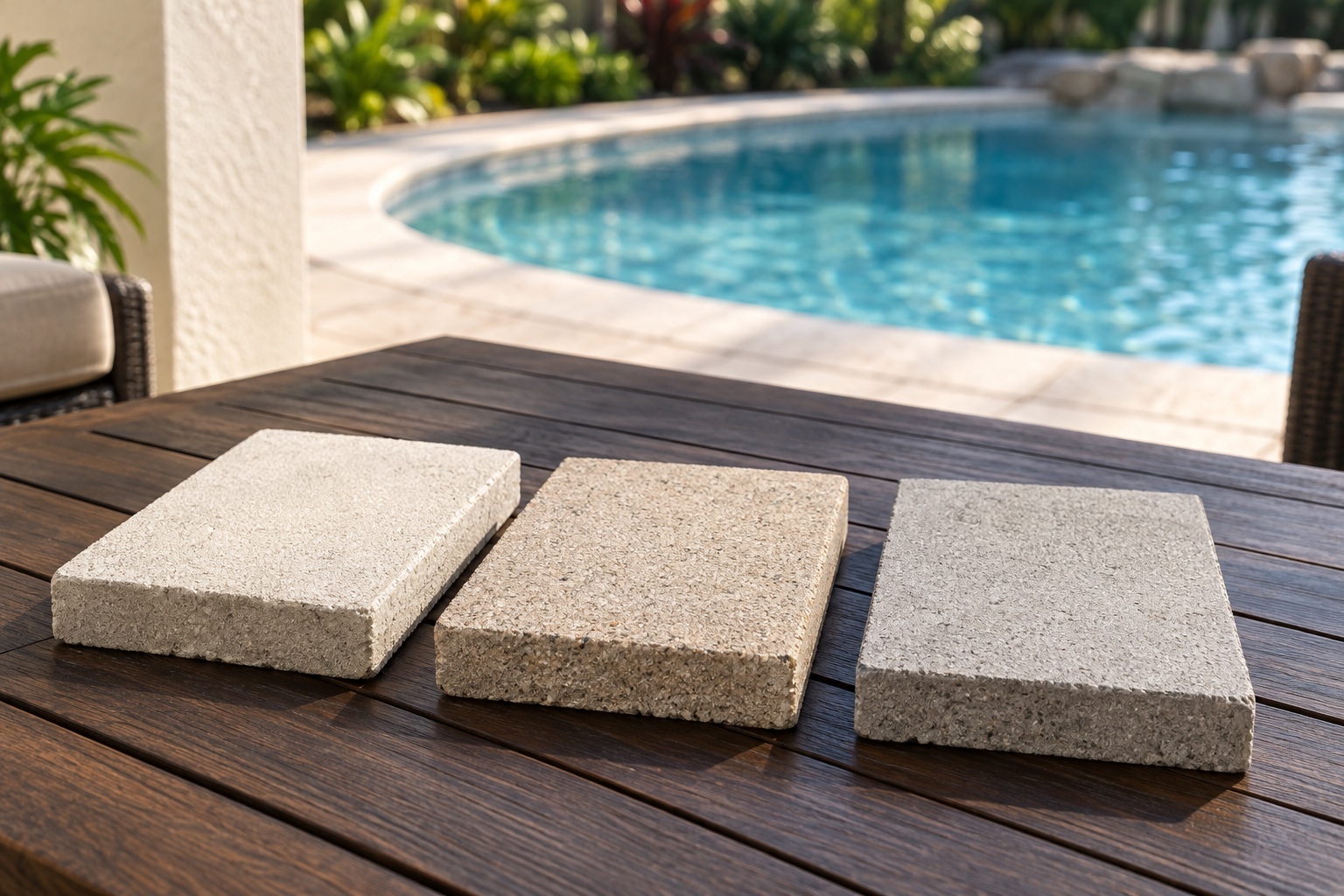
HOA Review for Pool Deck Pavers in Palm Beach Gardens
Choose pool deck pavers within your HOA's palette in Palm Beach Gardens. Prepare a consistent plan, address a written denial and document material changes.
Read the article →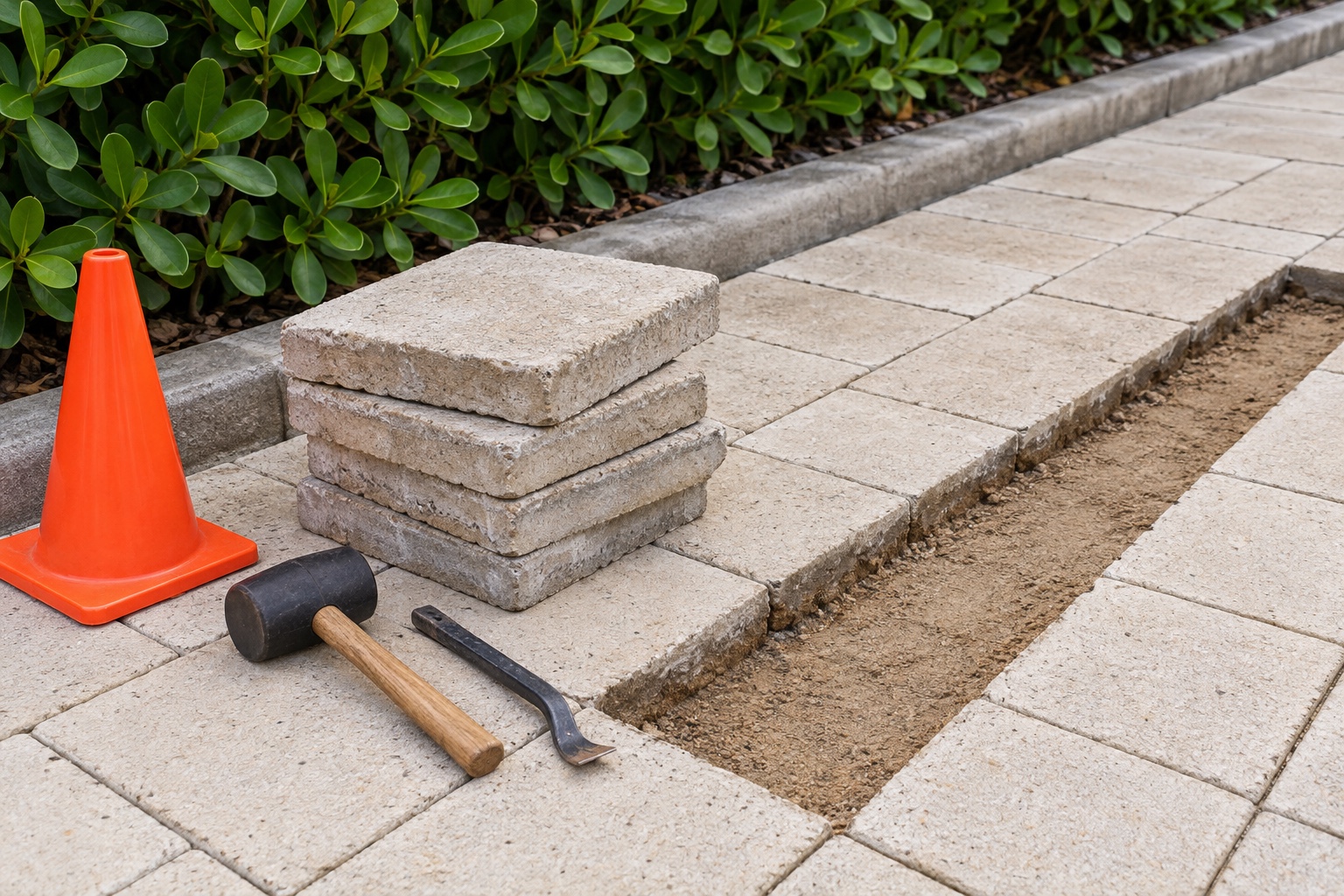
Boynton Beach Pavers: Who Pays When the City Needs Access?
Planning driveway pavers in Boynton Beach? Understand owner restoration duties, the City's HHA guidance, and what to include in a future repair scope.
Read the article →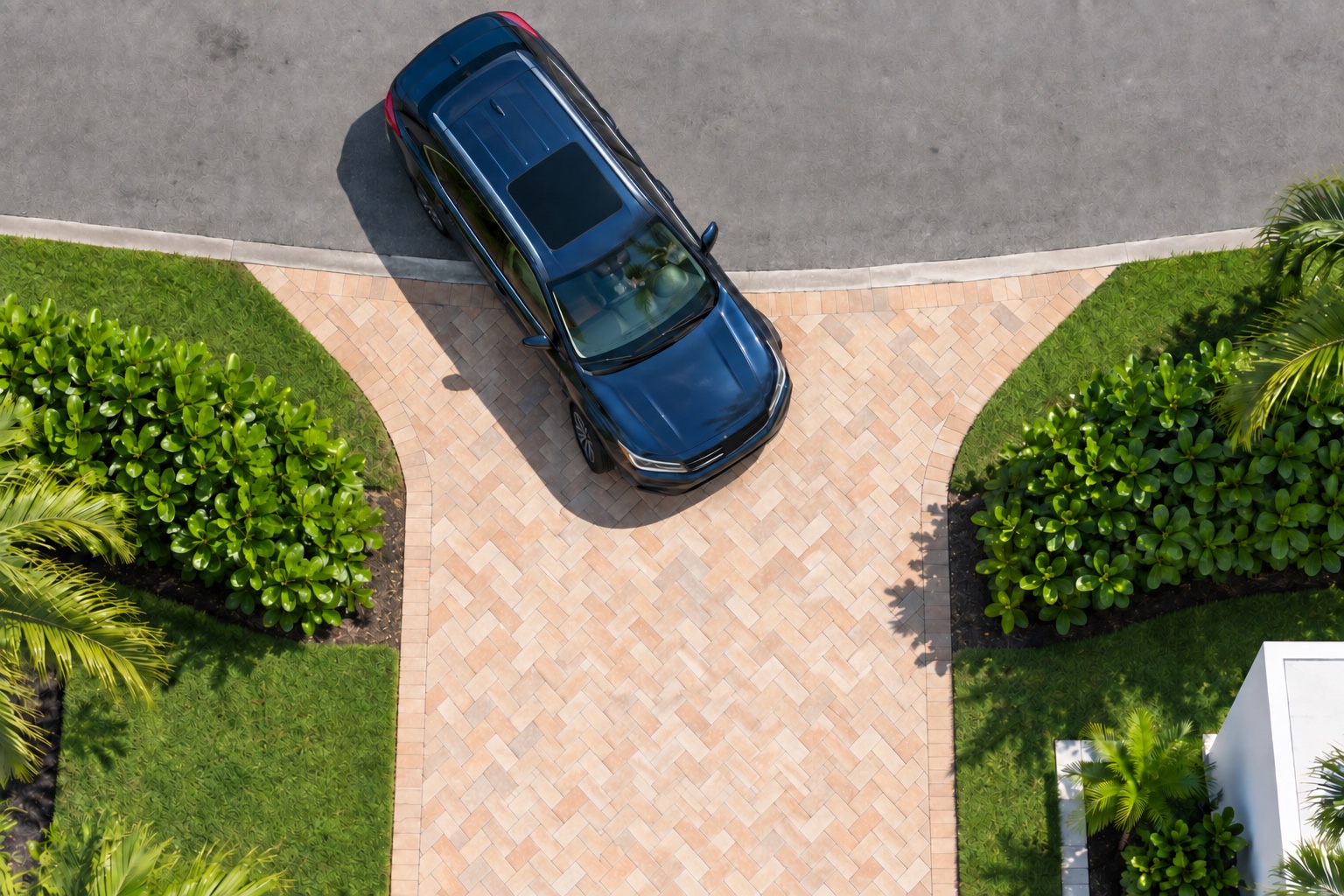
Boynton Beach Driveway Pavers: Keep the 5-by-10-Foot Flare
Replacing a Boynton Beach driveway with pavers? Plan the 5-by-10-foot flare, borders, edge support and total scope before comparing estimates.
Read the article →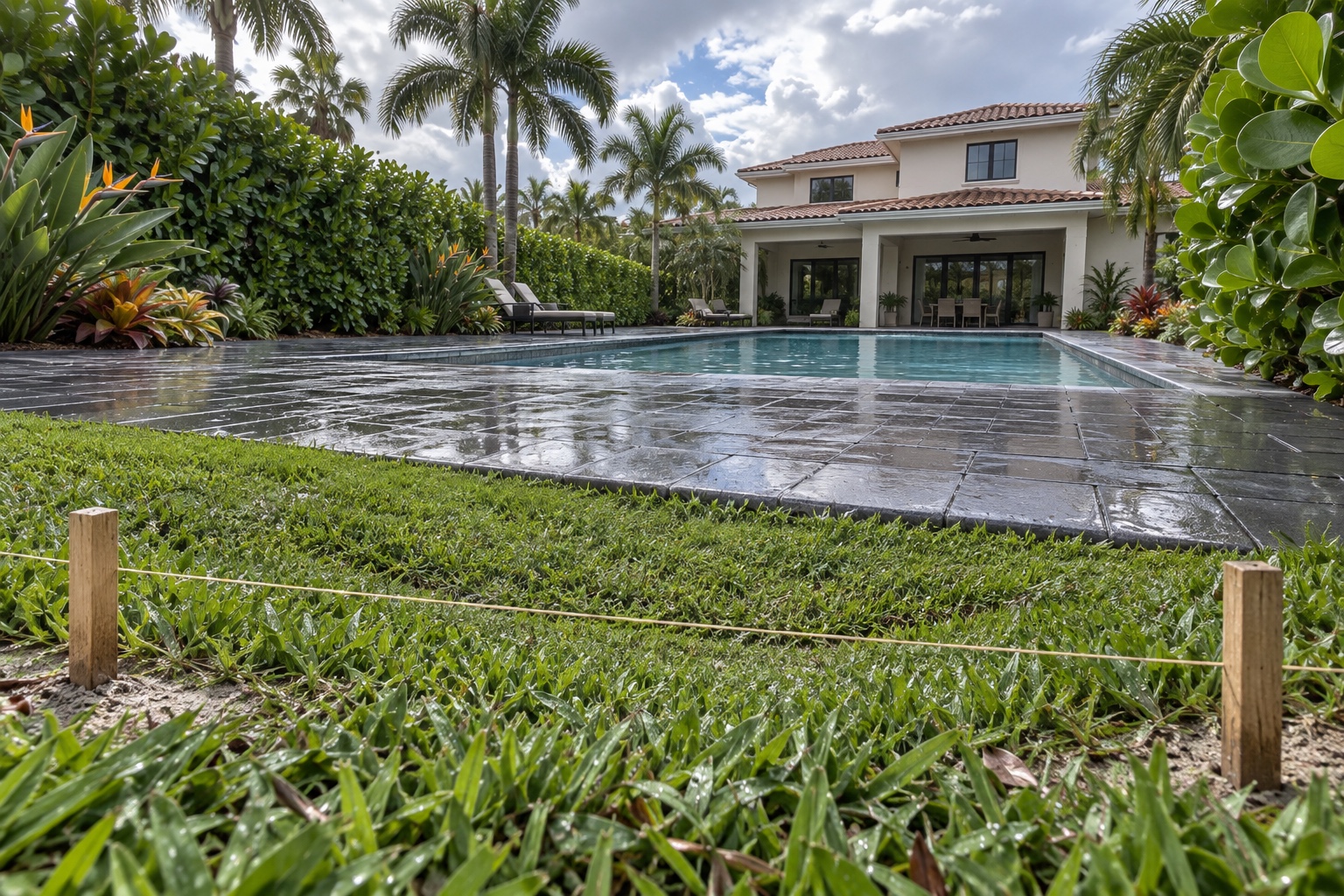
Pool Deck Pavers in Jupiter: Where Will the Water Go?
Expanding a pool deck in Jupiter? Understand boundary grading, notarized certification and what belongs in your application before choosing the finish.
Read the article →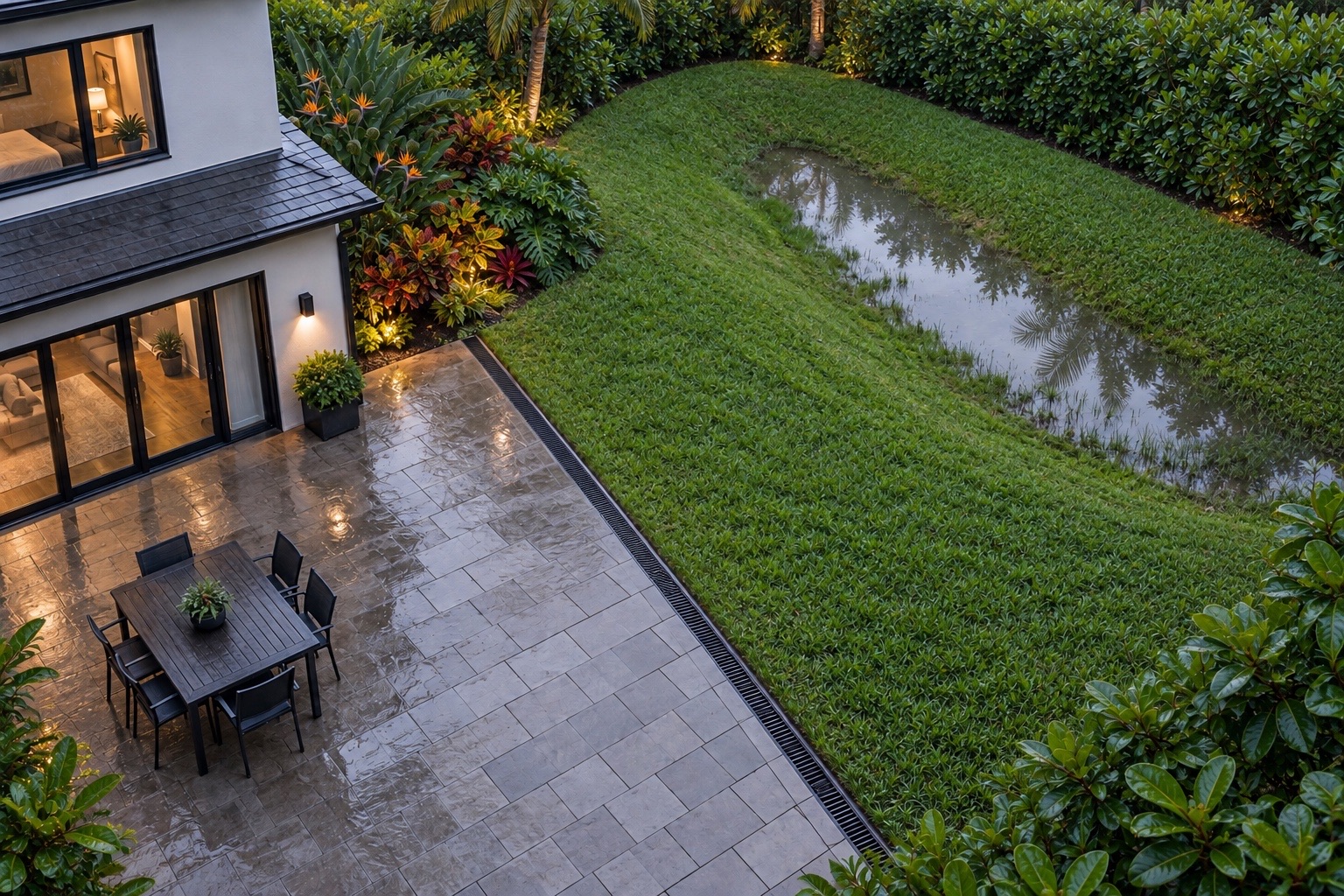
Patio Pavers in Boynton Beach: The 800-Square-Foot Decision
Planning patio pavers in Boynton Beach? Learn how the 800-square-foot threshold, water management and city requirements affect your budget and schedule.
Read the article →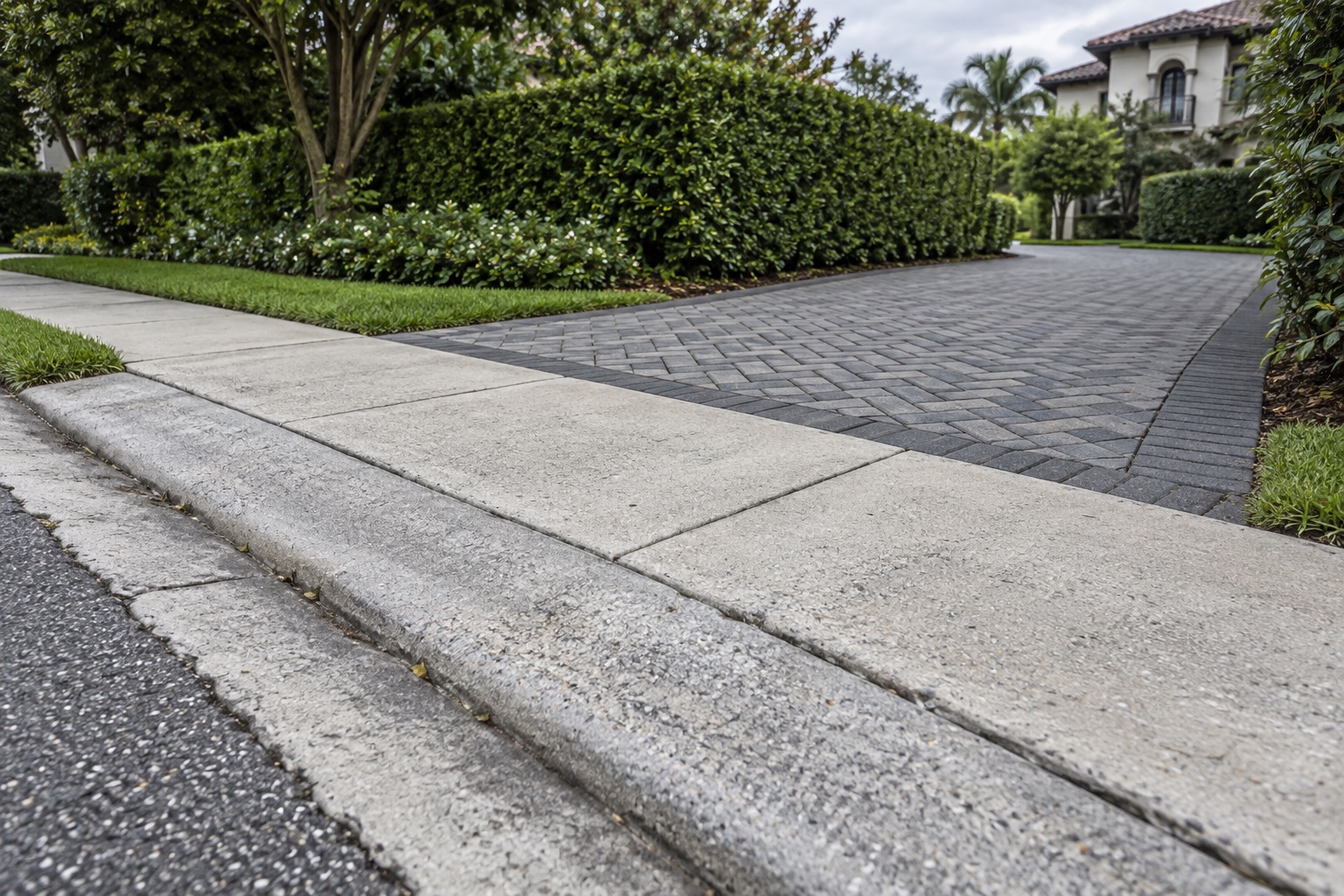
Driveway Pavers in Boca Raton: Two Rulebooks, Not One
Planning driveway pavers in Boca Raton? Understand city driveway standards, HOA review limits under Florida law, and how to prepare both approval packages.
Read the article →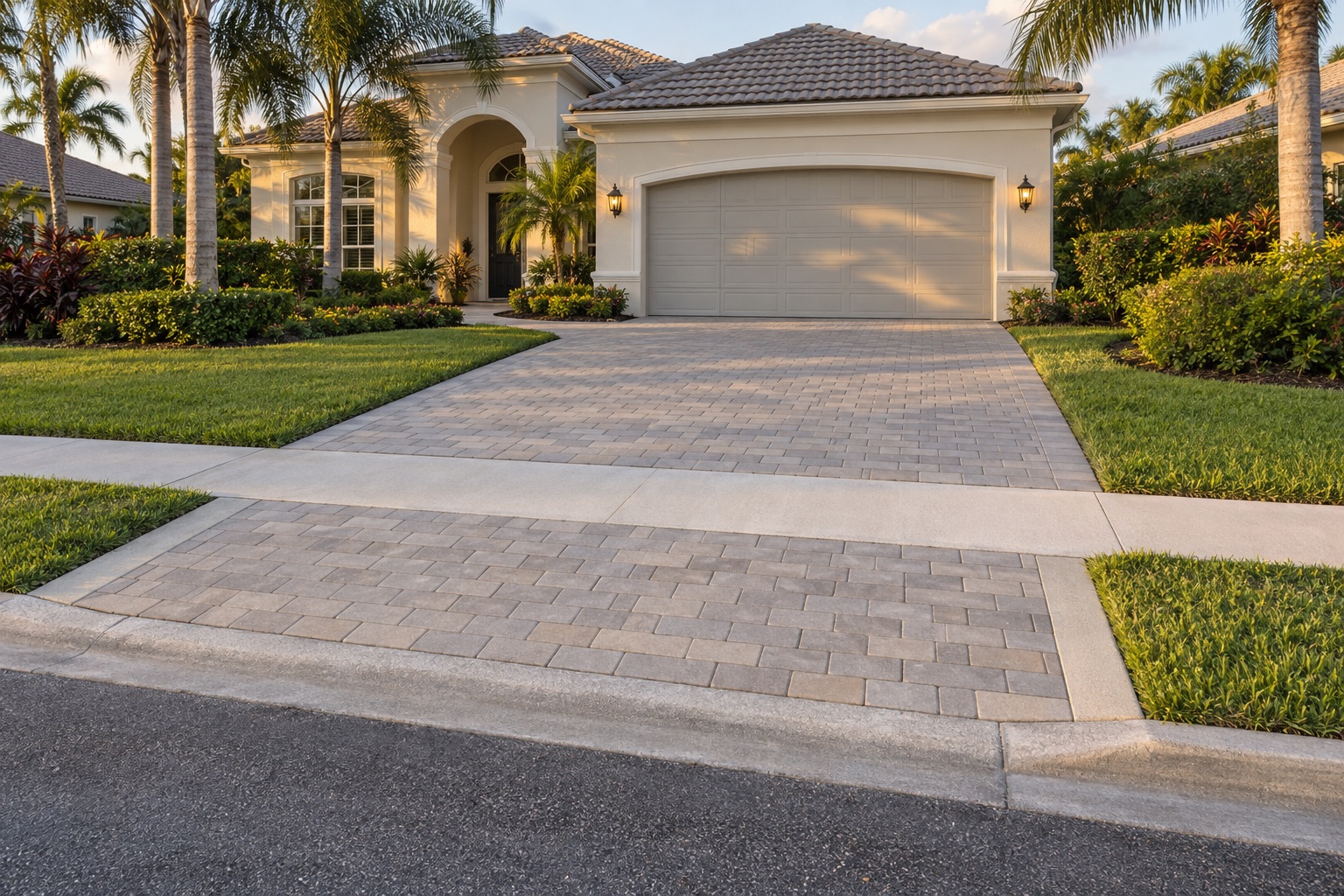
Driveway Pavers in Jupiter: The Right-of-Way Section Is a Different Build
Driveway pavers in Jupiter need separate plans for private property and the town right-of-way. Learn what ARB review, permits, drainage and restoration involve.
Read the article →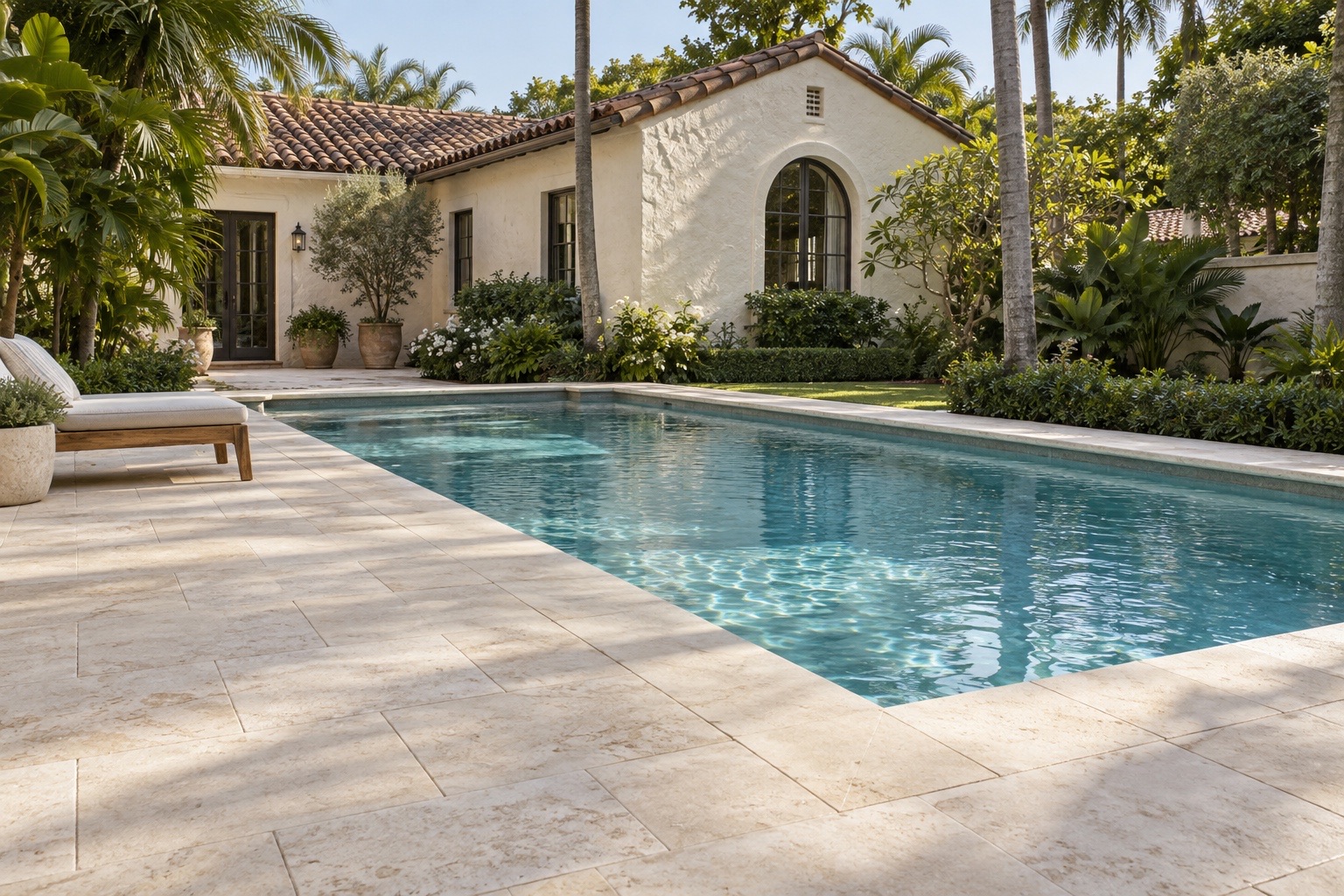
Pool Deck Pavers in West Palm Beach: What Comes Before the Permit?
Plan pool deck pavers in West Palm Beach with the historic review step first, then permits, material details, drainage, and a clearly defined scope.
Read the article →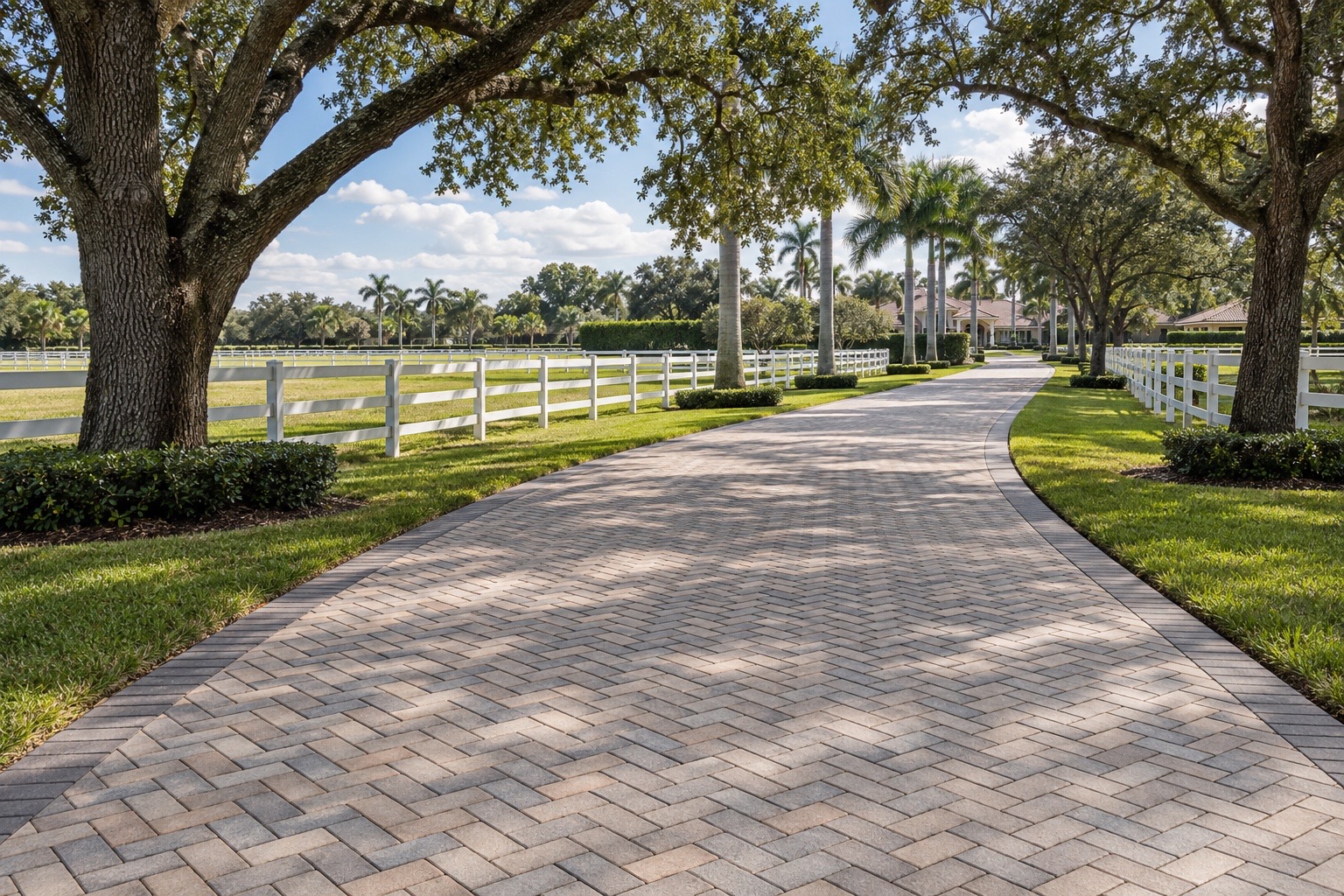
Wellington Driveway Pavers for Acreage and Horse Trailers
Plan driveway pavers in Wellington for an acreage property, with guidance on engineering permits, trailer loads, base depth, edge support, and drainage.
Read the article →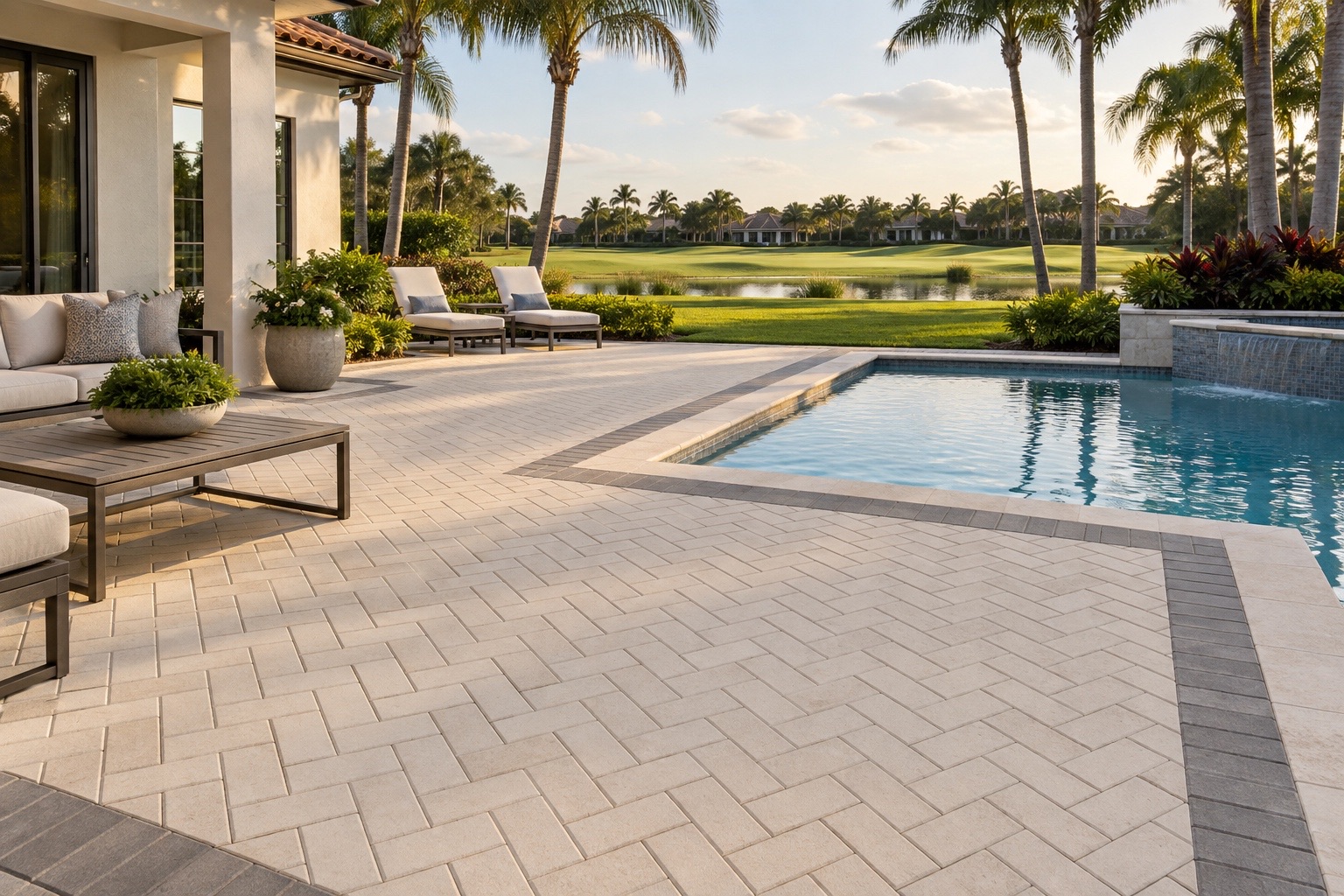
Patio Pavers in Palm Beach Gardens: Plan Before You Build
Plan patio pavers in Palm Beach Gardens with guidance on HOA approval, city permits, proper base preparation and material choices for a lasting patio.
Read the article →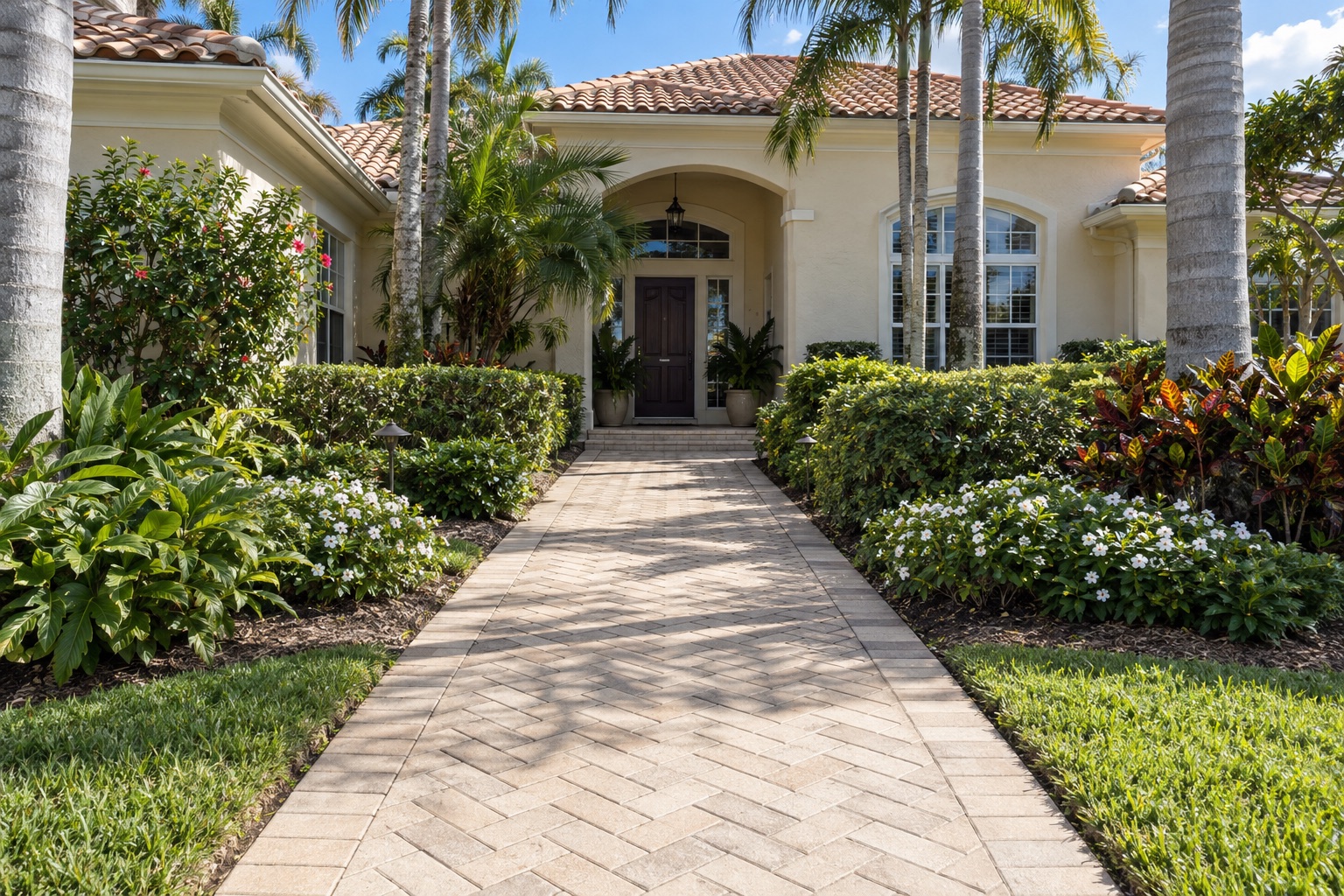
Paver Walkways in Palm Beach County and the Cost of Shortcuts
Plan walkway pavers in Palm Beach County with clear guidance on base depth, edges, drainage, local permits and what an itemized installation quote should cover.
Read the article →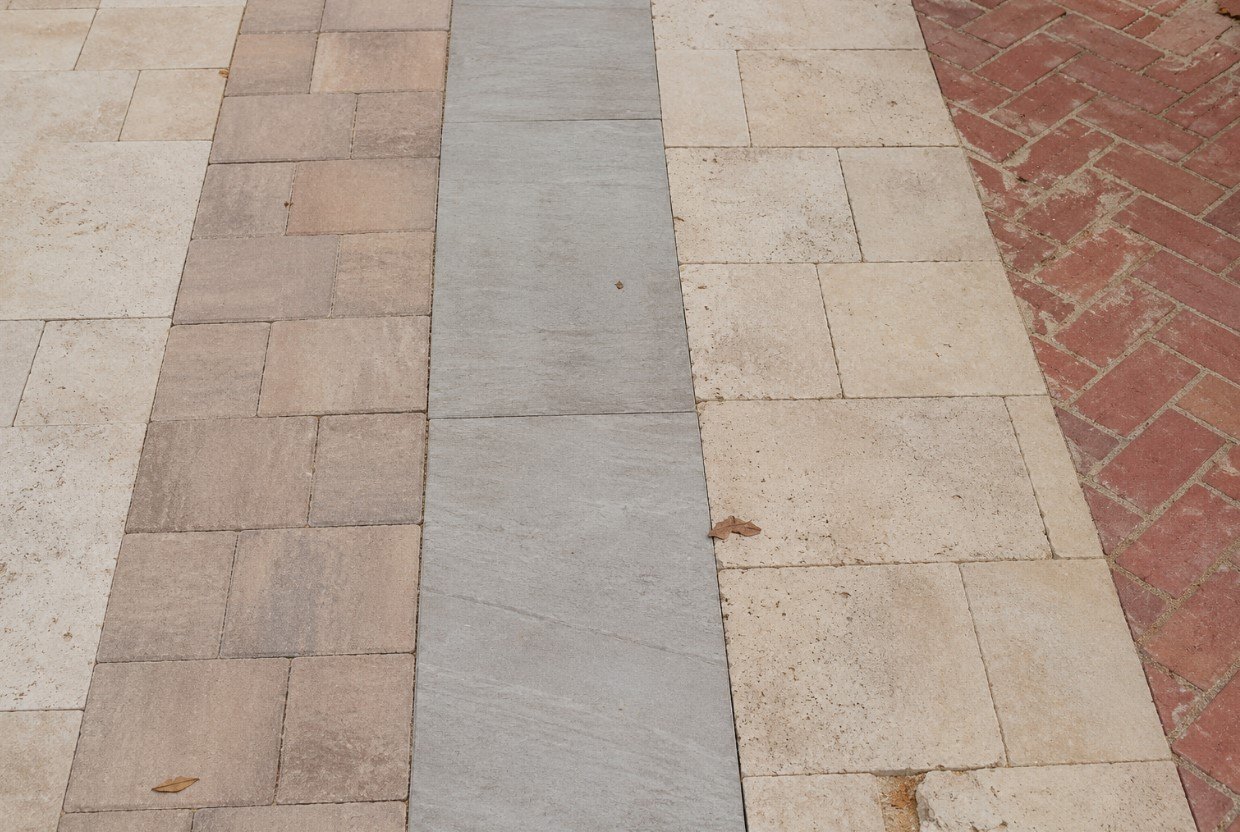
How to Choose Pavers for South Florida: Materials Compared
Choose pavers for a South Florida pool deck, patio or driveway by checking the exact product, surface samples, drainage, installation scope and care.
Read the article →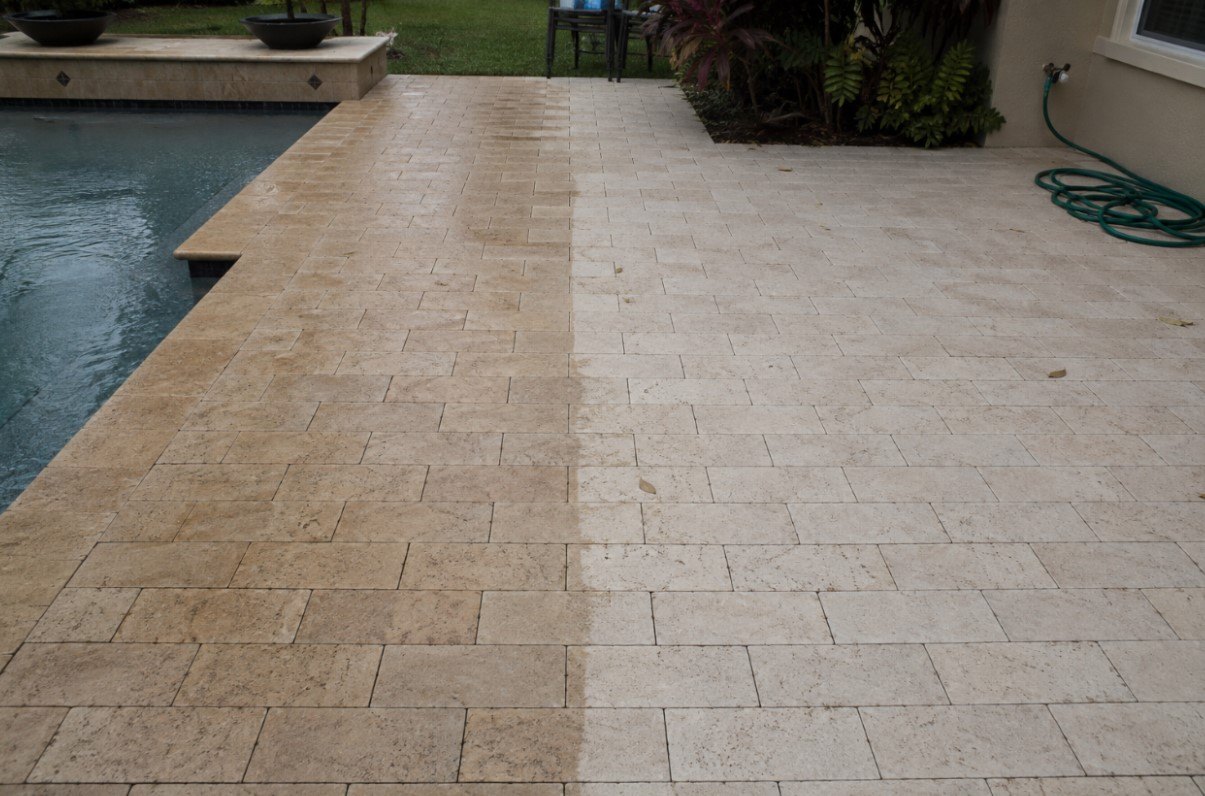
Do Pavers Need to Be Sealed? A South Florida Homeowner's Guide
Do pavers need to be sealed? No, sealing is not required, but it protects color and joints. When to seal, when to skip, and how often, for South Florida homes.
Read the article →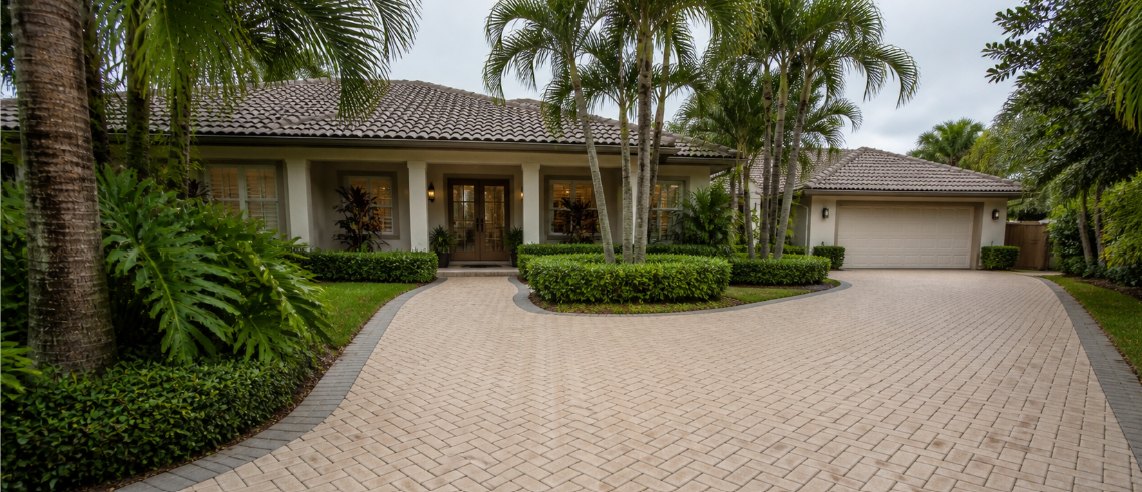
How Long Do Pavers Last? A South Florida Homeowner's Guide
How long do pavers last in South Florida? Often 30 to 50 years or more, if they are installed and cared for right. What shortens their life, and how to extend it.
Read the article →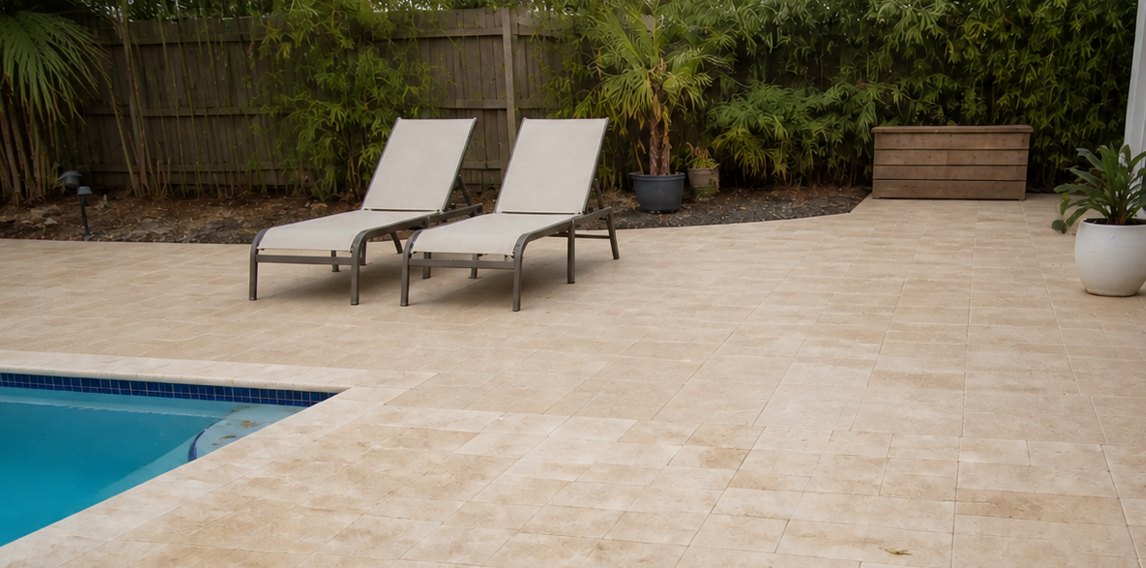
Porcelain vs Travertine Pavers for South Florida Pool Decks
Compare porcelain vs travertine pool deck pavers by outdoor finish, wet and dry samples, sun exposure, care requirements and complete installation scope.
Read the article →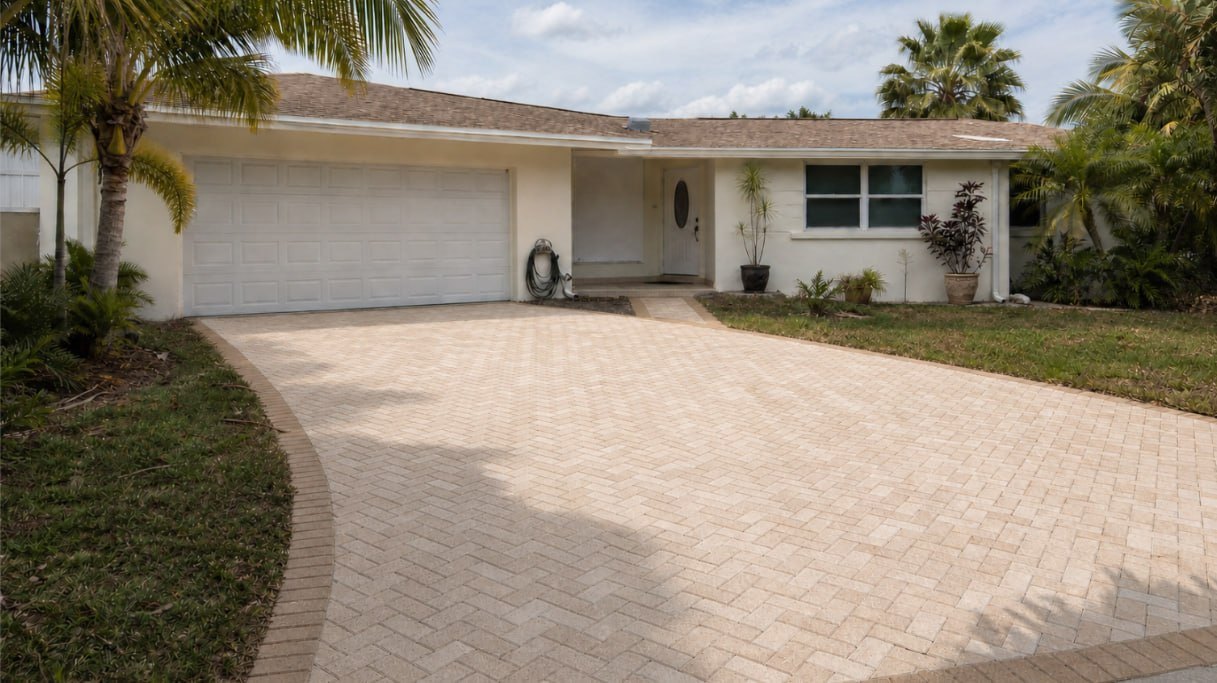
Pavers in South Florida: The Complete Homeowner's Guide
A homeowner's guide to paver driveways, patios, and pool decks in South Florida: choosing materials, colors, and patterns, what makes an installation last, and how to care for it.
Read the article →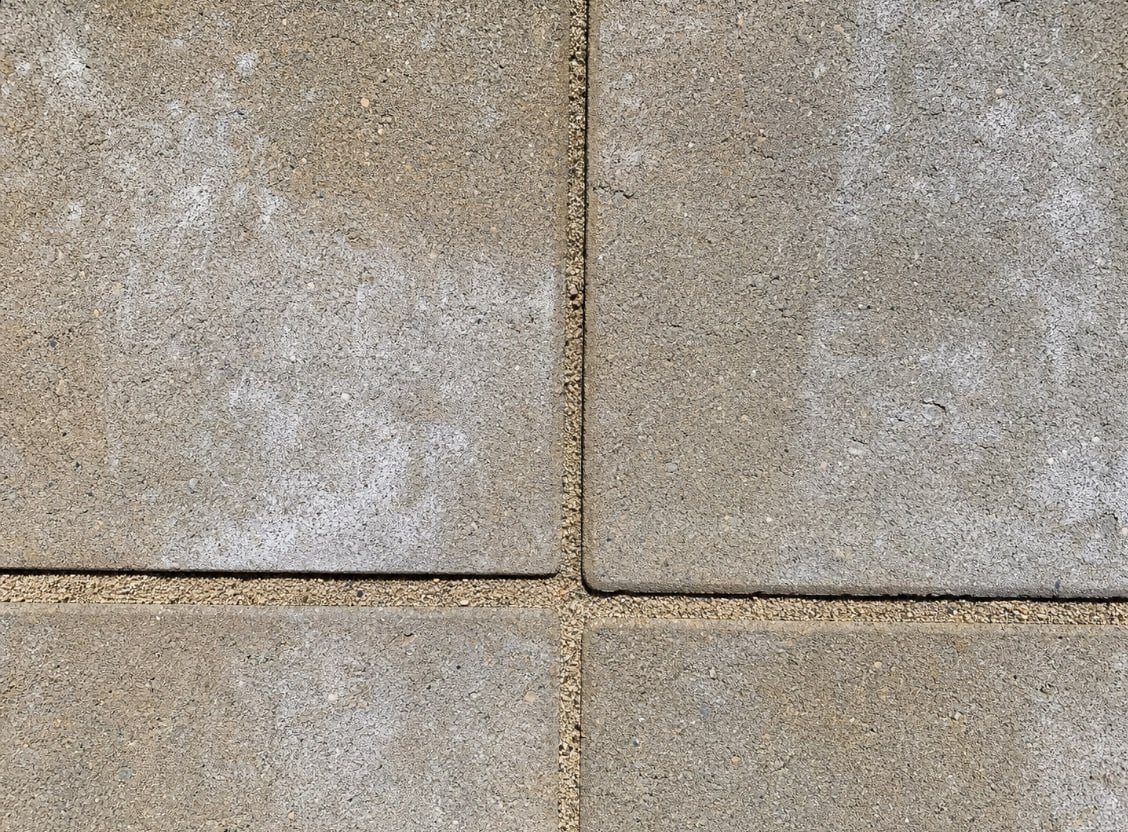
Efflorescence on Pavers: Why the White Haze Appears (South Florida Guide)
That white haze on new pavers is efflorescence, not a defect. A South Florida installer explains the chemistry, why premium colored pavers show it most, and what to do and never do.
Read the article →
Landscape Design Trends 2026: A South Florida Hardscape Brief
The 2026 landscape design trends that matter for Palm Beach and Broward: outdoor rooms, warm neutrals, large-format porcelain, soft layouts, permeable pavers and integrated lighting, read through a coastal, no-freeze, hurricane-drainage lens.
Read the article →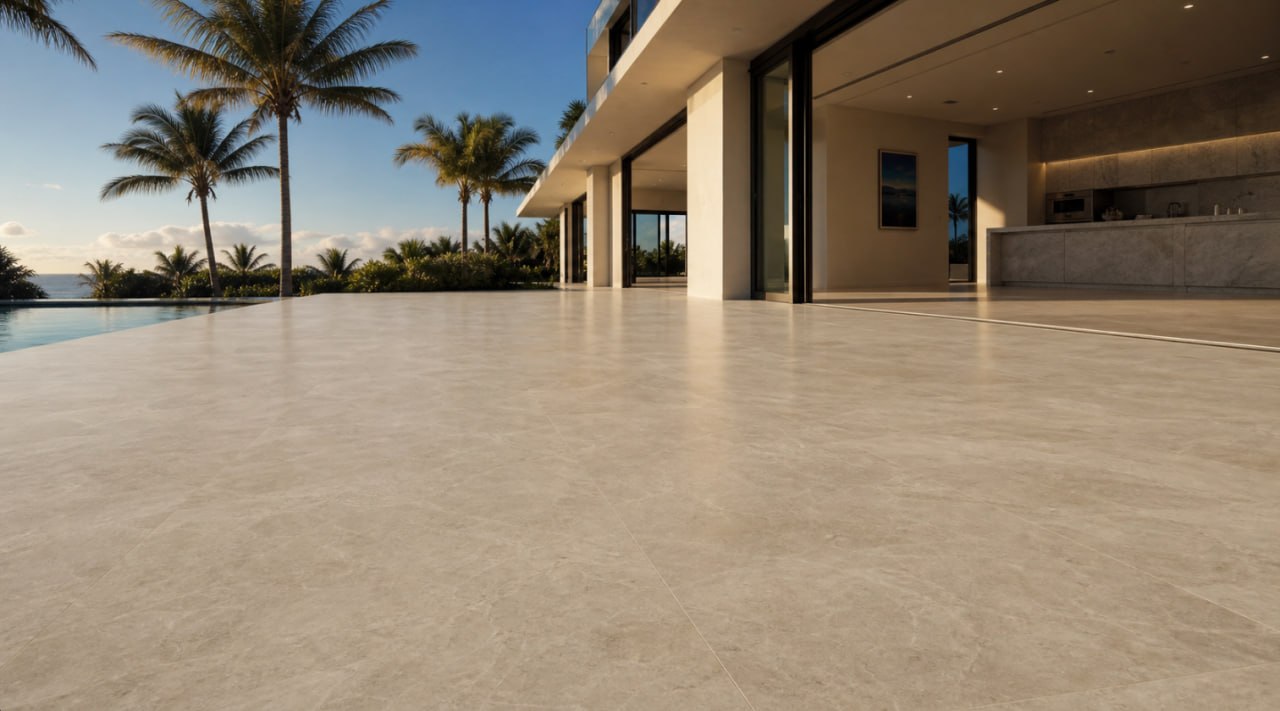
Large Format Porcelain Pavers: The Monolithic Look for Coastal South Florida
A design and material essay on large format porcelain pavers for Broward and Palm Beach: the monolithic slab look, the impervious spec behind coastal performance, and the honest install reality.
Read the article →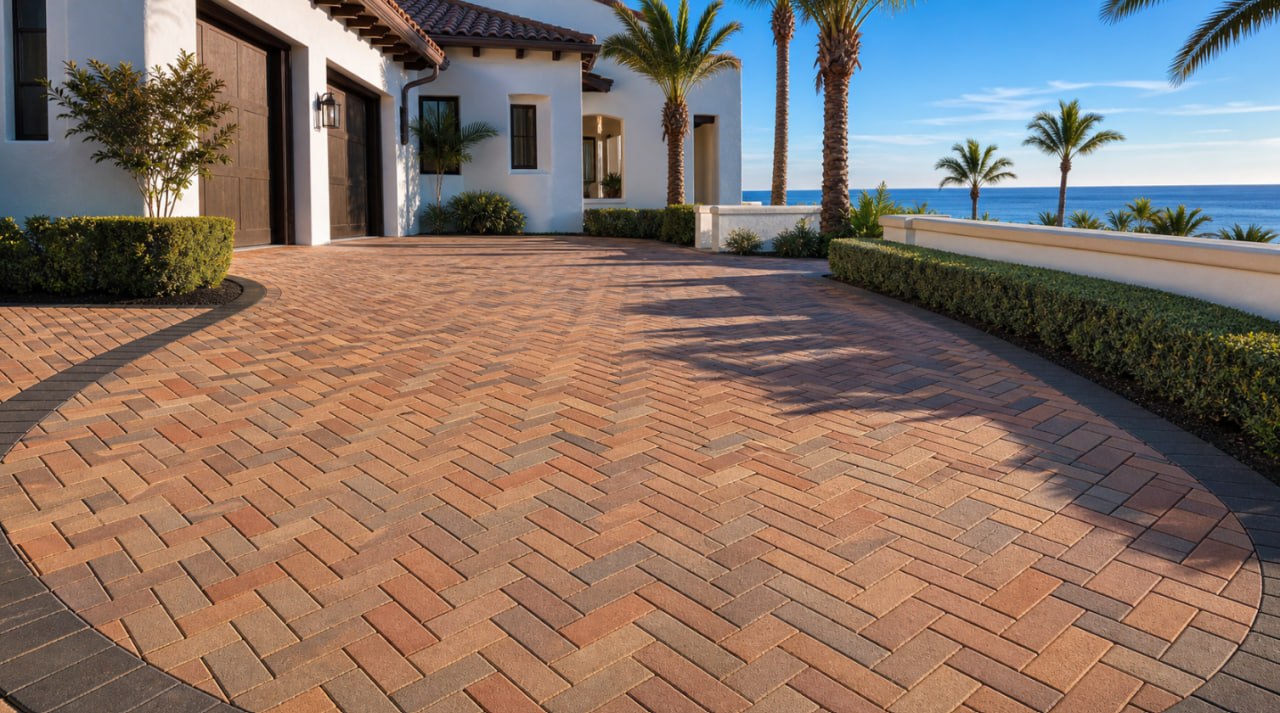
Paver Patterns as a Design Language: Herringbone, Ashlar & the Art of the Laid Surface
A connoisseur's guide to paver patterns for Broward and Palm Beach homes: herringbone, running bond, basketweave and ashlar as a design language, with the structural logic behind each.
Read the article →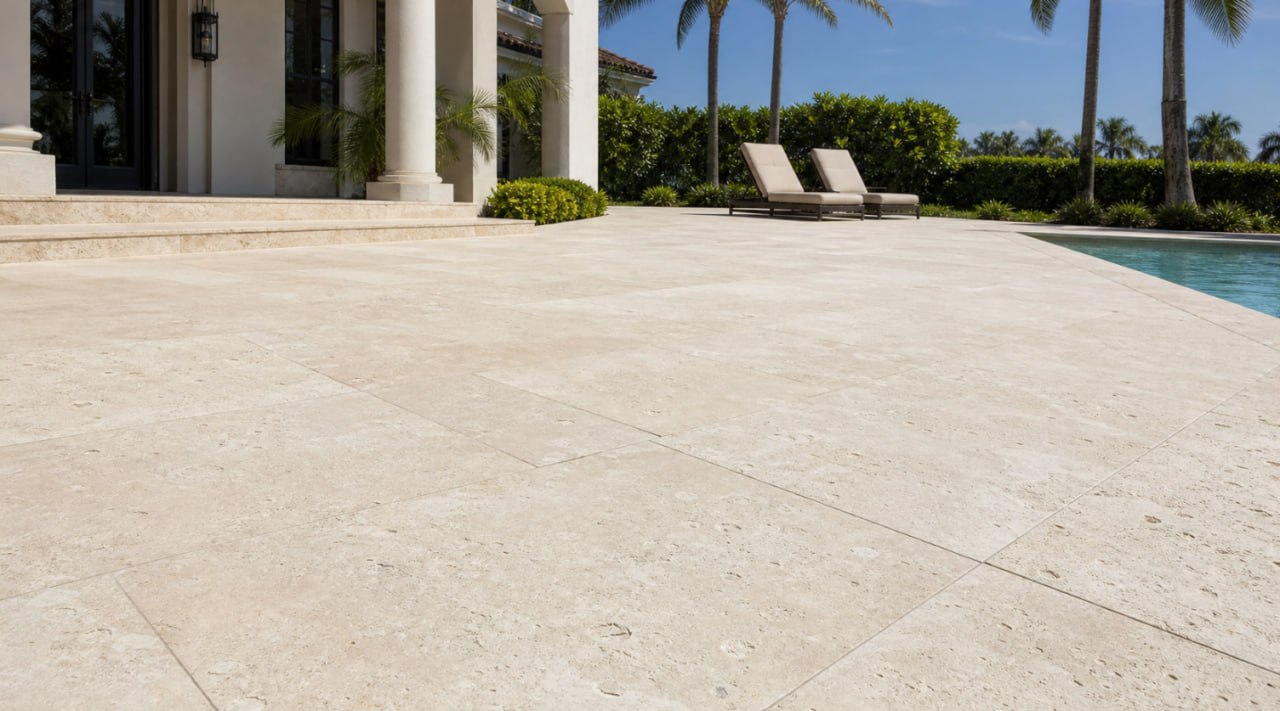
Shellstone Pavers in South Florida: The Native Coastal Stone, Reconsidered
A design and heritage guide to shellstone pavers for Broward and Palm Beach homes: the coquina and keystone story, the three materials sold under one name, and how to select, seal, and live with native coastal stone.
Read the article →
Beige Pavers and the Return of Warm-Toned Stone in South Florida
Why warm-toned pavers, from sand and beige to taupe and clay, are replacing a decade of cool grey in luxury South Florida design, with the color science and coastal light behind the shift.
Read the article →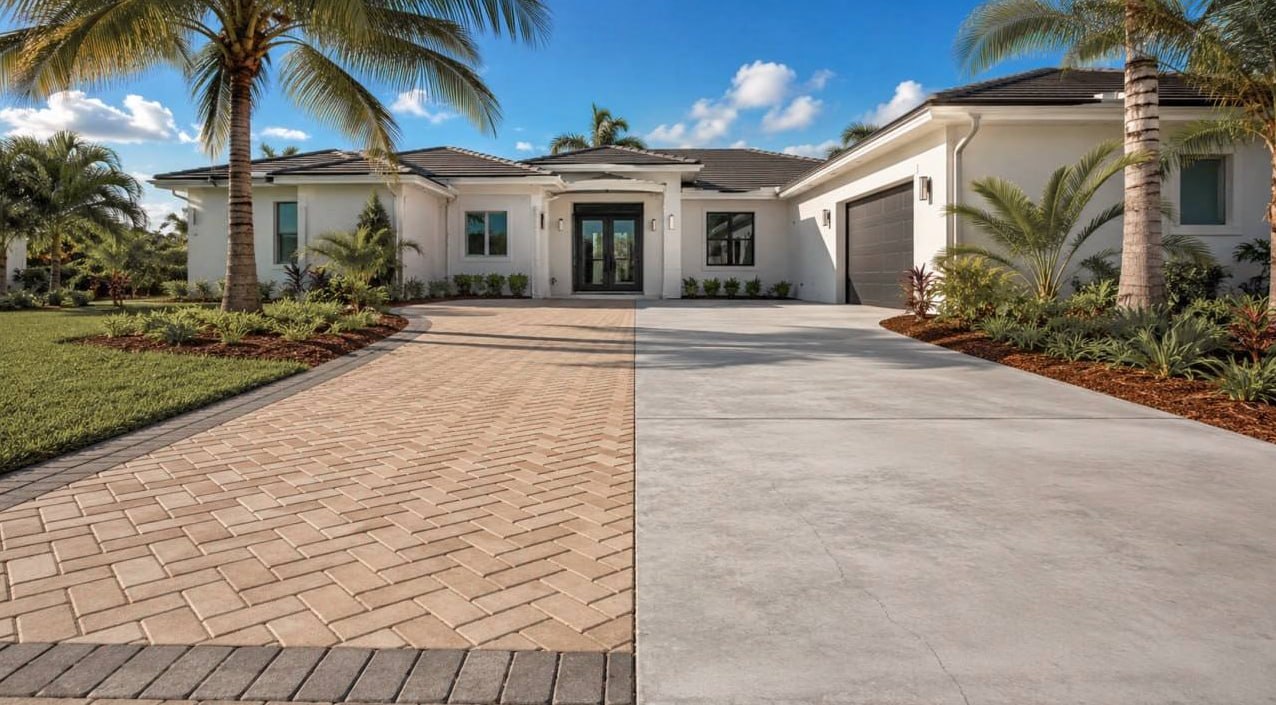
Pavers vs. Concrete in South Florida: Which Is Better for Your Driveway, Patio & Pool Deck?
A balanced pavers vs concrete comparison for Broward and Palm Beach homeowners: cracking, repairs, strength, UV fade, salt air, drainage and resale, framed for South Florida.
Read the article →
Pool Deck Pavers in South Florida: Heat, Slip & Material Guide
A South Florida buyer's guide to pool deck pavers: how color drives barefoot heat, what wet slip ratings mean, how porous stone handles salt and chlorine, and why permits are city-specific.
Read the article →