Leaf Stains on Pavers in Palm Beach Gardens: Next Steps
Persistent leaf stains on pavers? Compare a dry cleaning test, limited further treatment and local replacement, then plan debris removal and optional sealing.
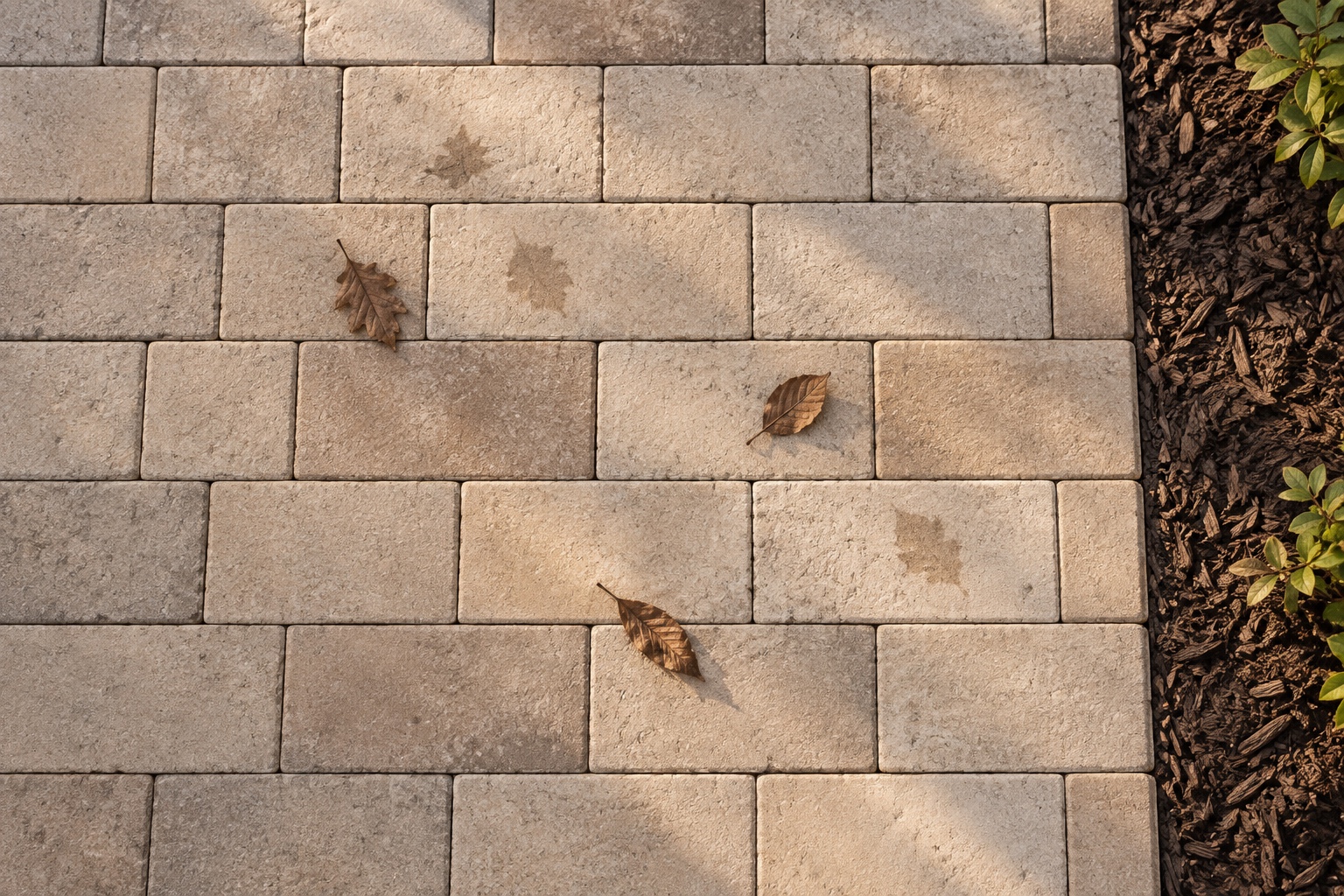
AI-generated illustration, not completed work or diagnostic proof.
To address leaf stains on pavers, identify the surface and likely stain, then test a compatible treatment on a small hidden stained area. Review the result after the surface dries. If a mark remains, choose between accepting it, limited further treatment or localized replacement. For Palm Beach Gardens homeowners, sealing is a separate decision after cleaning; it does not remove an existing stain or make pavers immune to new marks.
An assessment for paver cleaning and sealing in Palm Beach Gardens should help establish which of those options suits your surface before you approve work across the patio, walkway or driveway.
Identify the material and the suspected stain
Gently lift or sweep away loose leaves using care appropriate to the surface. A brown outline beneath a leaf supports a suspicion of organic staining, but shape and color alone cannot confirm its cause. Show the contractor where leaves collected and identify any products already tried. An overview and a close photo are enough to start that conversation.
Confirm whether the units are concrete pavers or natural stone, and identify any existing sealer. Missing records mean identification belongs in the assessment. Concrete cleaning guidance should not be extended to stone borders, steps or coping. Our guide to cleaning stone beside concrete pavers explains how to separate adjoining surfaces so each receives an appropriate plan.
Test a compatible treatment before extending it
For concrete pavers, CMHA’s Cleaning, Sealing and Joint Sand Stabilization of Interlocking Concrete Pavement recommends identifying stains before selecting a cleaner and evaluating it on a small, inconspicuous stained area. Follow the selected product’s directions and warnings. Natural stone needs its own material-specific assessment.
Techniseal’s Organic Stain Remover for Pavers technical data sheet lists dead leaves among the stains it addresses, requires a small hidden test and prohibits mixing with other chemicals. This is an example of product instructions, not a recommendation to buy it or a claim that our company uses it. Compatibility with the actual surface, coating and current label still needs confirmation.
Agree on the test location and treatment boundary with the contractor. The patch should include the suspected stain; a clean corner cannot show whether that mark responds. Ask how adjacent stone, planting and joints will be protected, and when the treated area can be assessed. Keep the product name and test location for that review.
Judge the dry result and choose the next step
Once the treatment is complete and the surface has dried as directed, compare the patch with nearby dry pavers under similar light. Check the remaining mark, surrounding color and surface texture. A patch that looks lighter because the surface changed is a reason to stop and reassess. Judge it close up and from your usual doorway or seating position.
Accept a residual mark
If the pavers are sound and a faint trace no longer bothers you in normal use, accepting it can end the stain treatment. Decide whether the remaining contrast is acceptable across the affected area before authorizing wider cleaning. Record the accepted appearance so neither party expects complete removal later. You can choose cleaning without adding sealer.
Limit any further treatment
If the stain remains objectionable but the test improved it without an unwanted surface change, ask whether the product guidance supports another controlled attempt. Some stains need repeated treatment, but that does not mean every leaf mark will disappear. Agree on the specific area, included work and another dry review. Stop if improvement stalls, the surface changes or compatibility remains uncertain. Have the cause reassessed before changing products; do not improvise stronger mixtures or combine cleaners.
Consider localized replacement
CMHA identifies replacement as an option for small stained areas of concrete pavers and warns that replacement units can differ in color. Ask whether matching units are available and compare a physical sample beside the cleaned, dry surrounding pavers. A matching product name does not promise an invisible repair. Do not assume weathering will erase the difference. If the replacement contrast is more distracting than the residual stain, keeping the existing unit may be preferable.
Ask for an assessment through our paver cleaning and sealing service if the test leaves that decision unresolved. Bring any treatment details you already have. Request a scope that separates further stain treatment, any proposed replacement and optional sealing, with the limits of the expected result explained before you authorize work.
Reduce recurrence where leaves collect
For a Palm Beach Gardens property, build the maintenance plan around two conditions you can check on site: where loose organic debris accumulates and where rain or irrigation keeps that debris wet. Inspect garden edges, sheltered corners and areas beneath planting after leaf fall or landscape work. A recurring wet patch deserves investigation, but it does not by itself prove a drainage defect or identify the stain.
Remove loose leaves and clippings before they accumulate. Use gentle sweeping with a surface-appropriate soft broom or lift debris by hand, without scraping attached marks or digging into joints. Collect the debris for disposal instead of moving it into another corner. If ordinary sweeping shifts joint sand, stop and have the joints assessed.
Adjust the cleanup frequency to what you find rather than relying on a fixed calendar. Where irrigation repeatedly wets an accumulation area, ask the landscape or irrigation provider to review it. Continue these checks after cleaning and after any sealing. Uneven, moving or broken pavers need a separate repair assessment; stain treatment does not resolve those conditions.
Decide on sealing after accepting the cleaned appearance
Sealing should serve an agreed maintenance or appearance goal. For concrete pavers, CMHA describes sealers as adding protection against stain penetration and notes that products can change color or sheen. This does not establish immunity from leaf staining, and a new coating does not replace debris removal.
Review any remaining marks before choosing the finish. Ask the contractor to confirm that the surface condition and existing coating meet the proposed sealer’s requirements. Accepting a residual mark does not automatically make that surface ready to seal. Use our guide to reviewing a paver sealer finish test to compare the actual cured appearance before extending the finish.
Keep cleaning and sealing separate in the estimate. Specify preparation, included areas and product-specific drying and return-to-use instructions, without assuming every product follows the same schedule.
To discuss persistent marks at your home, request a paver cleaning and sealing consultation in Palm Beach Gardens. Point out the stains that affect how you enjoy the space and any previous test areas. Ask for an on-site review and a written proposal explaining the next treatment decision, acceptable appearance and ongoing care, with sealing offered separately where appropriate.